RECIPE · FERMENTATION
If you want to learn how to make sauerkraut in a Mason jar, start with a small-batch method that treats salt, temperature and submersion as recipe controls rather than suggestions. For this US guide, the core method follows Penn State Extension and National Center for Home Food Preservation guidance for fermented sauerkraut.
The research-based small-batch jar ratio is 5 lb fresh cabbage + 3 1/2 tablespoons canning or pickling salt. That amount makes about two 1-quart jars or one half-gallon jar. Keep the cabbage under brine, allow fermentation gases to escape safely, and ferment around 70–75°F (21–24°C).
Keep the core salt, setup and warning-sign basics nearby for your next fermentation project.
Product testing note: We did not personally test these products. Product selections are based on their current Amazon listings and their relevance to the specific task described here; verify the current listing, included parts, dimensions and materials before buying.
If this is your first ferment, you can also open the Fermentation for Beginners hub for the basic setup before you start. The recipe below is deliberately more conservative than many quick social-media versions because the salt ratio and fermentation conditions matter.
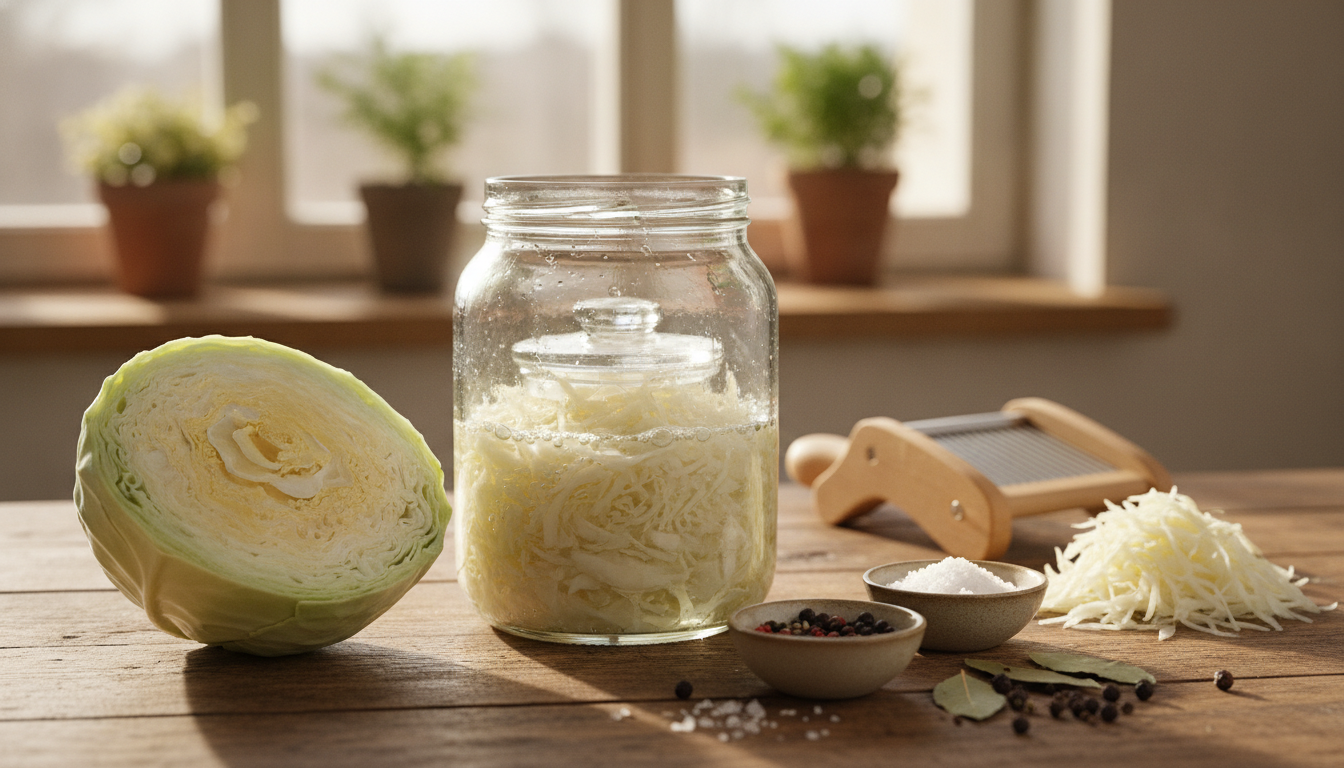
Ingredients and equipment for Mason jar sauerkraut
Sauerkraut is simple because cabbage creates its own brine when salt draws out moisture. The simplicity is also why accuracy matters: there are very few ingredients to hide a mistake. Weigh the cabbage, use the specified salt type and amount, and choose a food-safe jar or crock that lets you keep the cabbage submerged.
| What you need | Amount / role | Why it matters |
|---|---|---|
| Fresh cabbage | 5 lb, trimmed and shredded | Firm, fresh heads give the best starting texture. |
| Canning or pickling salt | 3 1/2 level tablespoons for the small-batch jar method | Use the tested ratio; do not cut back the salt. |
| Quart or half-gallon jars | About two 1-quart jars or one half-gallon jar | Penn State specifically describes these sizes for small-batch sauerkraut. |
| Weight | Keeps cabbage below brine | Glass weights or another food-safe method help control floating cabbage. |
| Cover / airlock | Lets fermentation gases escape while protecting the batch | Follow the instructions for your specific lid system. |
Mason jar or fermentation crock?
A Mason jar is useful for learning because you can see the brine level and make a small batch. Penn State notes that spoilage is more of a concern in jars because keeping shredded cabbage submerged can be harder. A crock gives you more room and makes weighting a larger batch easier. Either can work when you follow a research-based method.
Prefer a crock instead of Mason jars?
For a larger batch, a water-seal crock can make weighting and gas management easier. We did not personally test this product. Check the current Amazon listing for capacity, included weights, lid design and food-contact materials before buying.
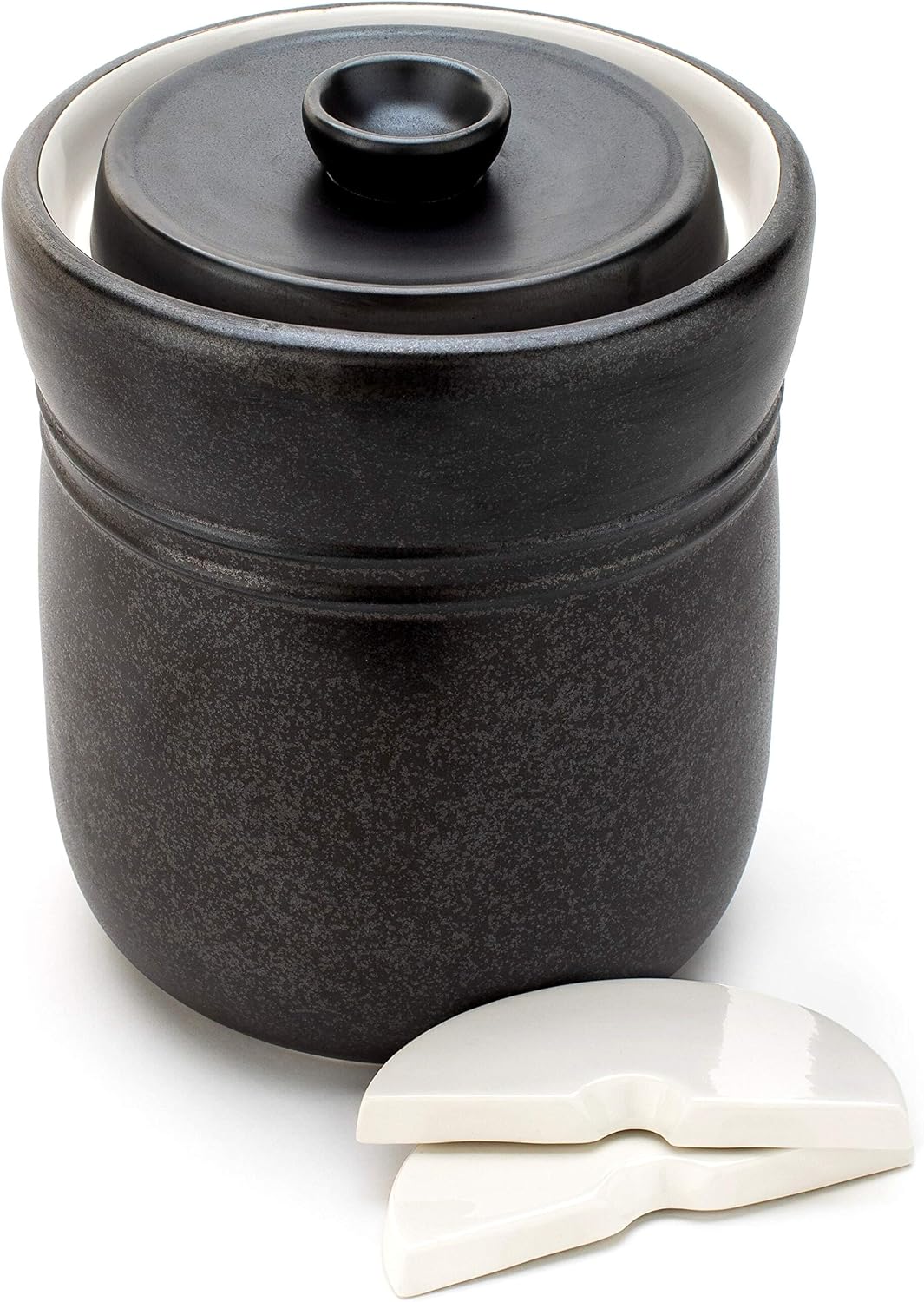
Fermentation Crock 1 Gallon, Stoneware Pot
A black 1-gallon stoneware crock supplied for larger sauerkraut, pickle and vegetable-fermentation batches.
View on AmazonThe tested salt ratio for sauerkraut in jars
For this US version, I am not carrying over the German article’s 20 g-per-kilogram shortcut. Penn State’s small-batch jar procedure specifically calls for 3 1/2 tablespoons canning or pickling salt for 5 lb of cabbage. The same source warns that the cabbage-to-salt proportion controls pathogen growth, so changing it is not a casual flavor adjustment.
For larger crock batches, the NCHFP and Penn State general sauerkraut method uses 3 tablespoons of canning or pickling salt per 5 lb of shredded cabbage. Because this article is centered on Mason jars, use the small-batch jar ratio above.
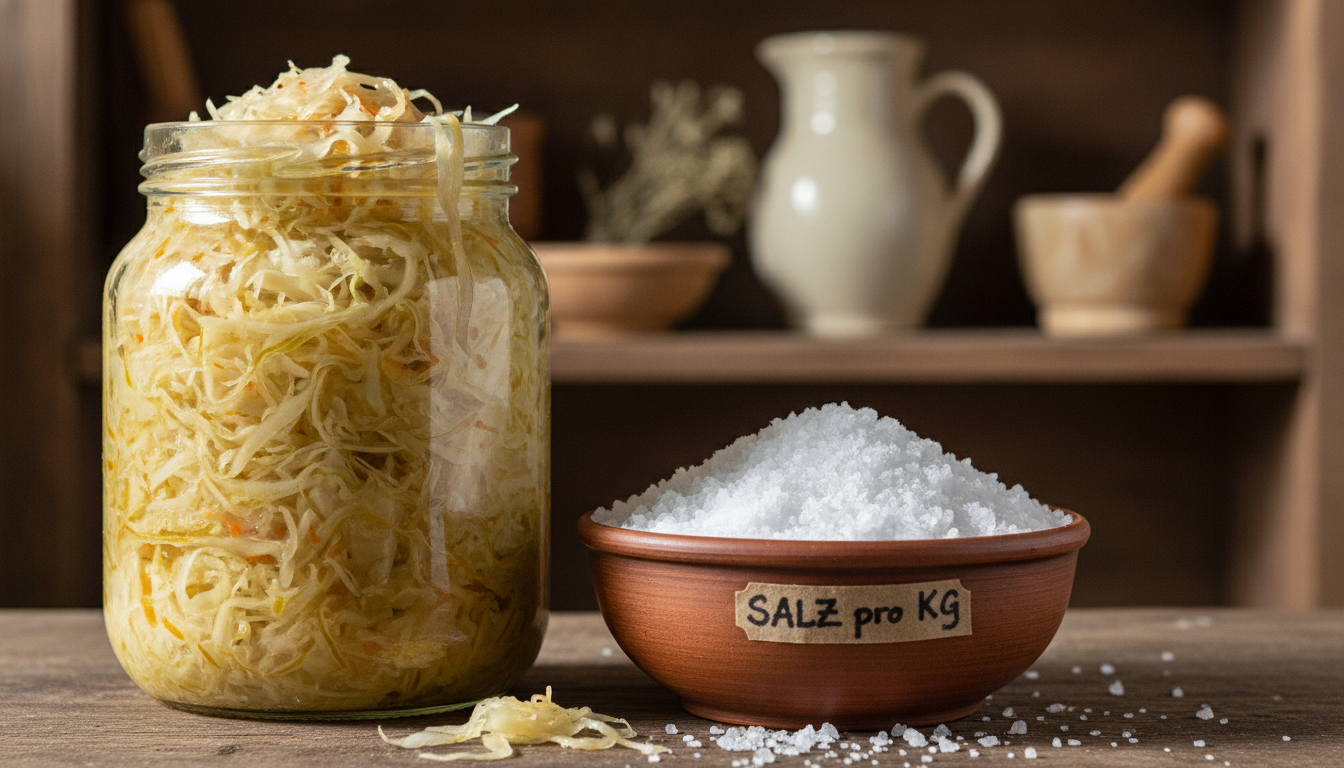
Which salt should you use?
Use canning or pickling salt for this tested recipe. Penn State lists canning or pickling salt as the preferred choice for sauerkraut. The Sea Salt Superstore option below is included because the current product is marketed as fine, non-iodized pickling & curing salt. Product formulations and listings can change, so verify the current Amazon label before use. The recipe calls for purpose-labeled canning/pickling salt—not ordinary coarse grinder salt.
A purpose-labeled salt option for this recipe
This product is included because it is currently sold as fine, non-iodized pickling & curing salt. We did not personally test this product. Verify the current ingredient and product label before using it in a research-based fermentation recipe.
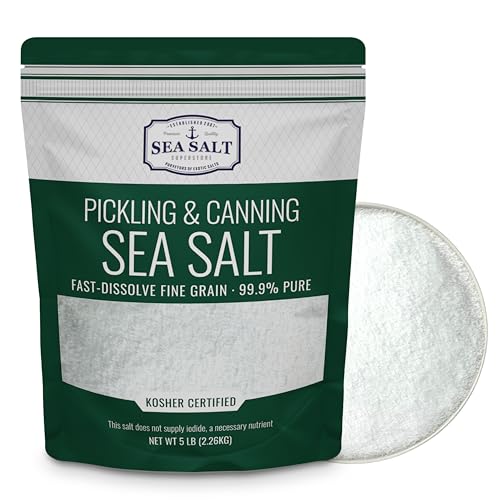
Sea Salt Superstore Pickling & Curing Salt, 5 lb
A fine-grain, non-iodized salt marketed specifically for pickling, curing and brining.
View on AmazonPrepare the cabbage correctly
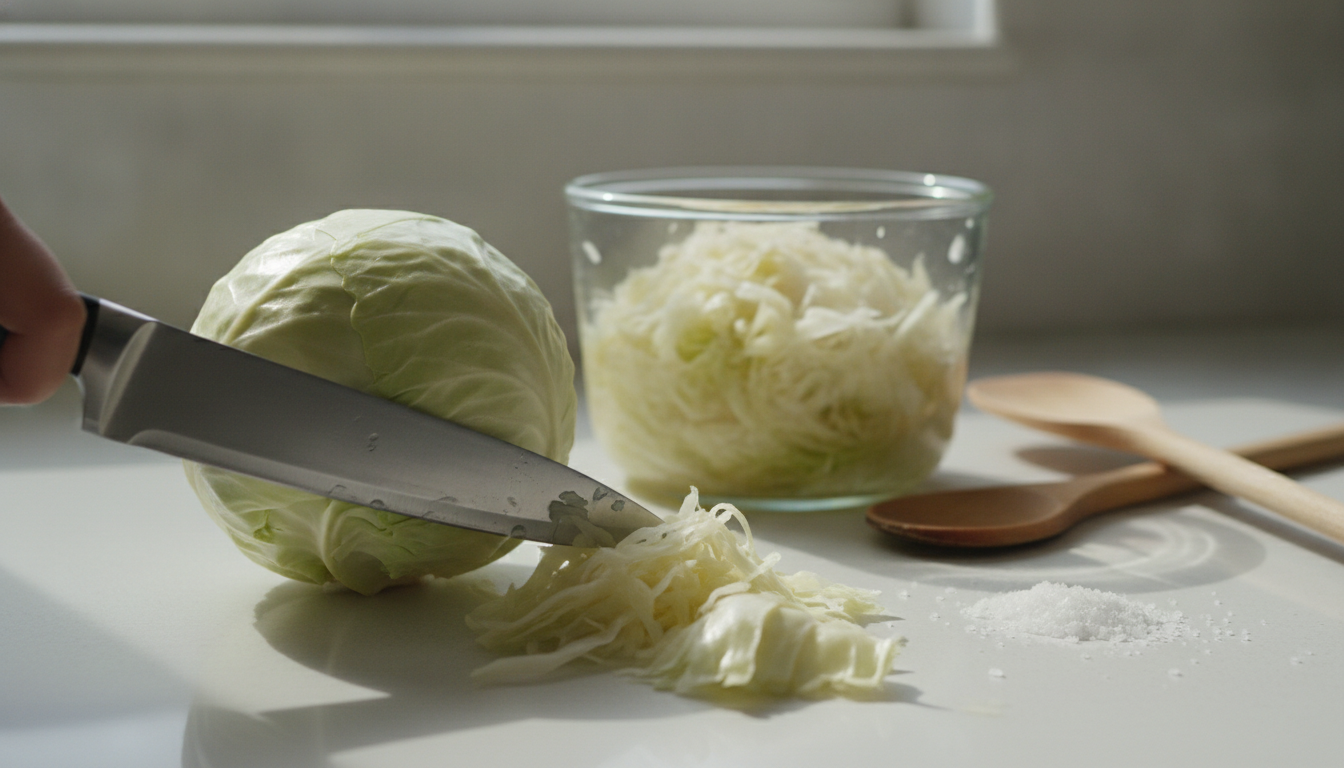
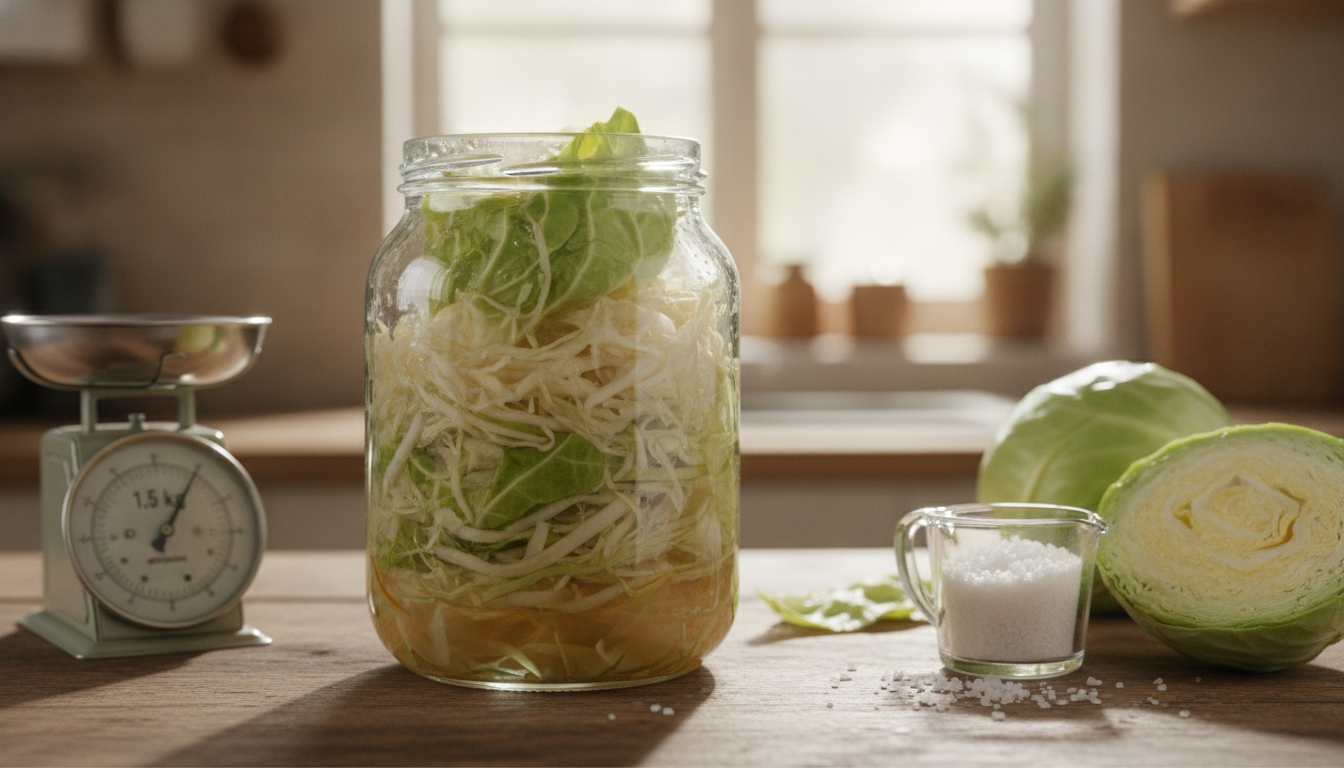
Start with firm, fresh cabbage. Discard damaged outer leaves, rinse the heads under cold running water, drain them, cut into quarters and remove the cores. Penn State describes shredding cabbage to about 1/16 inch (1.5 mm) thick. Consistent ribbons pack more evenly and make it easier for salt to draw liquid from the cabbage.
Shred, salt and let the cabbage wilt
Place the 5 lb of shredded cabbage in a large clean bowl and mix in the full 3 1/2 tablespoons of canning or pickling salt. Penn State’s small-batch instructions recommend letting the salted cabbage wilt for about 10 minutes. Then massage, tamp and squeeze until the cabbage softens and liquid collects in the bowl.
Do not pour off the liquid. That natural juice becomes the primary brine. A cabbage shredder or mandoline can speed up preparation, while a long kraut pounder makes it easier to compress the cabbage once it is inside a deep jar.
How to make sauerkraut in a Mason jar: step by step
1. Sterilize the jars for the small-batch method
Penn State’s jar procedure directs home preservers to sterilize the jars before adding the cabbage mixture. Place the jars on a rack in a large pot, cover them with water and boil for 10 minutes, then allow them to cool before filling. Keep your hands, bowl, tools, weights and work surface clean as well.
2. Pack the salted cabbage tightly
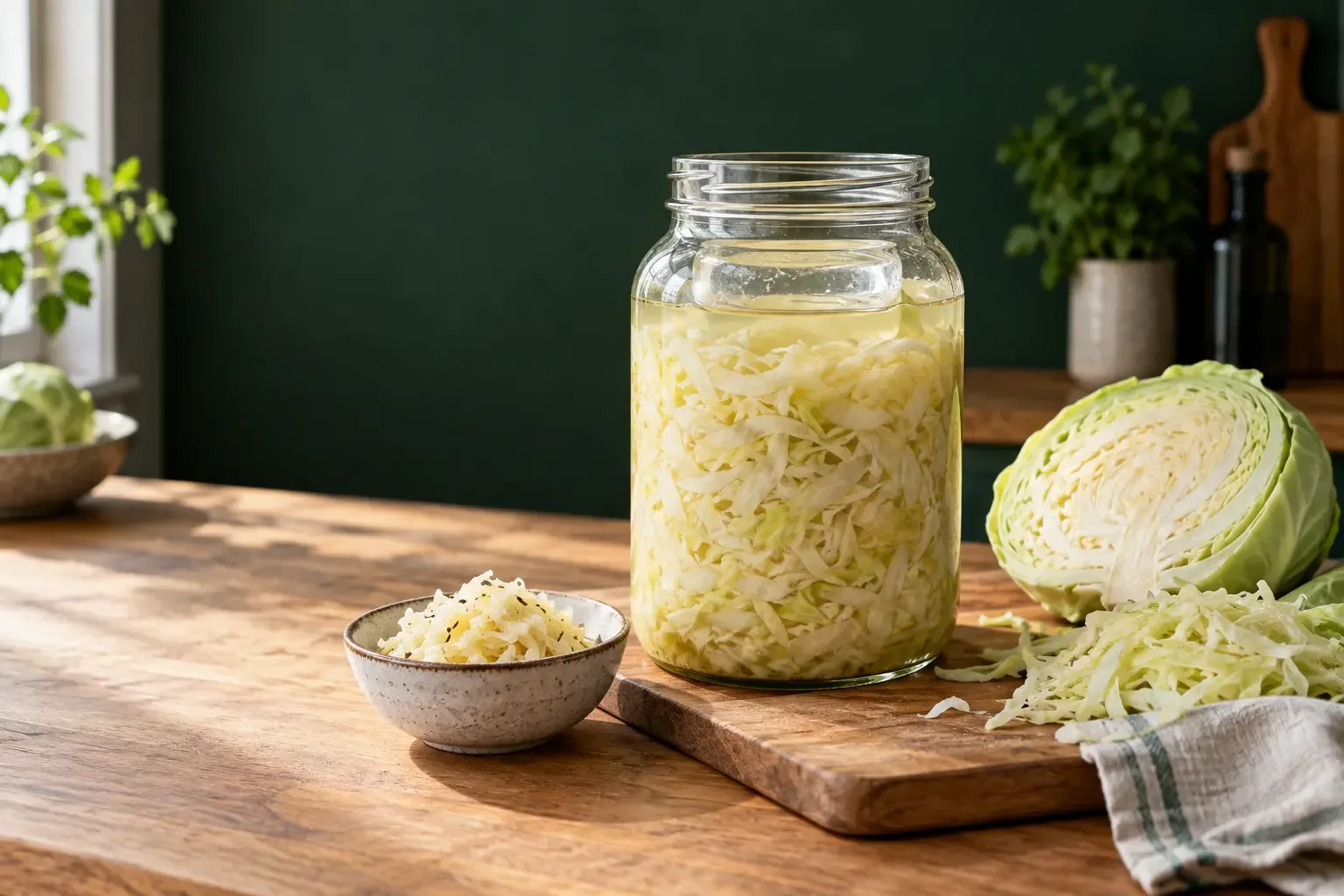
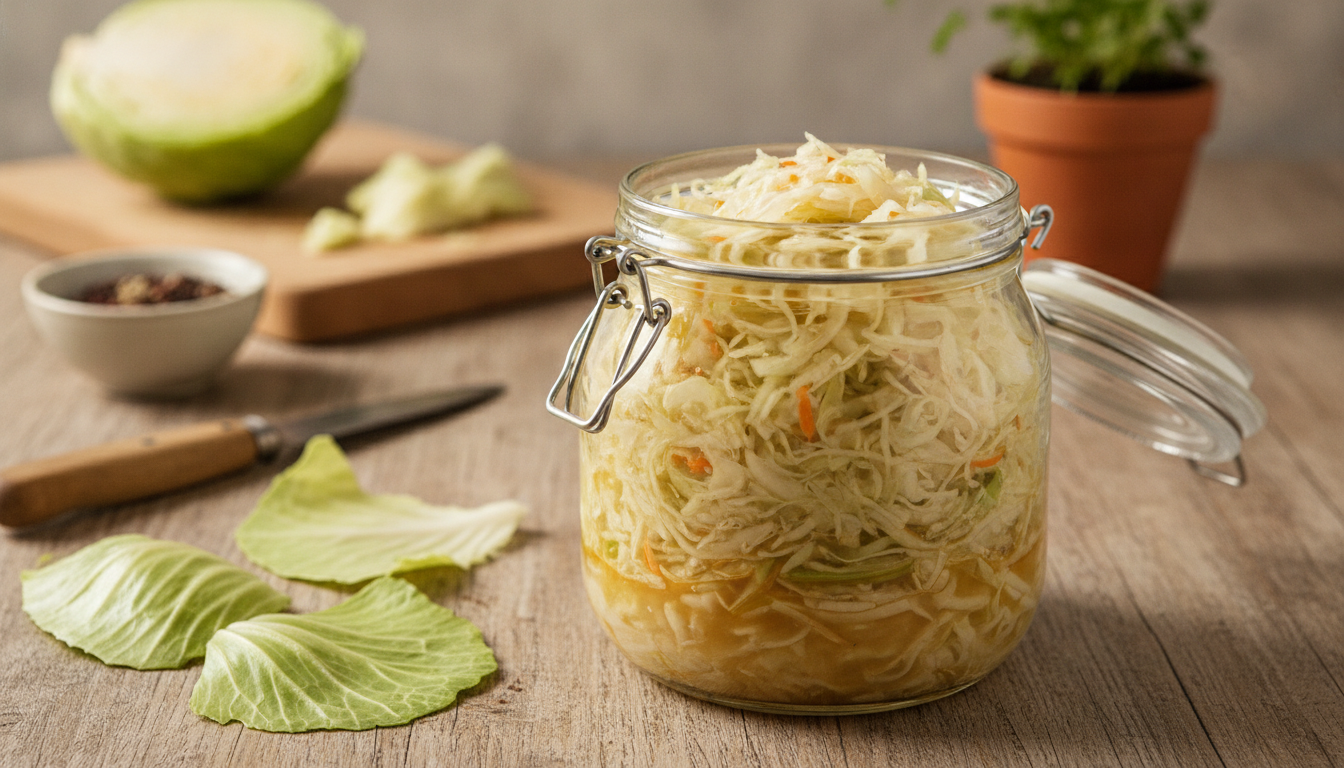
Transfer the wilted cabbage into the cooled jars, including all of the juice left in the bowl. Press firmly as you fill to remove trapped air. Leave about 2 inches of headspace above the cabbage so there is room for the weight, brine movement and active fermentation.
3. Keep every shred below the brine
Use a food-safe fermentation weight or another research-based weighting method to keep the cabbage below the liquid. The goal is not simply to press the cabbage down once; it is to keep the cabbage submerged as the ferment changes and gases form. Wide-mouth jar weights make this step easier because they fit below the shoulder of the jar.
4. Add brine only if the cabbage juice is not enough
If the cabbage’s own juice still does not cover it completely, Penn State’s small-batch method allows boiled and cooled supplemental brine made with 1 1/2 tablespoons canning salt per quart of water. Add only enough to cover the cabbage. Do not top the jar up with plain water because that changes the salt concentration.
5. Cover so fermentation gases can escape
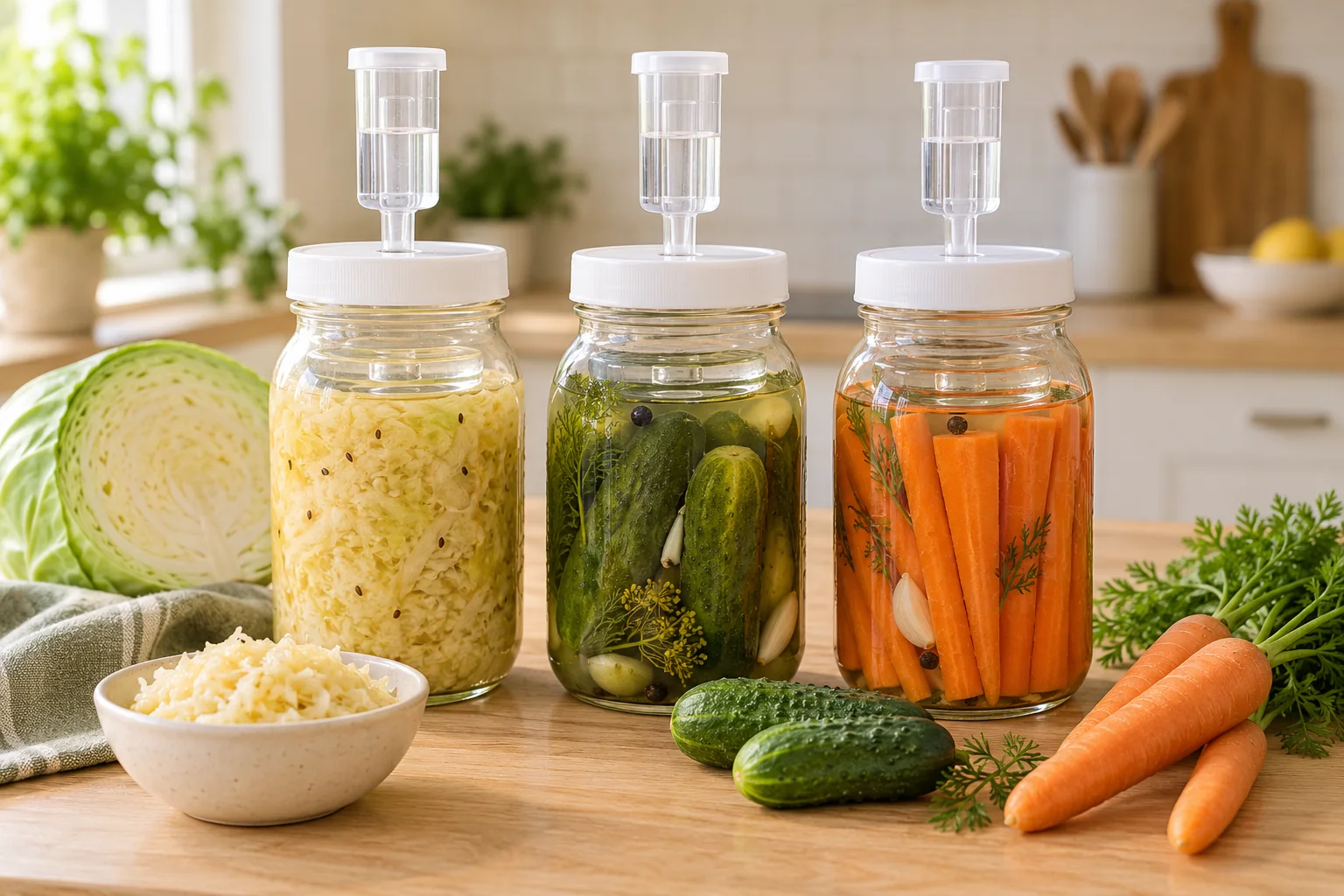
The jar needs protection from contamination and a safe route for fermentation gases. Penn State describes a loose lid or clean towel and also recognizes commercially available weights and one-way valve covers. If you use an airlock lid, follow that manufacturer’s setup instructions rather than inventing a daily “burping” schedule.
6. Put the jar on a tray
Active fermentation can push juice upward. Set the jar on a plate or tray so an overflow does not make a mess. The extra container also makes it easier to notice changes in the jar without repeatedly opening it.
Mason jar weights, lids and starter kits
These accessories solve the two practical problems that matter most in a jar: keeping cabbage submerged and giving fermentation gases a controlled path out. You do not need every item—choose one coherent system.
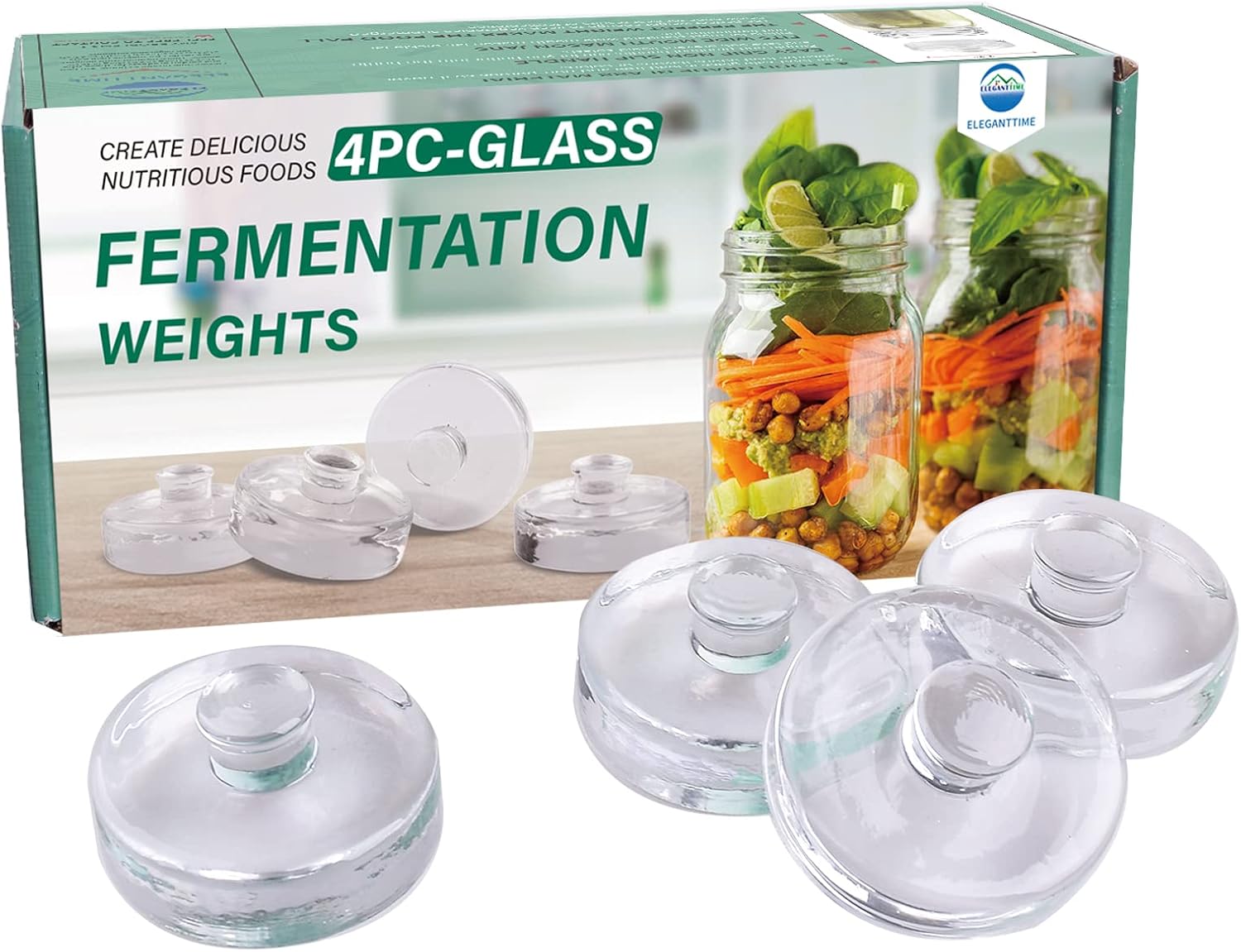
4-Pack Fermentation Glass Weights
Glass weights with easy-grip handles designed for wide-mouth Mason jars.
View on Amazon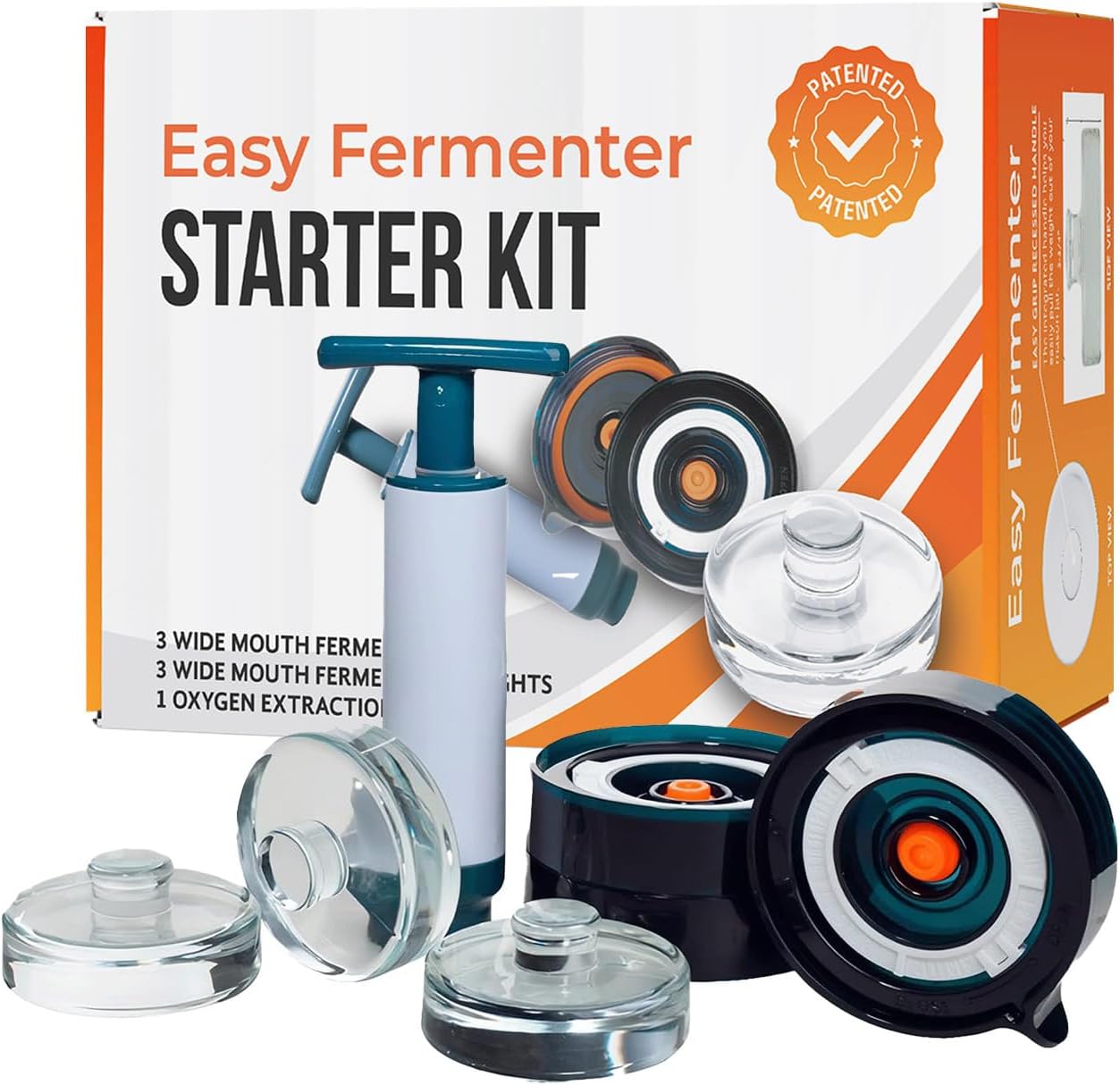
Fermentation Lids Starter Set with Weights
Airlock-style lids plus glass weights for wide-mouth jars.
View on Amazon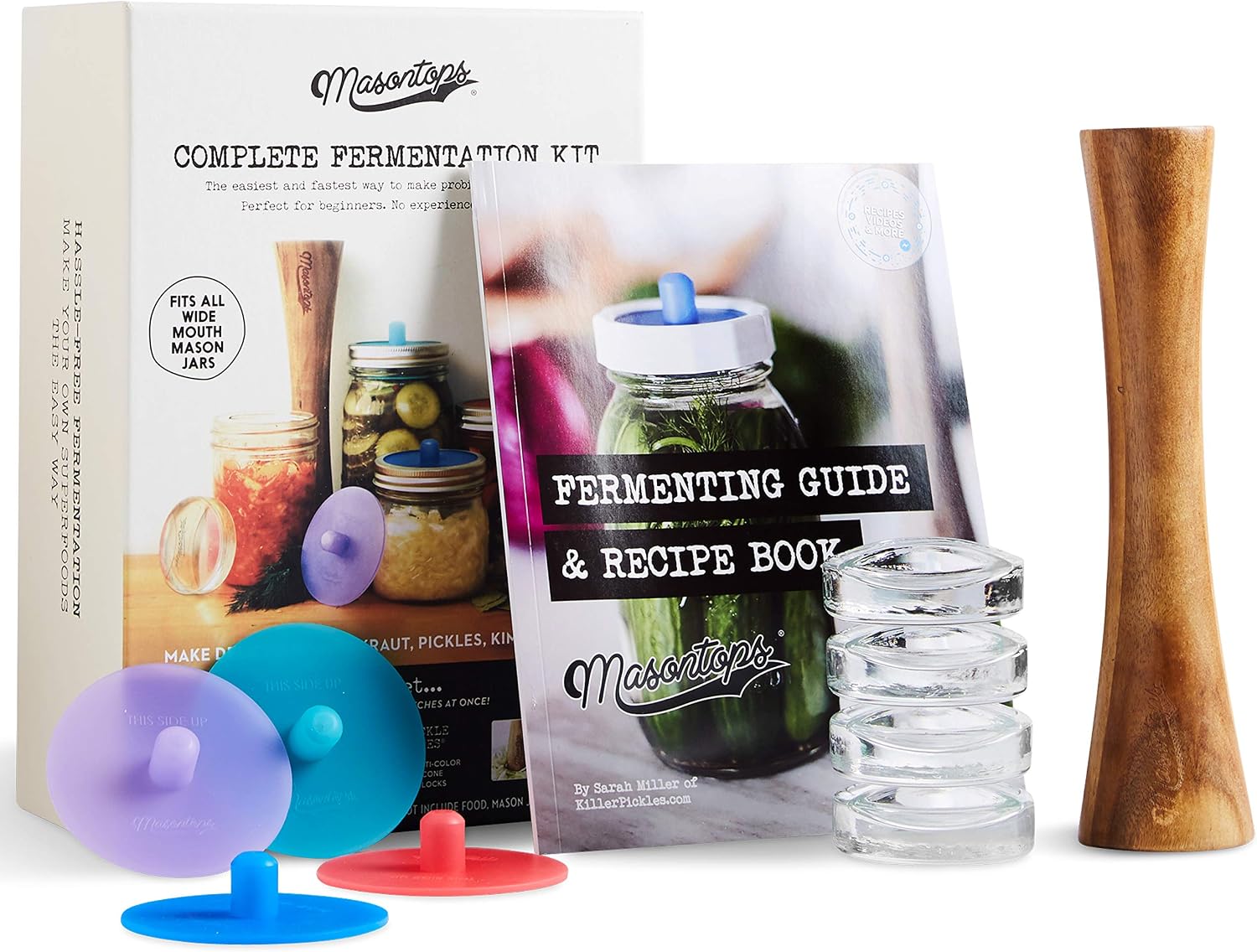
Masontops Complete Mason Jar Fermentation Kit
A coordinated wide-mouth Mason jar fermentation kit with airlock-style lids and weights.
View on AmazonAffiliate links · Your price stays the same.
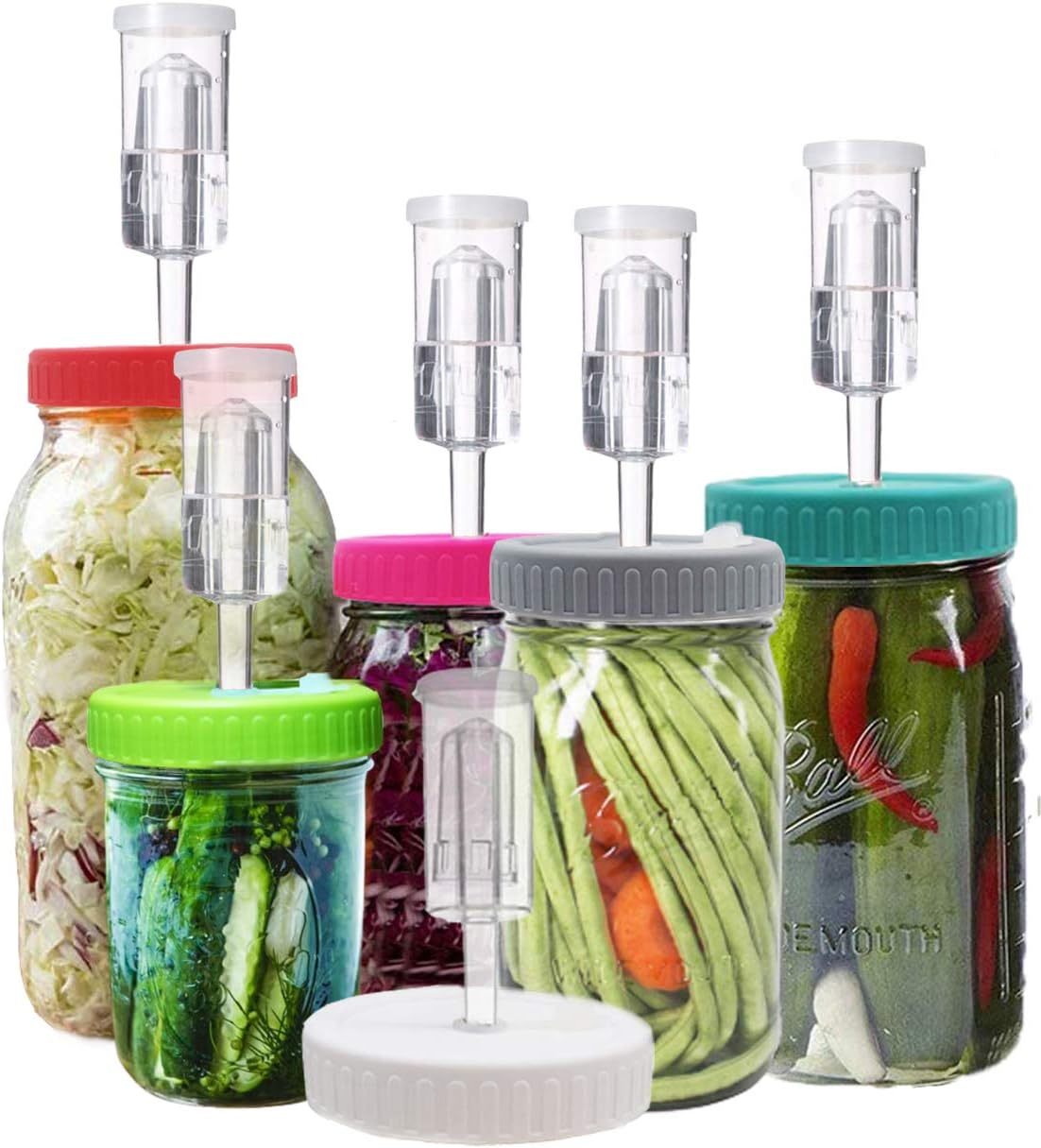
6-Set Fermentation Lids for Wide Mouth Jars
A larger lid-and-airlock set if you regularly ferment several jars at once.
View on AmazonFermentation temperature and how long it takes
For home sauerkraut, USDA/NCHFP guidance recommends 70–75°F (21–24°C). In the general crock method, sauerkraut is usually fully fermented in about three to four weeks at that temperature. Penn State’s small-batch jar guidance says fermentation at room temperature should take about three weeks. Cooler rooms slow the process; very warm conditions increase the risk of soft or spoiled kraut.
Do not use the calendar as the only signal. Watch the brine level, keep the cabbage submerged and evaluate the finished kraut for tartness, firm texture and the absence of spoilage signs. Below 60°F, fermentation may not proceed normally; temperatures above roughly 80°F can make sauerkraut soft and contribute to spoilage.
| Temperature | What to expect | Practical action |
|---|---|---|
| 70–75°F (21–24°C) | Preferred home-fermentation range | Plan on roughly three weeks for the small-batch jar method and monitor the batch. |
| 60–65°F (15–18°C) | Slower fermentation | Expect several more weeks. |
| Below 60°F (15°C) | Fermentation may not proceed normally | Move the batch to a more suitable location. |
| Above 80°F (26–27°C) | Greater risk of softening/spoilage | Do not intentionally ferment in this range. |
What is normal—and when should you discard the batch?
Fermentation produces visible activity. Bubbles, some brine movement and a sour aroma can all occur as the batch develops. The important distinction is between normal fermentation changes and clear spoilage signs.
Do not taste a questionable batch
Penn State’s guidance is direct: if you see mold, feel a slimy texture, or smell a bad odor, do not taste the sauerkraut. For a beginner article, that is the safest decision rule. Do not scrape off obvious mold and then sample the cabbage underneath.
What about cloudy brine or surface changes?
Do not diagnose a batch from one visual detail in isolation. Check the overall appearance, texture, aroma and whether the cabbage stayed below brine. If something looks or smells genuinely wrong, discard the batch rather than trying to rescue it.
If you want another research-tested fermentation project after sauerkraut, try fermented dill pickles. For a very different flavor profile, our how to make kimchi guide is the next step.
How to store finished sauerkraut
Once the sauerkraut is fully fermented and has the tartness and texture you want, keep it tightly covered in the refrigerator. NCHFP and Penn State both describe refrigerated storage for fully fermented sauerkraut; freezing and properly processing it for canning are separate options. This article does not turn fermented sauerkraut into a shelf-stable canned product unless you follow a tested canning process.
Use clean utensils each time you remove kraut and keep the remaining cabbage well managed in the brine. If you want to can fermented sauerkraut for shelf-stable storage, follow the current NCHFP processing table for your jar size, pack style and altitude instead of improvising a water-bath time.
The free beginner guide summarizes setup, salt discipline and the warning signs worth checking before you start another batch.
Helpful sauerkraut gear: what actually earns its place
You can make excellent sauerkraut with a jar, the correct salt, a clean weight and basic kitchen tools. Extra gear should solve a real problem: slicing five pounds of cabbage evenly, reaching into a deep jar, maintaining submersion or measuring an optional parameter. It should not replace the recipe.
FAQ
Common Mason jar sauerkraut questions
How much salt do I use for Mason jar sauerkraut?
For the Penn State small-batch jar method, use 3 1/2 tablespoons of canning or pickling salt for 5 lb of shredded cabbage. Do not reduce the salt. This differs slightly from the general crock ratio, which is why the article keeps the two methods separate.
How many Mason jars will 5 pounds of cabbage fill?
Penn State states that 5 lb of cabbage makes about two 1-quart jars or one half-gallon jar in its small-batch sauerkraut procedure.
How long does Mason jar sauerkraut take?
At the recommended room-temperature range, the small-batch jar method takes about three weeks. Cooler conditions take longer. Use the recipe conditions and spoilage checks rather than a fixed calendar date alone.
What temperature is best for sauerkraut?
Aim for 70–75°F (21–24°C). Research-based guidance warns that colder temperatures slow or stop fermentation and very warm conditions can make kraut soft or spoil.
Does the cabbage have to stay under the brine?
Yes. Keep the shredded cabbage submerged throughout fermentation. A wide-mouth glass weight or another appropriate food-safe weighting method makes this easier.
What if there is not enough natural cabbage juice?
Use the supplemental brine specified for the small-batch method: 1 1/2 tablespoons canning salt per quart of boiled and cooled water, adding only enough to cover the cabbage.
Do I need to burp a Mason jar every day?
Not as a universal rule. Your gas-management method depends on the lid system. A one-way fermentation lid or airlock is designed to let gas escape. Follow the instructions for the specific cover you use.
Can I use sea salt instead of canning salt?
For this research-based US recipe, use canning or pickling salt. Ordinary coarse sea salt or grinder salt is not the specified ingredient. A product specifically labeled as fine pickling/canning salt can be considered when its current label and ingredients match the recipe requirement.
How do I know sauerkraut is unsafe?
If you see mold, feel a slimy texture or smell a bad odor, do not taste it. Discard a clearly spoiled batch.
Do I need a pH meter?
No. A pH meter is optional and does not replace the tested salt ratio, temperature range, submersion and handling steps.
Bottom line: keep the method simple and the controls precise
The easiest way to make sauerkraut in Mason jars is not to chase clever shortcuts. Use 5 lb of fresh cabbage, 3 1/2 tablespoons of canning or pickling salt, sterilized jars, about 2 inches of headspace, reliable submersion and a 70–75°F fermentation environment. Let the process take the time it needs.
Once you understand this batch, you can decide whether you prefer small jars, a larger crock or a dedicated airlock system. The equipment can change; the food-safety logic should not.
Sources & editorial standard:
The salt ratio, small-batch Mason jar procedure, temperature range, fermentation timing, submersion guidance and spoilage warnings in this article were checked against research-based US home-preservation guidance.
Affiliate disclosure: As an Amazon Associate, Einfach Haltbar may earn from qualifying purchases. Product links are convenience links, not claims of personal testing.