About this guide: manufacturer research, not a hands-on test. We may earn a commission if you buy through an affiliate link, at no extra cost to you.
Is a home freeze dryer right for you?
Start with the food you already grow, cook or buy. A machine is easier to justify when you can name the batches you would put through it and how you would use the finished food. A vague plan to preserve “everything someday” is a weak reason to commit money and workspace.
It deserves a closer look when…
You repeatedly have a harvest or prepared-food surplus and want another way to preserve it.
You specifically want the texture and rehydration possibilities of freeze-dried food.
You have room for the whole setup and time to prepare, check and package each batch.
Wait before buying when…
You only want an occasional bag of fruit snacks.
Your current freezer or another preservation method already meets your needs.
You cannot yet identify a suitable location, electrical supply or realistic batch routine.
Our recommendation is to plan several real batches before choosing a size. Write down the food, the prepared quantity and its intended use. That turns a large appliance purchase into a decision about your own household.
Which Harvest Right size fits your batches?
Choose around a load you will actually prepare. The figures below are manufacturer-listed fresh-food capacities, not finished-food yield or a promise for every ingredient. Food thickness, density and usable tray space still matter.
For smaller harvests
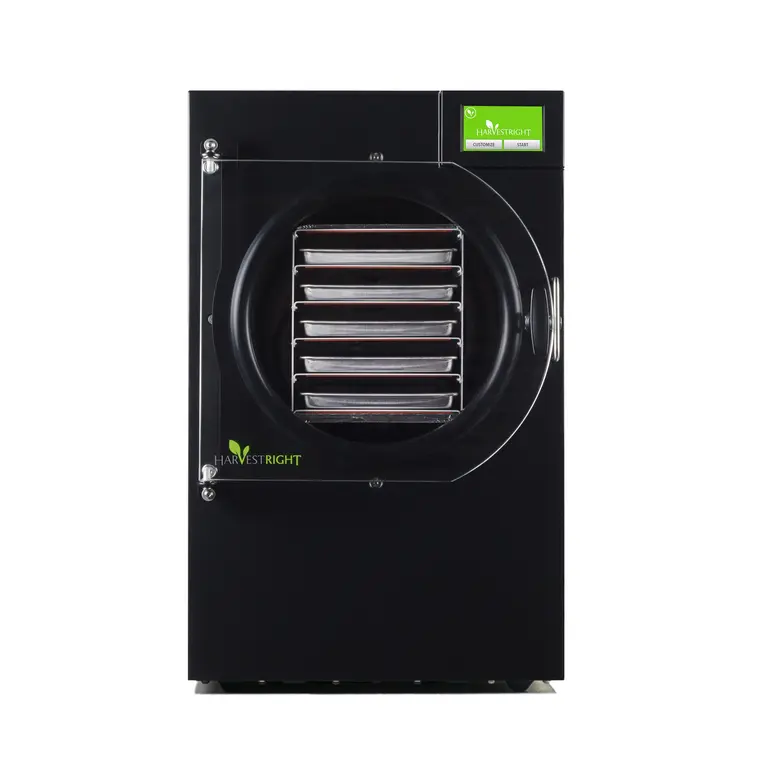
Harvest Right Small
Consider Small when you can regularly prepare modest batches and want the smallest cabinet in this comparison. Check your usual tray load before moving up a size.
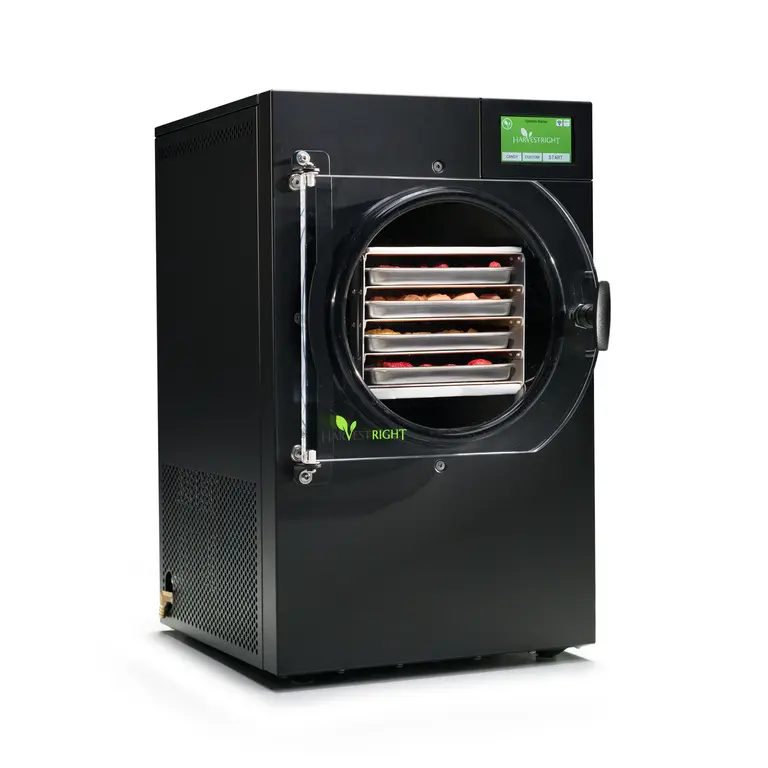
Consider Medium when your normal harvest or meal-prep load fills more trays than Small allows. It is a middle option, not an automatic best choice for every household.
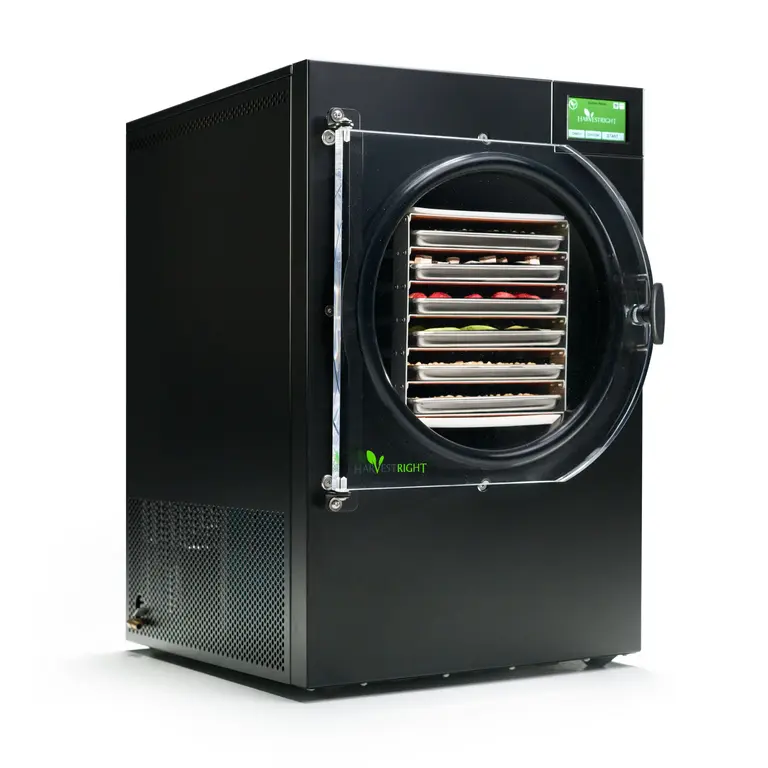
Consider Large when you have a repeatable supply of food for larger loads and room to prepare, dry and package it. Buying extra capacity only helps when you use it.
Affiliate links · We may earn a commission at no extra cost to you.
All three buttons open the Harvest Right website. Choose the size and configuration there; these links do not preselect a model.
A larger machine is useful when smaller loads would leave you with a repeating backlog. It is less useful when you would spend time looking for extra food simply to fill it. Avoid choosing by the biggest advertised number alone.
Compare the space as well as the capacity
Manufacturer product-page specifications checked September 11, 2026. Confirm the exact configuration before ordering.
Size
Fresh-food load
Cabinet W × D × H
Listed black-unit weight
Small
6–10 lb / 4 trays
17.4 × 21.5 × 26.8 in
91 lb
Medium
10–15 lb / 5 trays
19 × 25 × 29 in
119 lb
Large
18–27 lb / 6 trays
21.3 × 27.5 × 31.3 in
143 lb
These are cabinet measurements, not a complete installation footprint. The pump, hose, drain container, open door and loading space also need a home. The manufacturer’s FAQ and product page show different exterior measurements; the table uses the product page, and you should confirm the total clearances for the unit you order.
What about XL?
XL is a separate step up for consistently large loads. Consider it only after discussing your expected food volume, workspace and electrical setup with Harvest Right. Buying a larger unit does not remove the preparation, checking and packaging work.
Will the complete setup work in your home?
Measure a working area, not an empty countertop
Check that your table or cart can safely support the appliance, pump and a loaded batch. Plan how you will receive and move the shipment, then allow enough room to take trays in and out without carrying them across a crowded kitchen. Confirm delivery arrangements and moving help before checkout.
The refrigeration system and vacuum pump produce heat and sound. A room you can tolerate during a long run matters more than a staged product photograph. Keep the required airflow clear, position the drain correctly and follow the exact model’s installation instructions.
Confirm the electrical requirements before installation
The current US listings describe Small and Medium as 110 V units using a dedicated 15 A circuit. For the current Large, the product page specifies a NEMA 5-15 outlet and dedicated 15 A circuit, but the currently linked owner’s manual recommends 20 A for Large. That conflict matters: ask Harvest Right to confirm the requirements for the exact unit you will receive, and have a qualified electrician assess the installation.
Do not infer suitability from a plug fitting an outlet. Do not bypass protective devices or improvise an adapter. US model requirements are not installation advice for a German or other overseas household.
What will ownership cost beyond the machine?
Use the complete checkout quote as the starting point. Then add the costs that apply to your own setup. A headline appliance price alone will not tell you what getting started costs.
Initial setup: the selected size and pump, taxes, delivery, a suitable support surface, moving help and any necessary electrical work.
Each batch: food, electricity and the packaging you actually use.
Ongoing care: oil and filters for an oil pump, cleaning supplies, replacement parts and your preparation and packing time.
Estimate electricity from a whole batch
Batch electricity cost = measured kWh × your electricity rate per kWh. Use a measurement method appropriate for the appliance and circuit. A momentary watt reading or an internet estimate for someone else’s load is not your batch cost.
Compare with your real alternative
If you rarely buy retail freeze-dried food, comparing every home batch with an expensive retail pouch can exaggerate the savings. Compare with what you would otherwise do: use fresh food, freeze it, preserve it another way or let a genuine surplus go unused.
Write a household estimate that includes setup costs and realistic annual use. Treat projected savings as a scenario, not guaranteed payback. We do not have your electricity tariff, batch measurements or usage history, so we cannot honestly promise when a machine would pay for itself.
Which pump and maintenance routine suit you?
Ask which pump is included in the exact bundle. Product names and package contents can change, and the pump is part of the ownership decision.
Harvest Right’s maintenance schedule calls for Premier pump oil changes after approximately 20–30 batches, or sooner if the oil is cloudy or dirty. The listed interval for its Standard pump is shorter. Follow the instructions for the pump actually supplied; an interval is not permission to ignore contaminated oil.
An oil-free upgrade removes oil-change work, but does not make the freeze dryer maintenance-free. You still need to clean food-contact surfaces, inspect seals, defrost and dry the chamber, check each finished load and package food promptly.
Think through a complete batch day
Choose when you will prepare the food, where loaded trays will wait and who will be available when the machine finishes. Keeping that routine manageable is more useful than choosing a model because a marketing photo makes the process look effortless.
What will you do with the finished food?
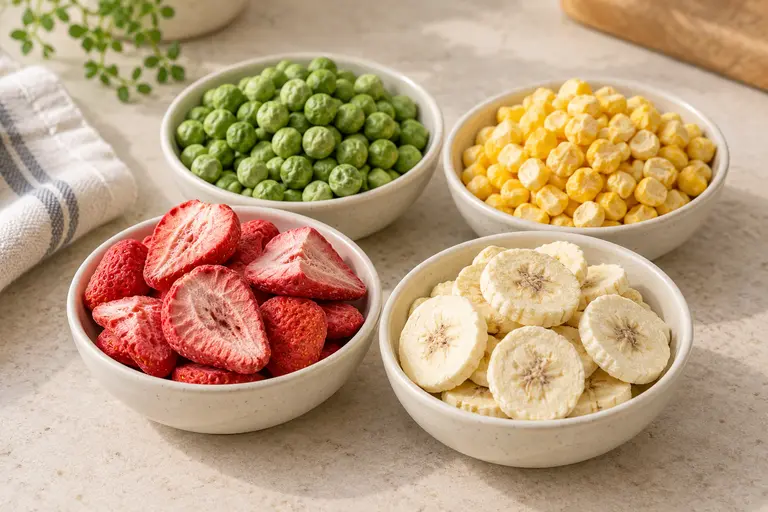
A useful first project has a clear purpose: vegetables you plan to cook later, fruit for a specific snack routine or another food with appropriate preparation guidance. Start with a simple food and learn the checks before planning complicated mixed meals.
Freeze-drying removes moisture; it does not sterilize food. Good hygiene, appropriate preparation and checking every tray remain necessary. An oxygen absorber or sealed pouch cannot make an under-dried batch safe. Multi-decade commercial storage claims are not a verified shelf life for your home batch.
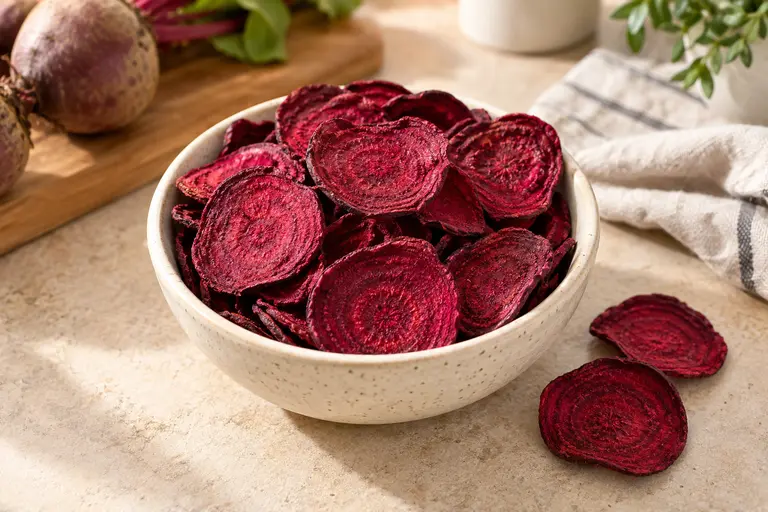
Our beet preparation guide explains a cooked-beet workflow, the limits of the method and the checks before storage. Read the method before buying accessories so you understand what you will need.
What happens if you need support or a return?
Read the current warranty for your location. Harvest Right describes first-year coverage for eligible defects, followed by more limited sealed-refrigeration-system coverage in years two and three. Its terms include customer diagnostic and transportation costs in that later period. This is not three years of comprehensive cover for every component.
Also read the separate return policy. Returns can involve shipping deductions and a restocking fee; ordering a unit is not a risk-free home trial. Check when any return period starts, what authorization is required and how the appliance would be packed and shipped back.
Keep the written model confirmation, order details and applicable warranty with your records. Ask unresolved setup questions before purchase, especially if the listing and manual disagree.
Ready to choose? Use this final check
Name your routine batches. Choose a size around the food you can prepare repeatedly.
Confirm the workspace. Include pump, ventilation, drainage and safe loading access.
Resolve the electrical specification. Match the actual unit and installation.
Read the whole quote. Check pump, included accessories, delivery, taxes, warranty and returns.
If these answers are clear, select your configuration on Harvest Right’s website. If an essential point is still uncertain, resolve it before checkout.
Affiliate link · We may earn a commission at no extra cost to you.
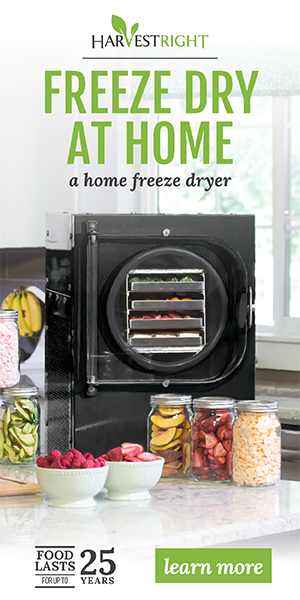
See a home freeze-drying setup
This supplied manufacturer banner illustrates the appliance in a kitchen. It does not identify the exact configuration you will receive. Its printed storage claim is advertising, not a shelf-life guarantee for a home batch.
Manufacturer advertisement · Affiliate link; we may earn a commission at no extra cost to you.
Questions before you buy
Which size is best for beginners?
Beginner status does not determine batch size. Small may suit modest repeatable loads; Medium and Large need enough food and preparation space to use their capacity. Choose around your real routine, then confirm the model specifications.
Is the listed capacity the amount of finished food?
No. The comparison uses manufacturer-listed fresh-food loads. Final weight depends on the food and the moisture removed. Follow loading instructions rather than piling food onto trays to reach an advertised maximum.
Can a food dehydrator do the same job?
The methods are different. A food dehydrator uses heated airflow, while a freeze dryer uses freezing and a vacuum process. Choose the preservation method for the result you need; a freeze dryer is not a necessary upgrade for every household.
Are the buttons direct links to Small, Medium or Large?
No. The supplied affiliate link opens the Harvest Right website. Select and check the exact size and bundle there. We do not claim that a particular model, price or promotion is preselected.
Will the machine pay for itself?
That depends on your actual use and costs. Include equipment, setup, electricity, food, packaging, care and your time. Compare with your real alternative rather than assuming that every batch replaces premium retail freeze-dried food.
Have you personally tested these models?
No. This is a manufacturer-specific buying guide based on documented specifications, instructions and terms. The photographs are manufacturer images; this article does not present an independent hands-on or laboratory test.
Sources and editorial notes
Open manufacturer specifications and references
Checked September 11, 2026. Specifications are manufacturer claims, not our measurements. The electrical and dimensional conflicts noted above remain subject to confirmation for the selected unit. Photographs and the banner are supplied by or sourced from Harvest Right. No current price, stock level, personal test result or guaranteed savings is asserted.