The useful answer is “yes, for the right model and batch”
Moving warm air is part of both air frying and dehydration, but the intended result is different. Air frying commonly aims for rapid cooking and browning. Drying needs a controlled process that lets moisture leave the food without assuming a browned surface means the center is ready to store.
A small fruit batch can be a reasonable way to use equipment you already own. A large harvest is a different workload. If you must run many tiny loads to process it, a purpose-built dehydrator may fit your routine better. The right choice depends on the food, the operating range and spreadable tray area, not simply the number of cooking programs.
Read these parts of the manual before preparing food
Find the model number on the appliance and open the corresponding US manual. Check whether it includes a dehydration function, the settings available within that function, the maximum running time and the instructions for racks or liners. An overall temperature range printed on a sales page does not establish every setting inside every program.
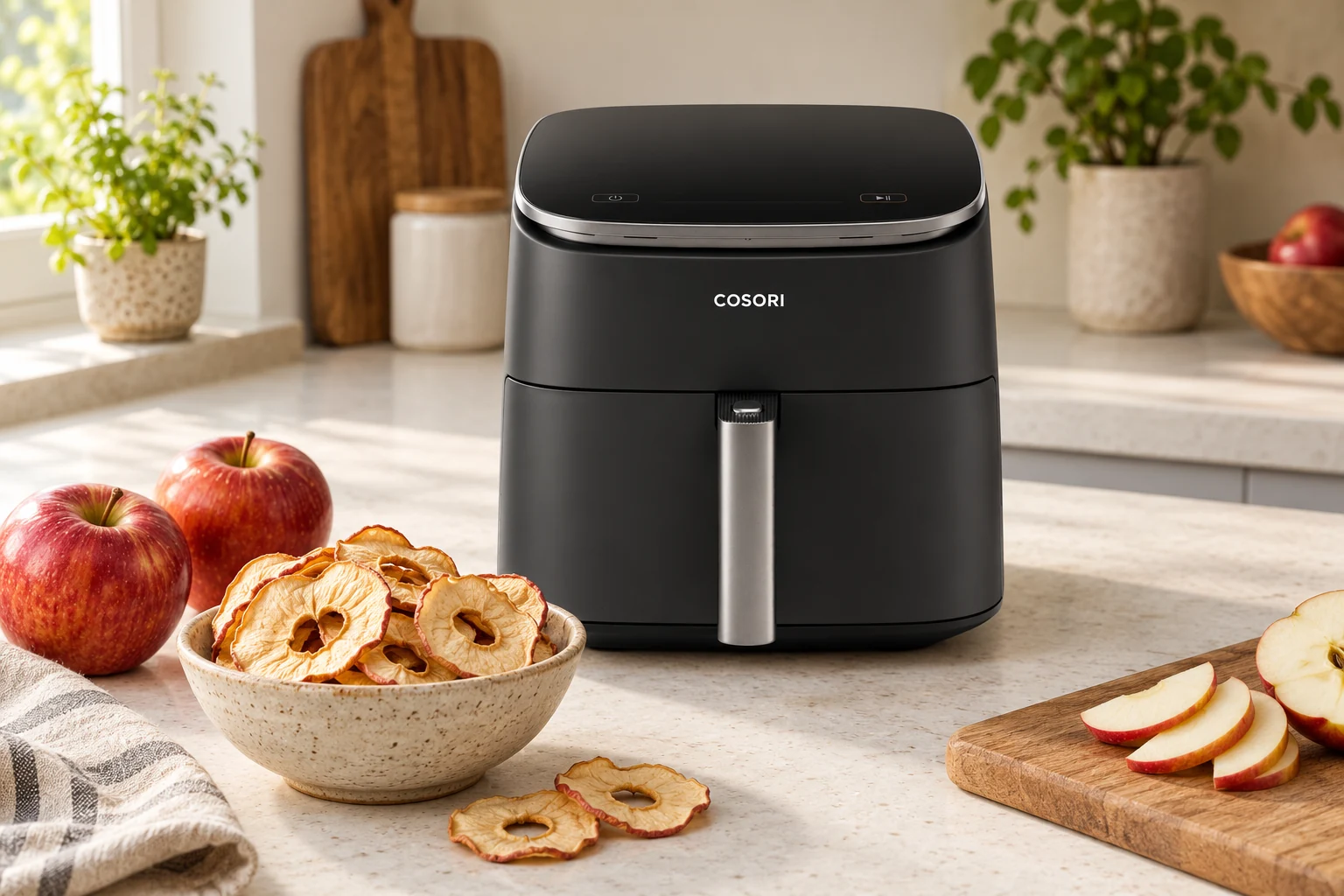
For example, COSORI’s US TurboBlaze 6-quart page identifies a Dehydrate function and lists an overall 90–450°F range and up to 24 hours. Its model identifier is CAF-DC601-KUS. Those are documented product specifications, not a promise about the results of an untested recipe, and they should not be transferred to a different similarly named model.
Check where the appliance must stand and how much ventilation space it needs. Do not wedge a drawer open, defeat an interlock or improvise a thermostat adjustment. If the required operating conditions are unsupported, use a suitable dehydrator or another validated method instead.
- One small batch of the chosen food Select a complete fruit, vegetable or herb drying method.
- Any pretreatment required by that method Do not omit blanching or substitute a time from another food.
- Compatible racks or liners, if specified Use only accessories permitted by the appliance instructions.
Yield varies with produce, trimming and final dryness. Record the weight of your own batch rather than assuming a fixed fresh-to-dried conversion.
Drying takes hours rather than the short cooking time associated with air frying. Use the selected recipe and exact appliance manual; there is no universal air-fryer drying time.
Three air fryers with a documented Dehydrate function
These US models have a manufacturer-listed drying function. Choose the format around your main cooking tasks, then confirm the exact mode settings and food method before drying. This is a feature comparison, not a hands-on performance ranking.
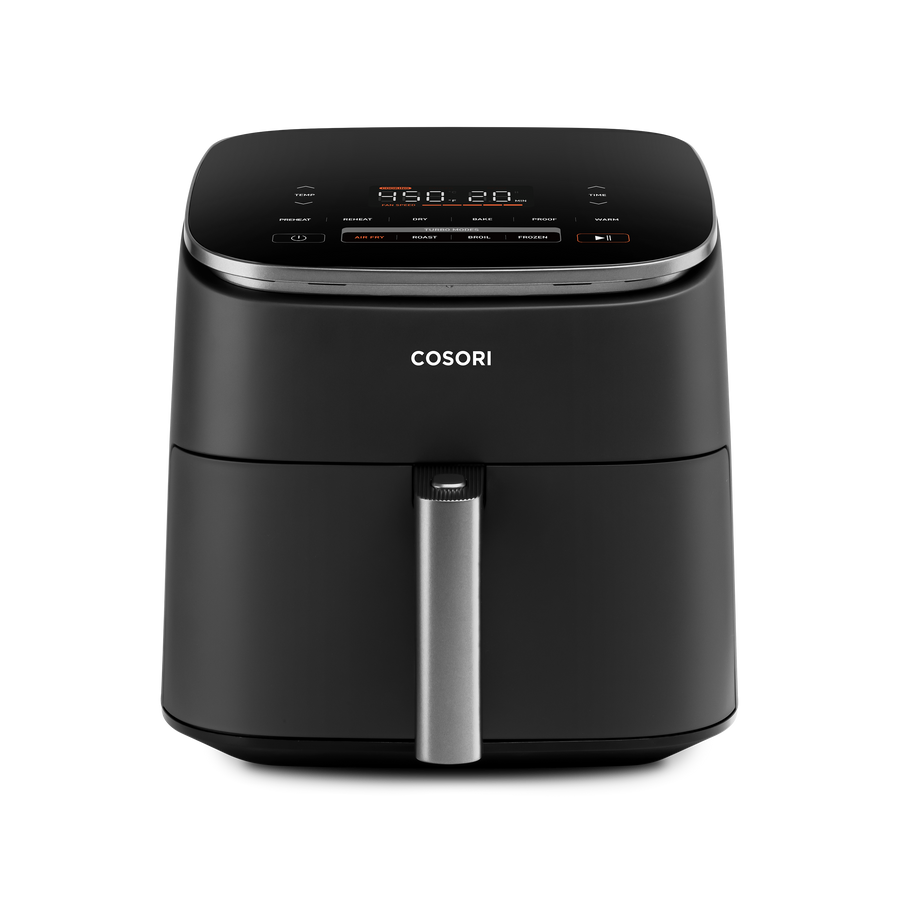
COSORI TurboBlaze 6QT · CAF-DC601-KUS
A basket air fryer with a documented Dehydrate function. A practical format for occasional small fruit batches alongside everyday cooking; check the mode settings and usable single-layer area.
View on Amazon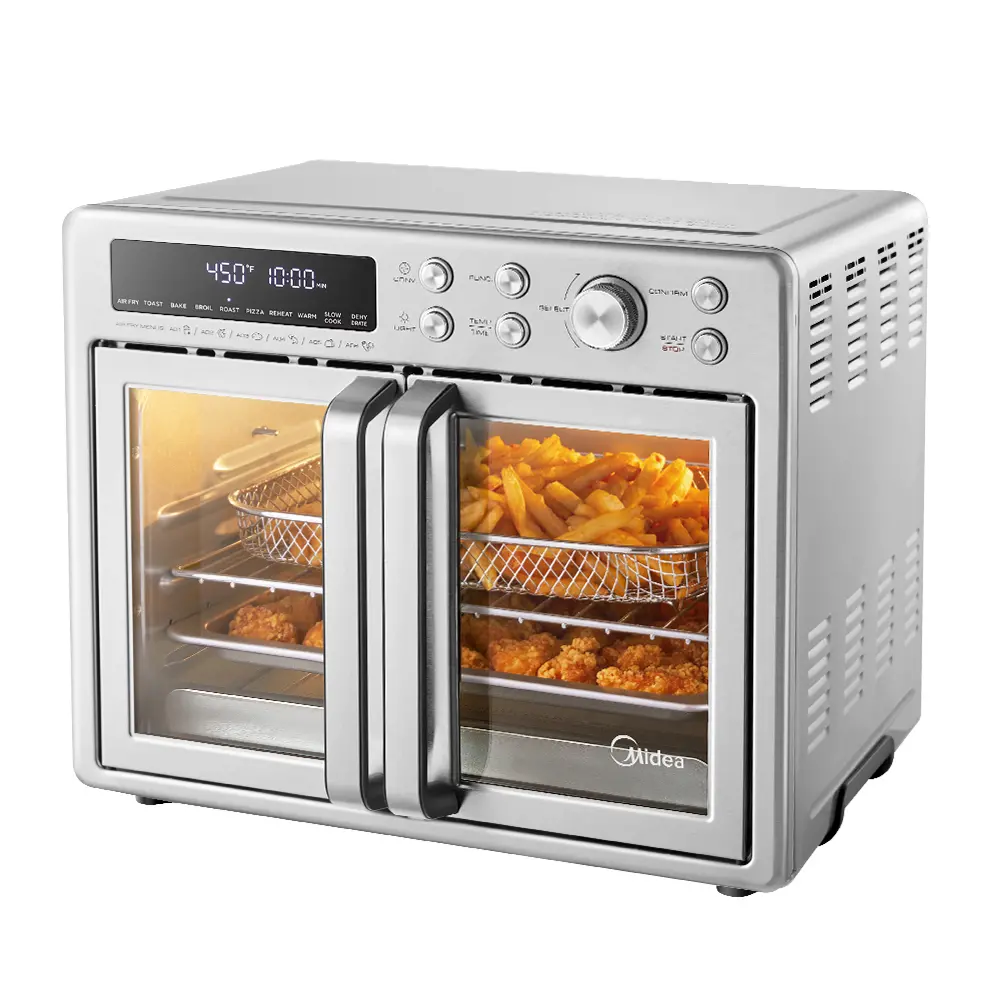
Midea Flexify · MET26C3AST
Midea lists Dehydrate for this exact oven model. Compare the permitted rack arrangement and drying settings with your intended food; the 26.4-quart cavity rating is not a measure of drying area.
View on Amazon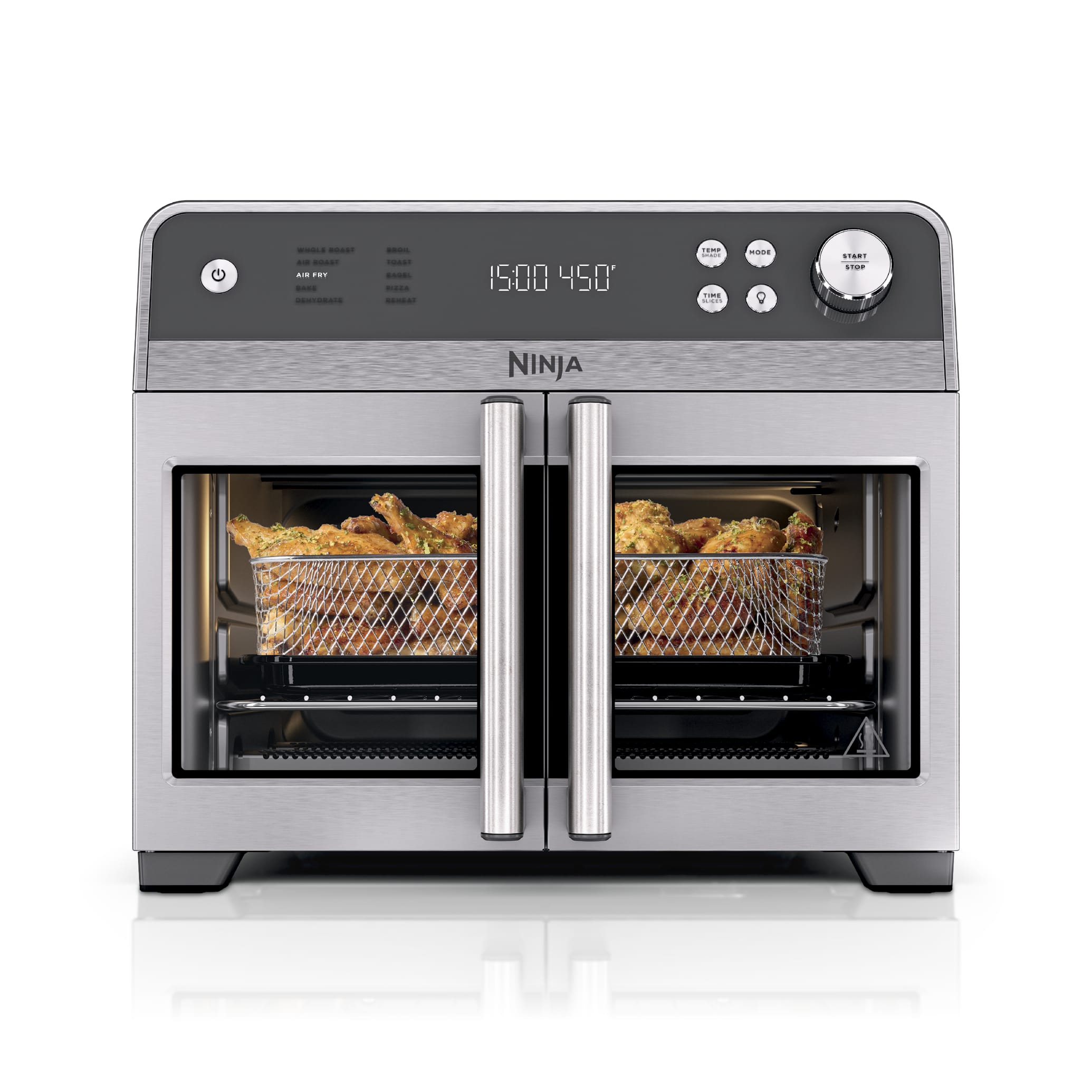
Ninja French Door Premier · FO101
A countertop oven whose manufacturer lists Dehydrate. Consider it when oven cooking is also part of your routine, then check the exact manual for supported food loading, temperatures and duration.
View on AmazonAffiliate links · Your price stays the same.
Compare more cooking formats in the nine-air-fryer comparison. If drying large harvests is your main goal, see the dedicated dehydrator alternatives below.
Measure drying area rather than basket volume
A deep basket may be excellent for another cooking task yet provide limited surface for one layer of slices. Lay the empty permitted rack or basket on the counter and imagine the actual food spread across it. That gives you a more useful batch estimate than the quart rating alone.
Extra racks can help only when they are intended for the model and leave the required airflow. Loose parchment or a poorly fitted liner can move toward the heating element, and a solid surface can prevent moisture from escaping where it needs to. Follow the accessory instructions instead of filling every available gap.
Start with a single food and a consistent cut. Photographing the arrangement or writing down the number of loosely covered trays can help you repeat it. The goal is a batch you can observe and understand, not a competition to fit in one more piece.
Five applications to explore separately
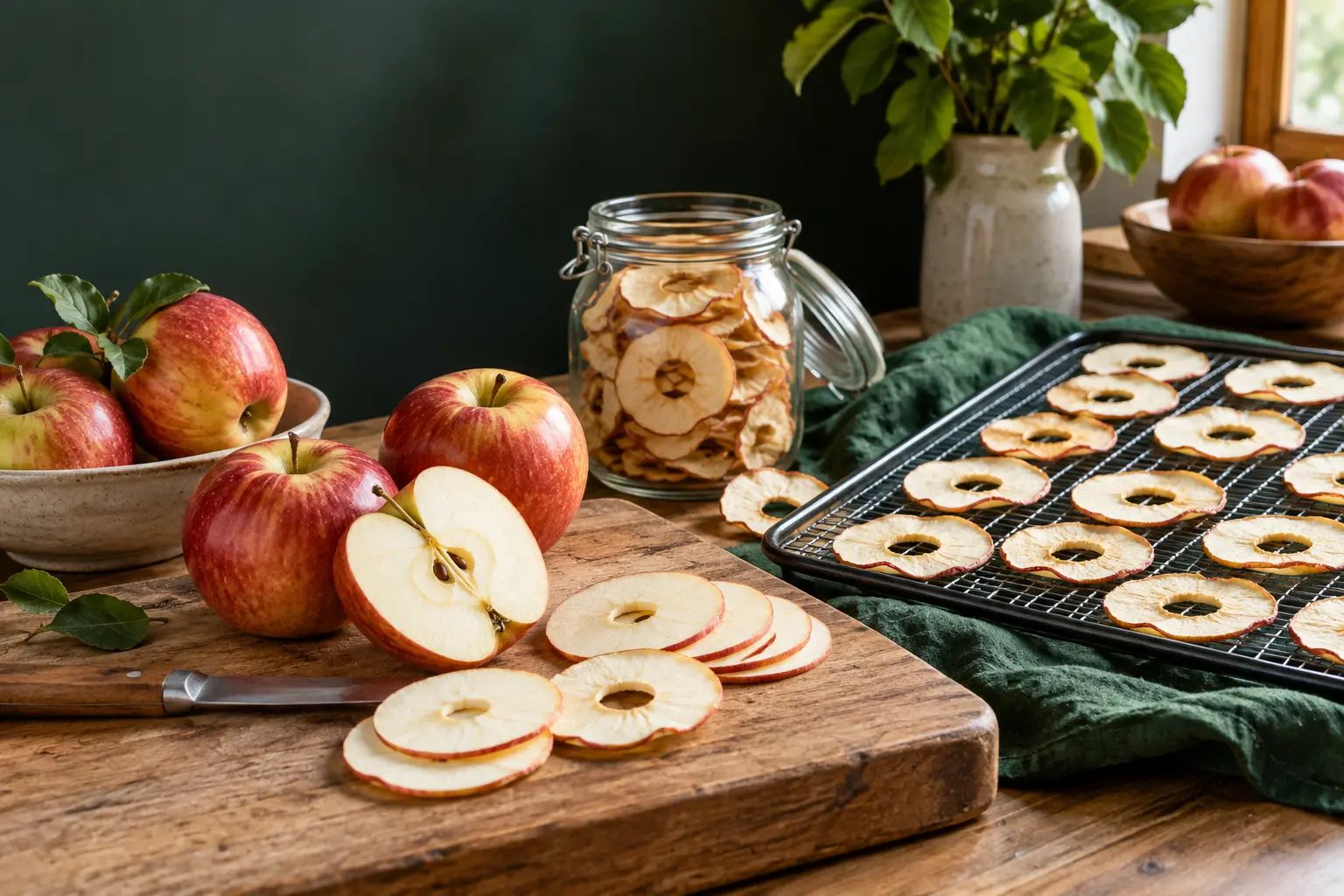
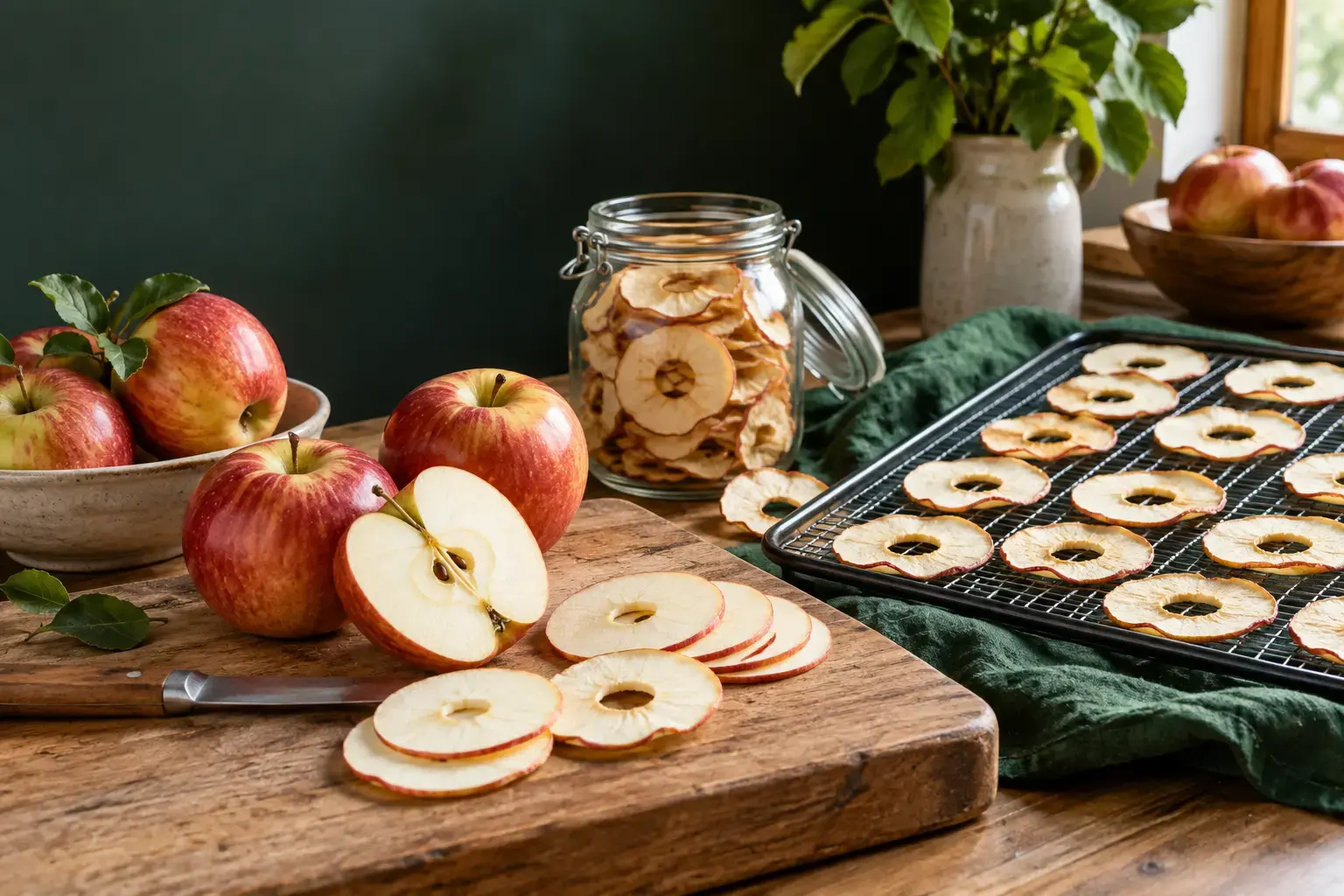
Apple rings: follow the apple preparation and finish. Even slices make a small trial easier to inspect. Plain dried apples are a different texture from fried chips.
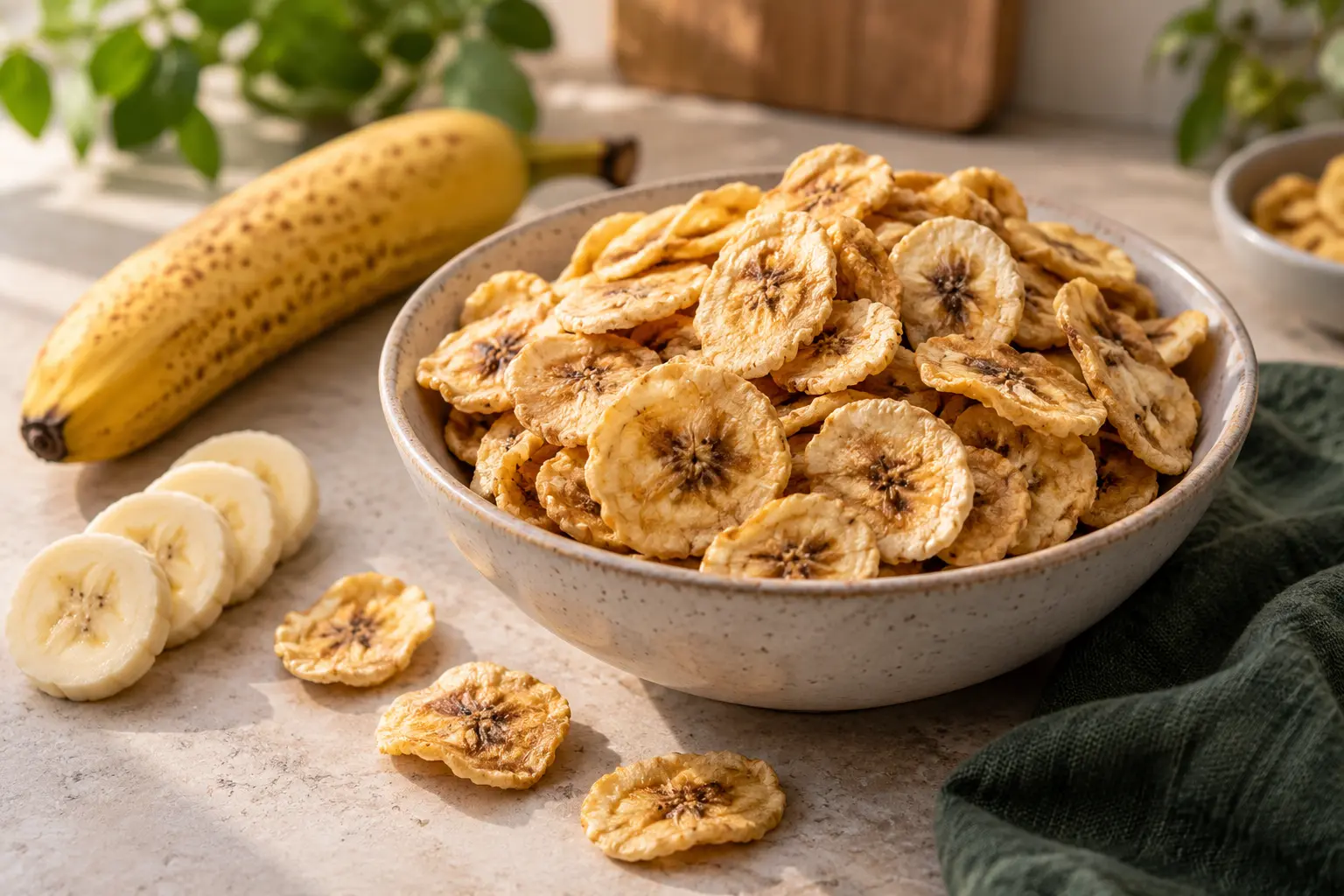
Banana slices: follow the banana-specific method. They can remain chewy; do not respond by using a hot cooking program to force a store-bought chip texture.
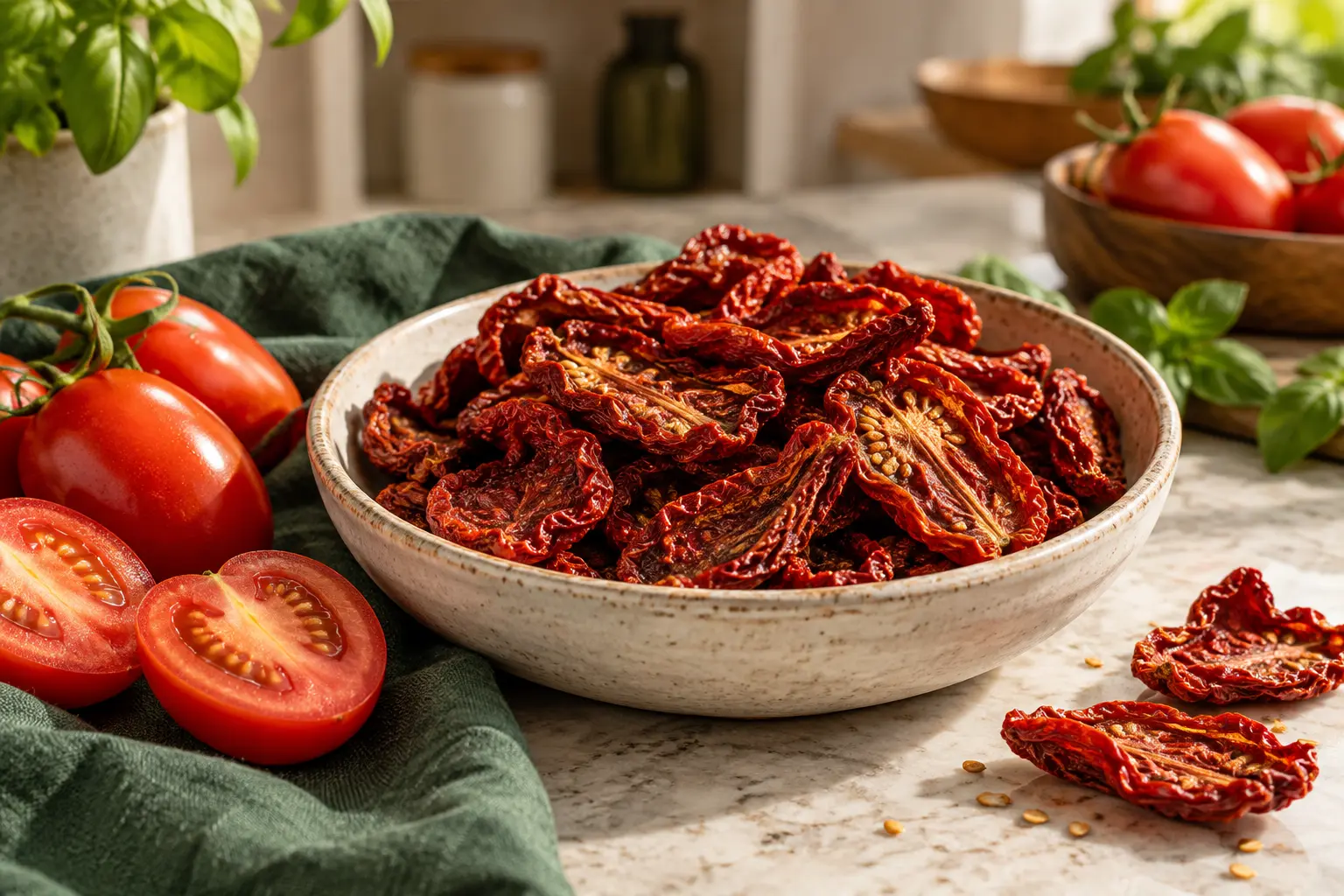
Tomato pieces: use the tomato guide and its handling directions. Keep the first trial plain, and do not add oil or create an oil-filled pantry jar from this appliance guide.
Carrot pieces: carrots require their own preparation and blanching method. Keep the specified cut, water or steam treatment, and dryness check together. A fruit preset does not decide those steps for you.
Herbs: these may require a lower range than your fruit project. NCHFP herb guidance uses 95–115°F in a dehydrator, with adjustments for humidity. If the air fryer cannot support the suitable setting and handling of lightweight leaves, choose another method.
A seven-step air-fryer drying plan
Identify the exact appliance
Read its US model instructions for dehydration, operating limits and accessories.
Choose one food method
Select a complete preparation and drying reference that matches the food.
Prepare evenly
Wash and cut consistently; carry out any specified pretreatment or blanching.
Load a small single layer
Use permitted racks or liners and maintain the required airflow and clearances.
Select supported drying settings
Use the documented mode and food-appropriate temperature; monitor according to the recipe and manual.
Check representative samples
Judge the selected food’s endpoint, including thicker pieces, rather than relying only on the preset.
Finish and store correctly
Carry out cooling, conditioning or other finishing steps for that food, then package according to its method.
Why a countertop appliance still needs monitoring
The small chamber does not make every drying project predictable. A different slice thickness, a fuller rack or a juicy fruit can change the result. Inspect the batch at appropriate intervals and follow the manufacturer’s directions for any turning or rack changes. Repeatedly opening it without a reason does not replace a useful check.
If edges darken while centers remain soft, investigate whether the selected program is too hot for the intended method. If some pieces remain damp beneath an overlap, correct the arrangement. These observations lead to different actions, so record what you see rather than shortening or lengthening a timer blindly.
Air fryer versus dehydrator: compare the work
For an occasional small batch, using a compatible air fryer avoids storing another appliance. The tradeoff is that you may occupy the machine when you would normally cook dinner in it. Think through the entire drying window before starting, especially if it is your main countertop cooking appliance.
A dedicated dehydrator offers a workspace organized around drying trays. That can be more comfortable when you preserve produce often or want to inspect multiple layers independently. More capacity only helps when you have the produce, preparation time and a plan to use the result. Our dehydrator comparison covers that separate equipment choice.
There is no measured energy comparison here. Electricity use depends on the exact model, load, cycling and total running time. Avoid assuming that the appliance with the smaller rated wattage necessarily uses less energy for your finished batch.
When a dedicated dehydrator makes more sense
For recurring harvest batches, compare a dedicated dehydrator with the area your air fryer actually provides. These existing US options belong to that alternative equipment decision; they are not air-fryer test winners.
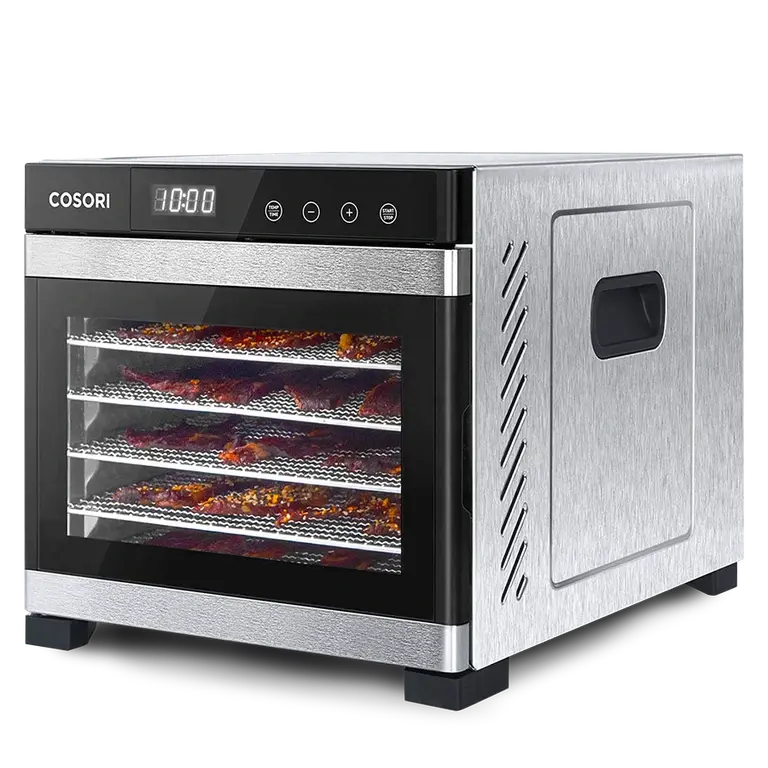
COSORI CP267-FD Food Dehydrator
A cabinet alternative when apple slices regularly exceed your air fryer’s single-layer area. Compare tray dimensions and the space needed to open the front.
View on Amazon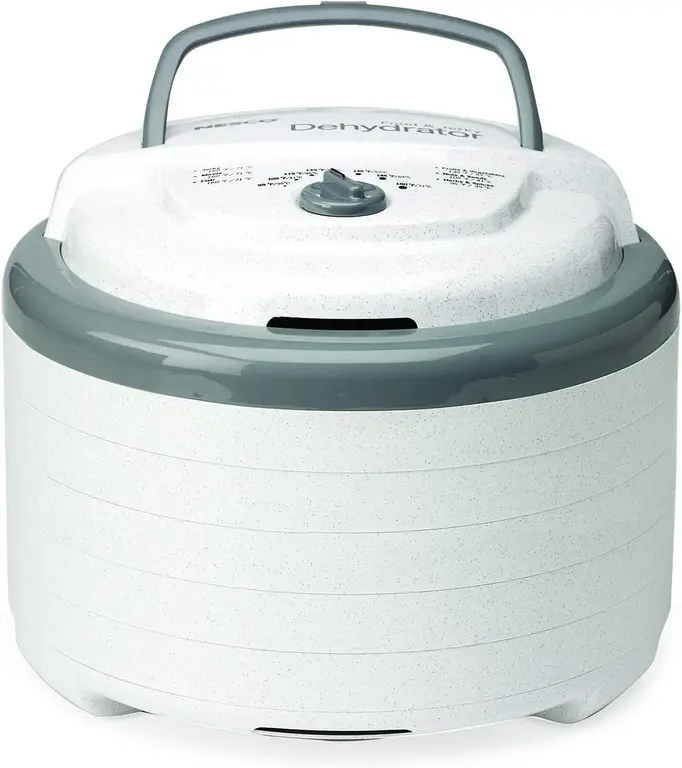
NESCO FD-75A Snackmaster Pro
A stackable dehydrator alternative for repeated fruit or vegetable batches. Compare tray access and usable drying area with the air fryer you already own.
View on Amazon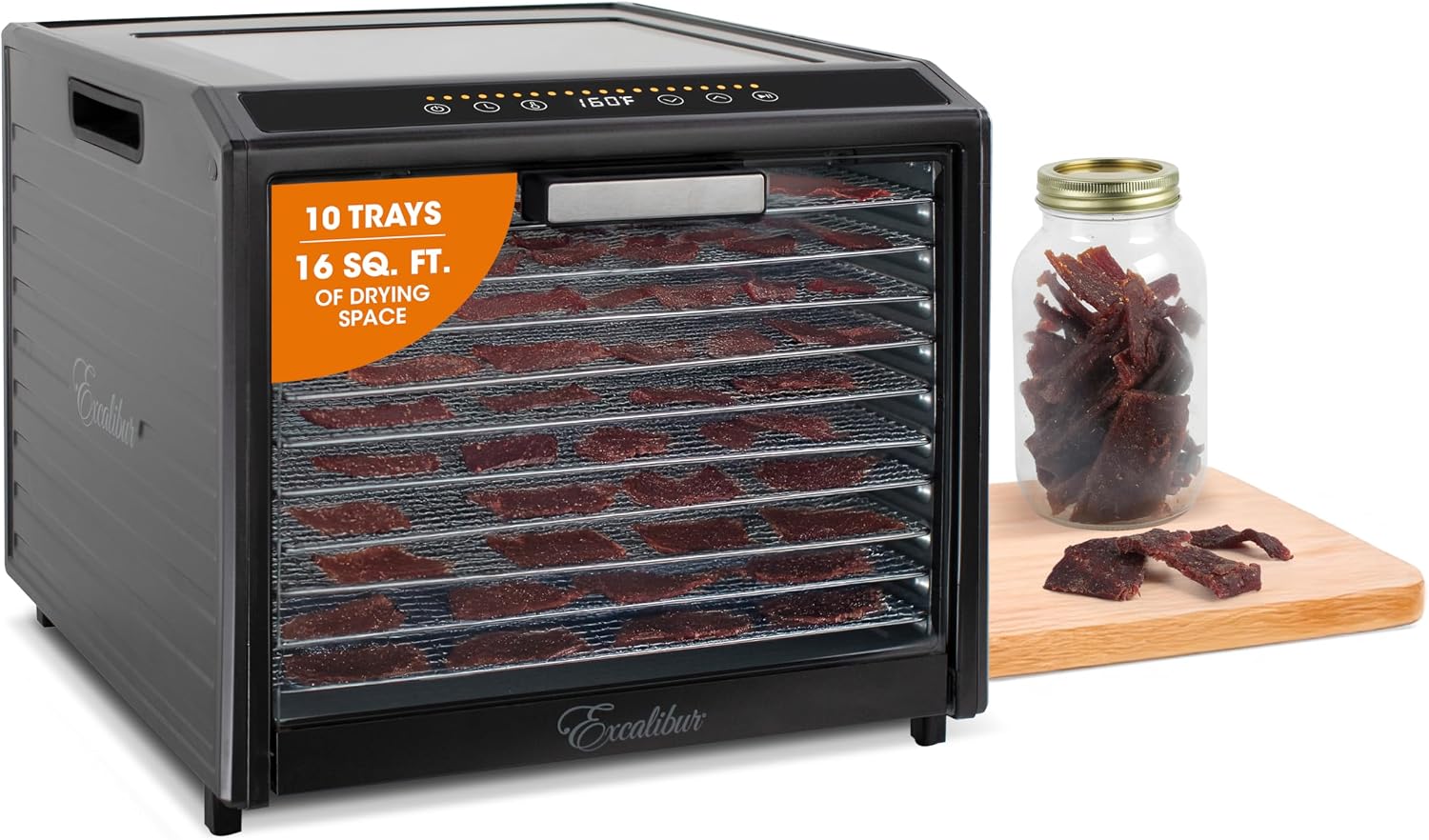
Excalibur Performance Series 10-Tray
A ten-tray alternative for regular larger harvests. Consider it when drying area is the limitation; an occasional small air-fryer batch does not require this capacity.
View on AmazonAffiliate links · Your price stays the same.
For the wider equipment decision, see our food dehydrator comparison. For process basics, read dehydrating for beginners.
Storage begins with the food, not the appliance name
Once the batch is finished, the storage rules belong to the food you made. Pear or apple slices may need a fruit-conditioning step; herbs have their own dry endpoint; a cooked mixture may remain perishable. Calling something air-fryer dried does not create a universal pantry category.
Allow the required cooling and finish before closing containers. Label the food and date, keep it away from moisture and inspect it during use. A vacuum seal does not certify dryness or remove the need for proper handling. If the first batch is small, ordinary suitable containers may be all the packaging equipment you need.
Keep jerky out of your first fruit trial
Meat and poultry require separate food-safety processes. A manufacturer may mention jerky among a mode’s uses, but that short feature label is not the complete instruction for controlling pathogens. Do not put raw chicken beside apple rings and apply the same settings to both.
Learn the appliance with a simple produce project first. If you later make jerky, use an appropriately validated meat process and equipment capable of meeting it. The general workflow on this page is deliberately a planning guide, not a meat-preservation recipe.
Frequently asked questions
Can every air fryer dehydrate?
No. Check the exact model for an appropriate temperature range, operating duration, airflow and supported drying instructions.
Does “Keep Warm” mean “Dehydrate”?
Not automatically. A program name does not establish the temperature, fan behavior and intended use needed for a drying method.
Can I use parchment to stop small pieces falling through?
Only use a liner or accessory permitted for the exact appliance and function. Loose or poorly fitted material can interfere with airflow or approach the heater.
Are air-fryer banana chips the same as fried banana chips?
No. Plain dried banana often has a chewy texture. A fried snack uses a different process and does not provide a useful dryness target.
Should I buy an air fryer just for drying?
Compare the actual tray area and operating limits with a dedicated dehydrator first. An air fryer is a stronger fit when you also want its other cooking functions.
Sources and editorial notes
Prepared from the linked primary sources; this is not a personally tested recipe or product test. Product options are compared by their stated function and fit for this guide; they have not been tested by Einfach Haltbar. Accuracy cannot be guaranteed; please verify the cited guidance.
- COSORI US: TurboBlaze 6-Quart Air Fryer, CAF-DC601-KUS
- NCHFP: Food Dehydrators
- NCHFP: Drying Herbs
- University of Alaska Fairbanks: Drying Fruits & Vegetables
- Midea US: Flexify MET26C3AST
- Ninja: French Door Premier FO101
AI-generated contextual illustration; not a photograph of our recipe or appliance tests.