RECIPE · QUICK PICKLES
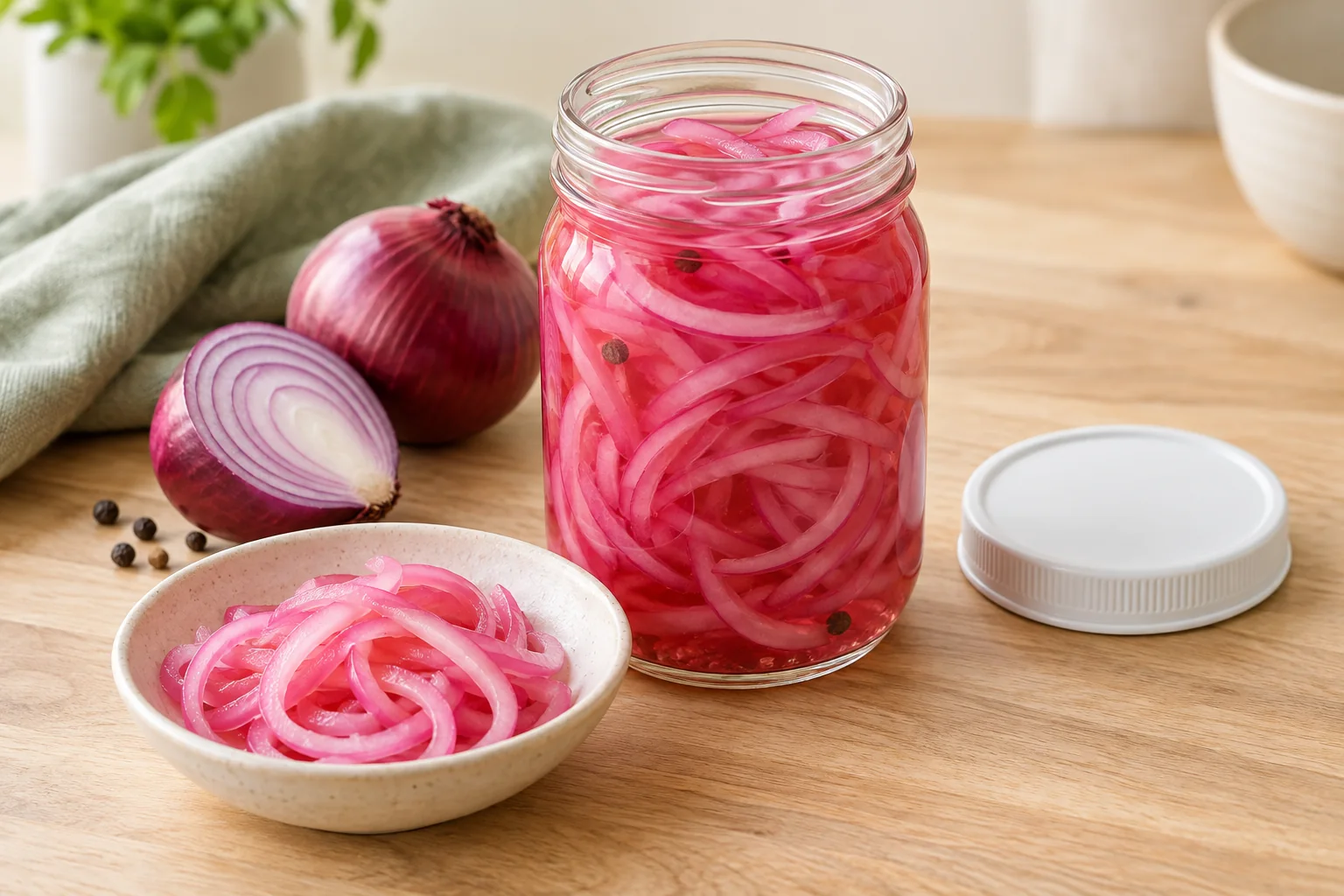
Quick pickled red onions turn a raw red onion into a bright, tangy refrigerator condiment with a simple vinegar brine. The goal is not pantry storage: this recipe stays chilled and is designed for tacos, burgers, sandwiches, grain bowls, salads, barbecue, eggs, and avocado toast.
The method below uses sour refrigerator-pickle brine proportions published by University of Maine Cooperative Extension, scaled to a practical one-jar batch: equal parts water and vinegar labeled 5% acidity, canning/pickling salt, and a small amount of sugar. Oregon State University Extension also points readers to its refrigerator-pickled-vegetable method specifically when suggesting pickled red onions. The jar stays refrigerated; for this version, allow 1–2 days for flavor development and use it within two weeks.
Why this quick pickled red onion method works
Quick pickling is direct acidification: vinegar supplies the acidity immediately, while refrigeration controls storage. That is fundamentally different from fermentation, where microbes produce acid over time, and from shelf-stable canning, where a tested formula is paired with a validated heat process.
Red onions are especially useful for this method because the vinegar softens their raw bite while their natural red-purple pigments shift toward vivid pink in an acidic environment. Thin slices expose more surface area to the brine, so seasoning and color develop more evenly.
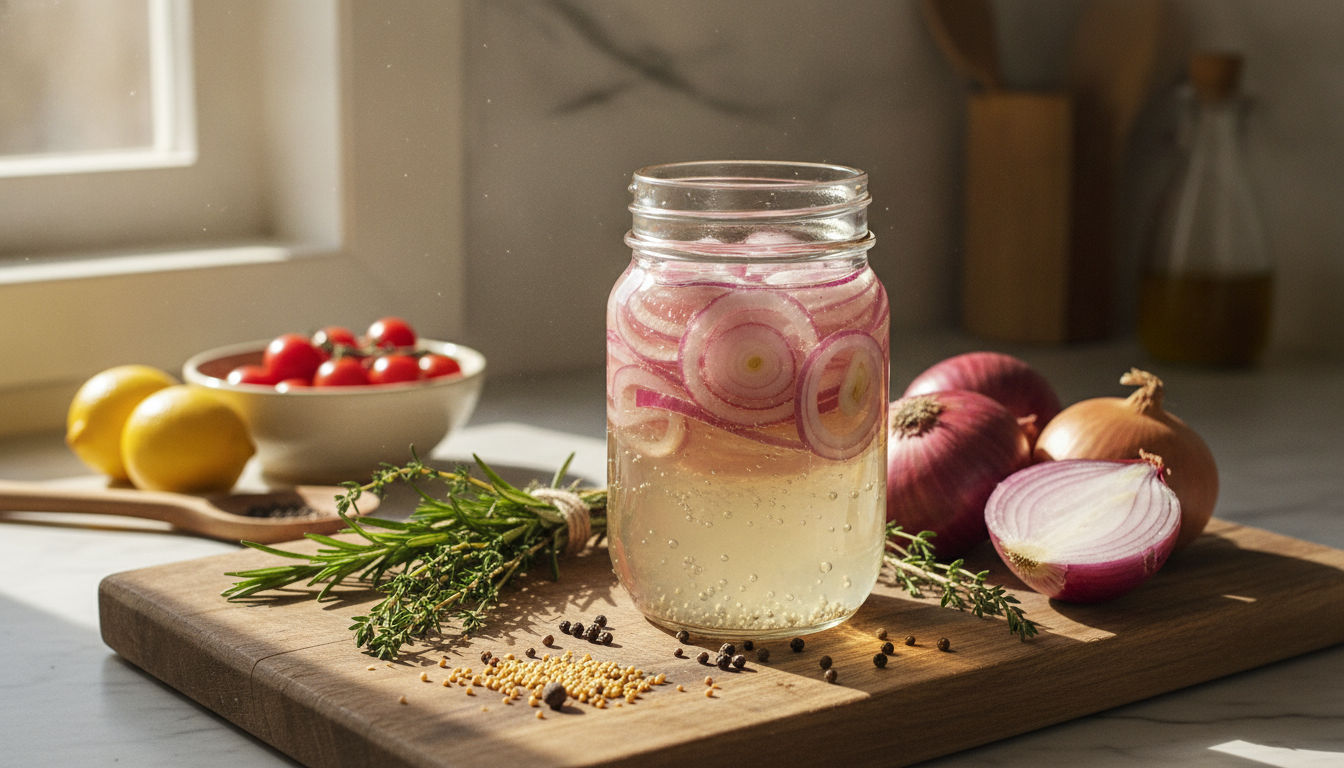
Ingredients for quick pickled red onions
This small batch uses a conservative refrigerator-pickle brine and fits comfortably in one pint-size heatproof jar.
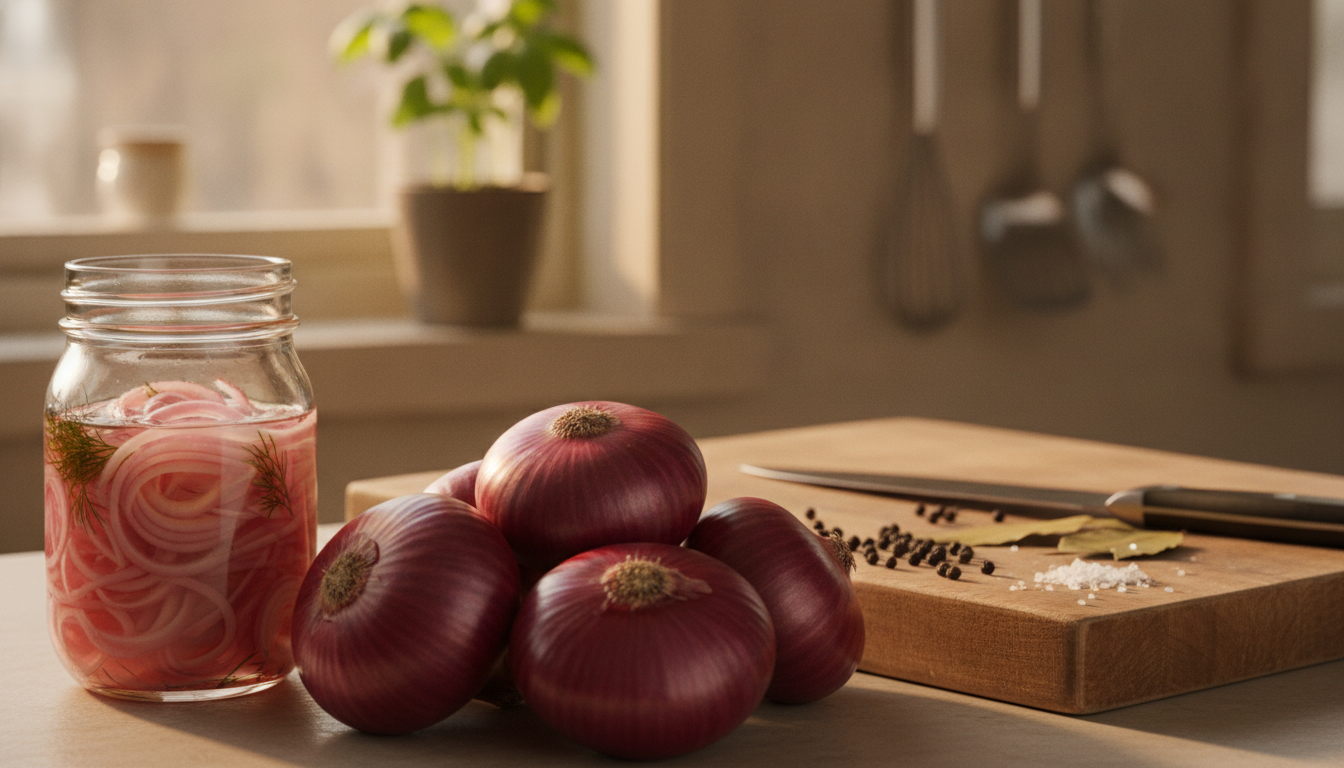
The small amount of sugar rounds the vinegar rather than making the onions noticeably sweet. If you want a sugar-free variation, see the FAQ below and keep the batch firmly in the refrigerator-pickle category rather than treating any change as a canning formula.
Which vinegar is best?
Distilled white vinegar gives the cleanest, sharpest flavor and a visually clear brine. Apple cider vinegar gives a rounder, fruitier flavor. For the recipe as written, use a commercial vinegar labeled 5% acidity. University of Maine’s refrigerator-pickle guidance lists both white and apple cider vinegar at that acidity.
Other vinegars vary in acidity and flavor. If the label does not clearly state 5% acidity, do not substitute it into this recipe. And do not use a refrigerator-pickle vinegar swap as a basis for shelf-stable canning.
Hot brine vs. cooled brine: what should you use?
For this recipe, use the hot brine method. The cited University of Maine refrigerator-pickle method brings the brine to a boil, boils it for 2 minutes, then fills the packed jars and refrigerates them. That is the process this recipe follows.
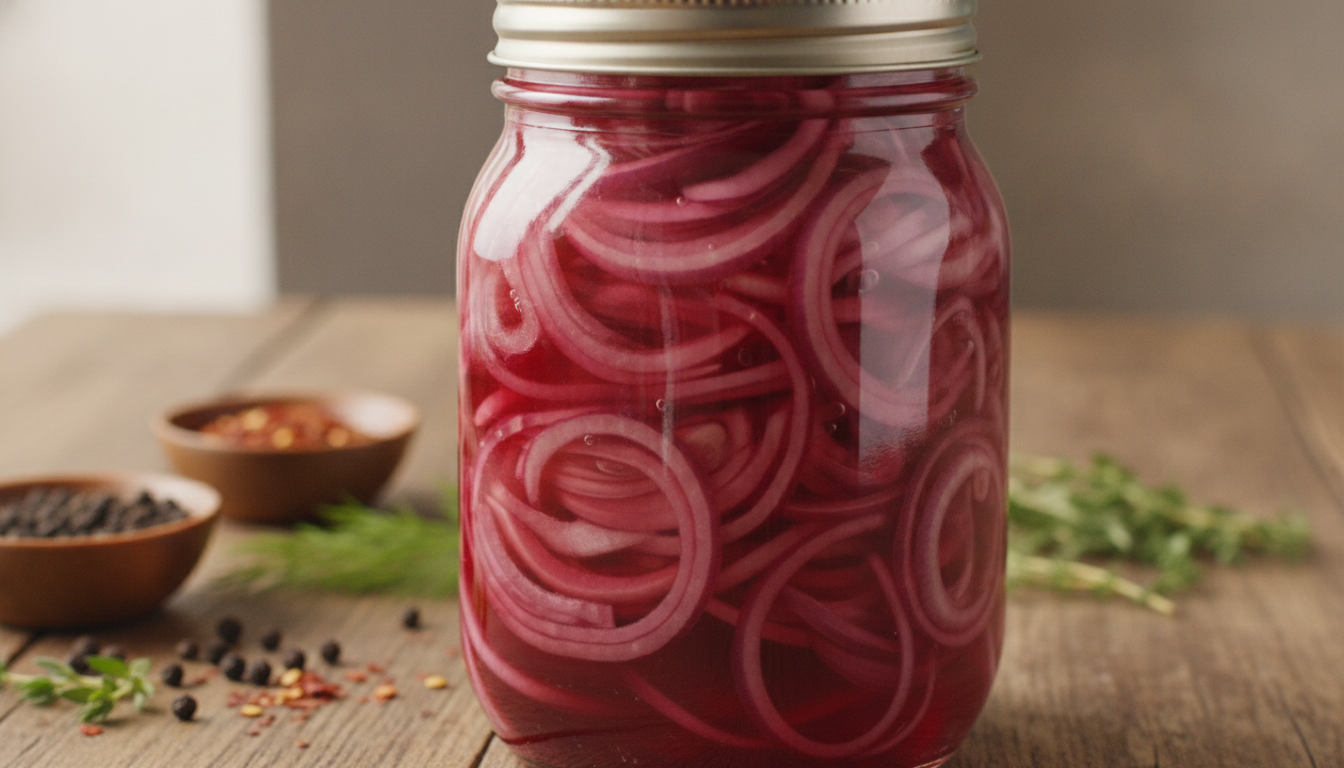
A cooled-brine technique is also common in quick-pickle recipes because less heat can preserve a firmer raw-onion snap. It is a different preparation method, though. If you are following the recipe on this page, use the hot brine steps below rather than mixing the two approaches.
| Approach | Use it when | Texture expectation |
|---|---|---|
| Boiled hot brine | Following the recipe on this page | Crisp-tender, with the raw bite mellowing as the jar rests |
| Cooled brine | Following a dedicated cooled-brine recipe | Often firmer because the onion receives less heat |
Table notes
How thin should you slice red onions for pickling?
Uniformity matters more than chasing an exact measurement. A practical target is around ⅛ inch / 3 mm or a little thinner: thin enough to season evenly, but not so paper-thin that the slices collapse immediately. Rings and half-moons both work.
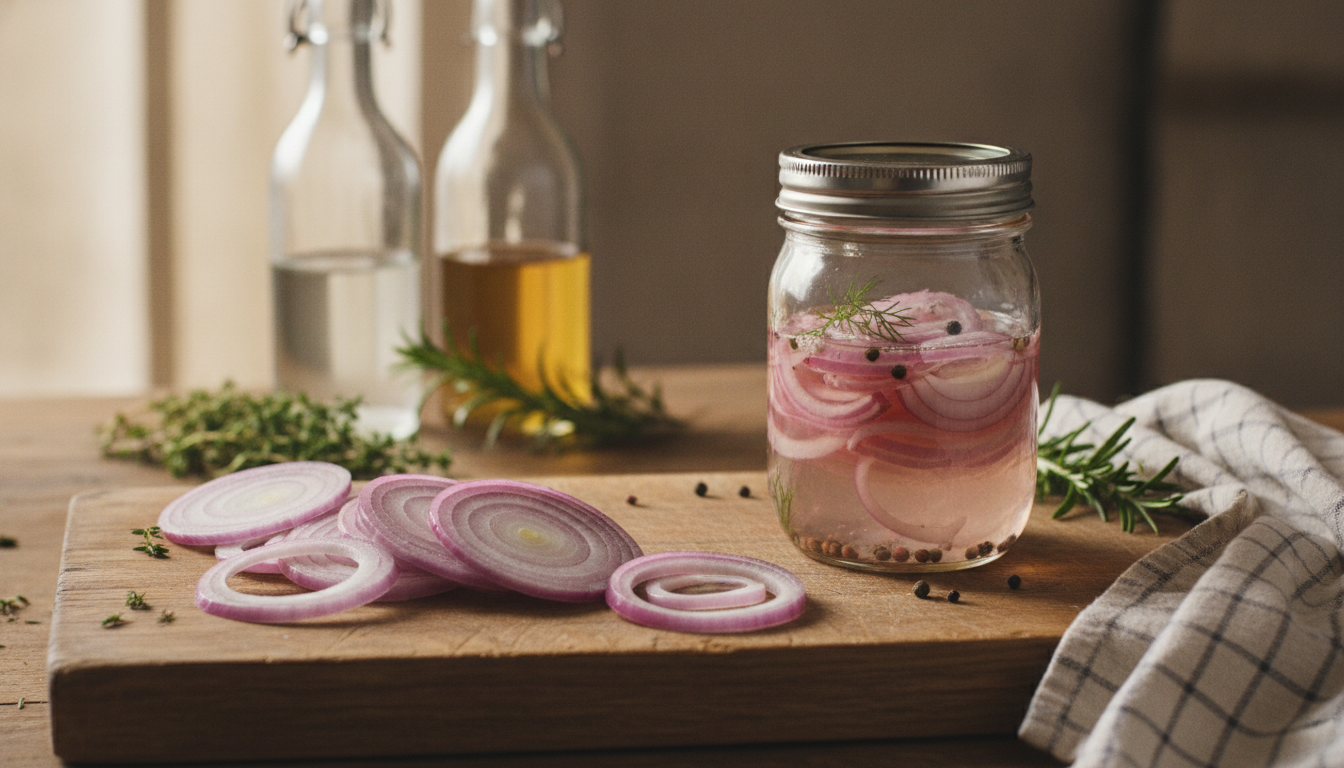
A sharp knife is completely sufficient for one onion. A mandoline becomes useful when repeatability matters across several batches. If you use one, follow the manufacturer’s guard and safety instructions; speed is not worth hand exposure to the blade.
Three practical ways to prep the onion
A sharp knife is enough for one batch. A mandoline earns its place when you want fast, repeatable thin slices.

Gramercy Mandoline Slicer — Black Edition
A direct fit when you want repeatable thin onion rings. Use the hand protection supplied by the manufacturer and keep fingers away from the blade path.
View on Amazon
ONCE FOR ALL Safe Mandoline Slicer Plus
An enclosed-style slicing option for fast, uniform cuts when you make pickled onions often. Follow the manufacturer’s operating and cleaning instructions.
View on Amazon
imarku 7-Inch Santoku Knife
A sharp knife is all you need for a one-onion batch. A Santoku gives good control for thin half-moons when you prefer a knife over a mandoline.
View on AmazonAffiliate links · Your price stays the same.
How to make quick pickled red onions, step by step
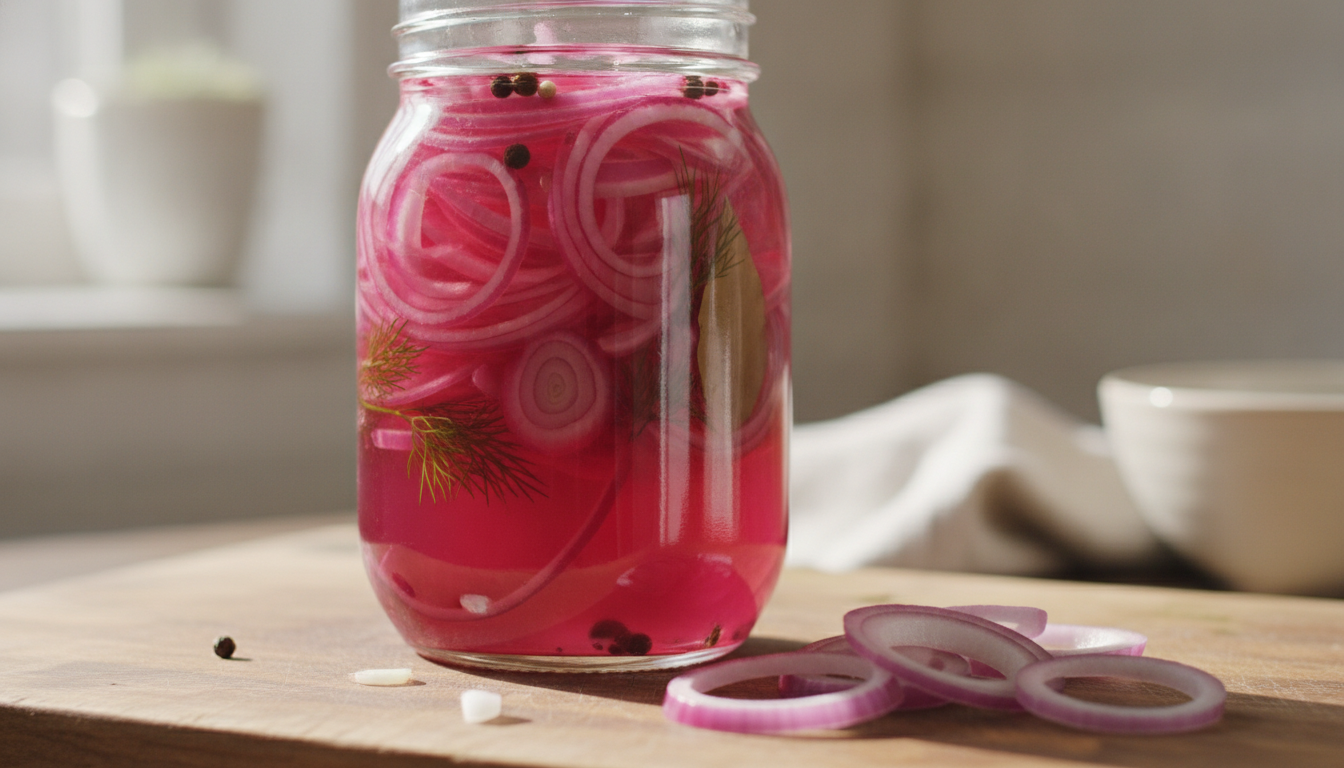
- Wash the jar. Use a clean, heatproof pint-size canning jar or a similar heatproof container with a lid.
- Slice and pack the onion. Peel the onion and slice it evenly. Pack the slices snugly into the jar without crushing them.
- Make the sour brine. Combine ½ cup 5%-acidity vinegar, ½ cup water, 1½ teaspoons canning/pickling salt, and 1 teaspoon sugar in a small saucepan.
- Boil for 2 minutes. Bring the brine to a boil and let it boil for 2 minutes, following the cited extension method. Remove from the heat.
- Fill the jar. Carefully pour the hot brine over the onions, leaving roughly ½ inch of space at the top. The slices should be thoroughly surrounded by brine.
- Cover and refrigerate. Put on the lid and refrigerate. This is not a counter-storage or pantry-storage recipe.
- Give the flavor time. The extension method allows 1–2 days for flavor development before serving. Use the batch within two weeks.
When are quick pickled red onions ready to eat?
Thin onions begin changing as soon as they meet the brine, so an earlier taste may already seem tangy. For the best-developed flavor, plan on 1–2 refrigerated days, which matches the University of Maine refrigerator-pickle guidance used for the brine and storage method here.
If you need them for a specific meal, making the jar the day before is the most reliable plan. The onion bite mellows, the color usually intensifies, and the brine flavor has time to move through the layers.
Why do pickled red onions turn bright pink?
Red onions contain anthocyanin pigments that change appearance as the environment becomes more acidic. Vinegar pushes the color toward the brilliant pink associated with refrigerator pickled onions.
Color is a quality cue, not a safety test. One onion may turn neon pink quickly while another stays deeper purple-pink. Variety, pigment concentration, slice thickness, and time can all change the visual result.
How to keep pickled red onions crisp
- Start with firm onions. Soft or dehydrated onions cannot become crisp pickles.
- Slice evenly. Mixed thickness creates mixed texture.
- Do not over-handle the slices. Pack them snugly, but do not mash them into the jar.
- Keep the jar refrigerated. This is a refrigerator pickle from the start.
- Make smaller batches. The two-week use window rewards making only what you will realistically eat.
If maximum raw crunch is your priority, a dedicated cooled-brine recipe may suit you better. This recipe uses the boiled-brine method throughout so the steps stay clear and consistent.
How to store quick pickled red onions
Keep the jar refrigerated and use the onions within two weeks, matching the University of Maine refrigerator-pickle guidance used for this recipe. Use a clean utensil when taking onions from the jar and close the lid again promptly.
When should you throw the batch away?
Discard the batch without tasting if you see obvious mold, a slimy surface or texture, or notice a strong unexpected off odor. Unexpected gas or active fizzing in a vinegar quick pickle is also a reason to stop and discard rather than troubleshoot by tasting.
Cloudiness alone is not a perfect spoilage test. University of Maine notes that some salts and ground spices can cloud pickle brine. Judge the whole batch rather than treating cloudiness by itself as proof of spoilage.
Common pickled red onion problems and fixes
| Problem | Likely reason | What to change next batch |
|---|---|---|
| Too soft | Very thin slices, soft starting onion, or more heat exposure than you prefer | Use firmer onions and slightly thicker, even slices |
| Too sour | Your palate prefers a sweeter balance | Keep the vinegar/water ratio and adjust sweetness rather than reducing vinegar at random |
| Too salty | Salt measurement or salt type differed | Use canning/pickling salt and level measurements |
| Not very pink | Normal pigment variation or the slices need more time | Use fresh red onion, slice evenly, and judge flavor before color |
| Cloudy brine | Ground spices or salt additives can contribute | Use canning/pickling salt and whole spices for a cleaner-looking brine |
Table notes
A batch that simply tastes more sour, salty, or bitter than you prefer is a flavor problem, not automatically a spoilage diagnosis. Separate preference issues from genuine discard signs.
Flavor variations
Once the baseline recipe is familiar, the easiest variations are aromatic rather than structural. Keep the vinegar/water/salt framework intact and change the accents.
- Spicy: add a few chile flakes or a small amount of sliced jalapeño.
- Peppery: add whole black peppercorns.
- Coriander-forward: add whole coriander seed.
- Garlic: add a small sliced or lightly crushed clove.
- Herbal: try a small sprig of dill, oregano, or another herb that fits the meal.
These additions change flavor, not preservation category. The jar is still a refrigerator pickle and still follows the same chilled-storage rule.
What to eat with pickled red onions
The best use case is contrast: the onions bring acidity, color, and crunch to foods that are rich, smoky, creamy, or otherwise heavy.
- Tacos and burritos: beef, carnitas, fish, beans, roasted vegetables.
- Burgers and sandwiches: especially with cheese, mayo, or richer meats.
- Barbecue: pulled pork, brisket, grilled sausages, or smoky plant-based mains.
- Salads and grain bowls: use a forkful as the sharp, colorful element.
- Avocado toast and eggs: acidity balances creamy textures.
- Nachos, quesadillas, and bowls: add them after cooking so the crunch remains noticeable.
Useful gear for faster, cleaner batches
You do not need special equipment to make this recipe. The highest-value tools are the ones that solve a specific task: even slices, a stable prep surface, or a jar that matches the batch size. Below are practical options for slicing, prep, and refrigerator storage.
Tools for steadier prep or chopped variations
These are optional helpers. The choppers are for diced onion variations rather than the classic thin rings used in the base recipe.

Extra-Large Onion Holder for Slicing
A simple aid for holding an onion steady while making knife cuts. It is not a mandoline and it will not create the same continuous ring-style slices.
View on Amazon
Titanium Cutting Board — 16 × 11 in
A roomy prep surface for slicing onions and keeping wet ingredients contained. Use whichever stable, clean board you already own if it works well.
View on Amazon
Inspire Black Nitrile Disposable Gloves
Optional for handling chiles, garlic or messy prep. Gloves do not replace handwashing and are not required for slicing a plain red onion.
View on AmazonAffiliate links · Your price stays the same.

Fullstar Pro Original Vegetable Chopper & Spiralizer
Useful for diced or chopped onion prep, not for the classic thin rings shown in this recipe. Better suited to relish-style or chopped quick-pickle variations.
View on Amazon
Ourokhome 500 ml Manual Food Processor
A pull-string chopper for small diced pieces. Use it for chopped onion variations, not when you want the thin rings or half-moons typical of quick pickled red onions.
View on AmazonChoose a jar size that matches the batch
For the one-onion recipe above, a pint jar is the most natural fit. Quart and half-gallon jars make sense only when you intentionally scale the ingredients and have refrigerator space for the larger batch. A larger jar does not make the recipe shelf-stable.
Choose the jar size to match the refrigerator batch
The pint jar is the natural fit for the recipe above. Larger jars only make sense when you scale every ingredient proportionally and keep the batch refrigerated.

Ball Regular Mouth Pint 16 oz Mason Jars — 8 Pack
The closest match to the one-onion batch in this guide. Here the jar is used for refrigerator storage; the lid and band do not make the recipe shelf-stable.
View on Amazon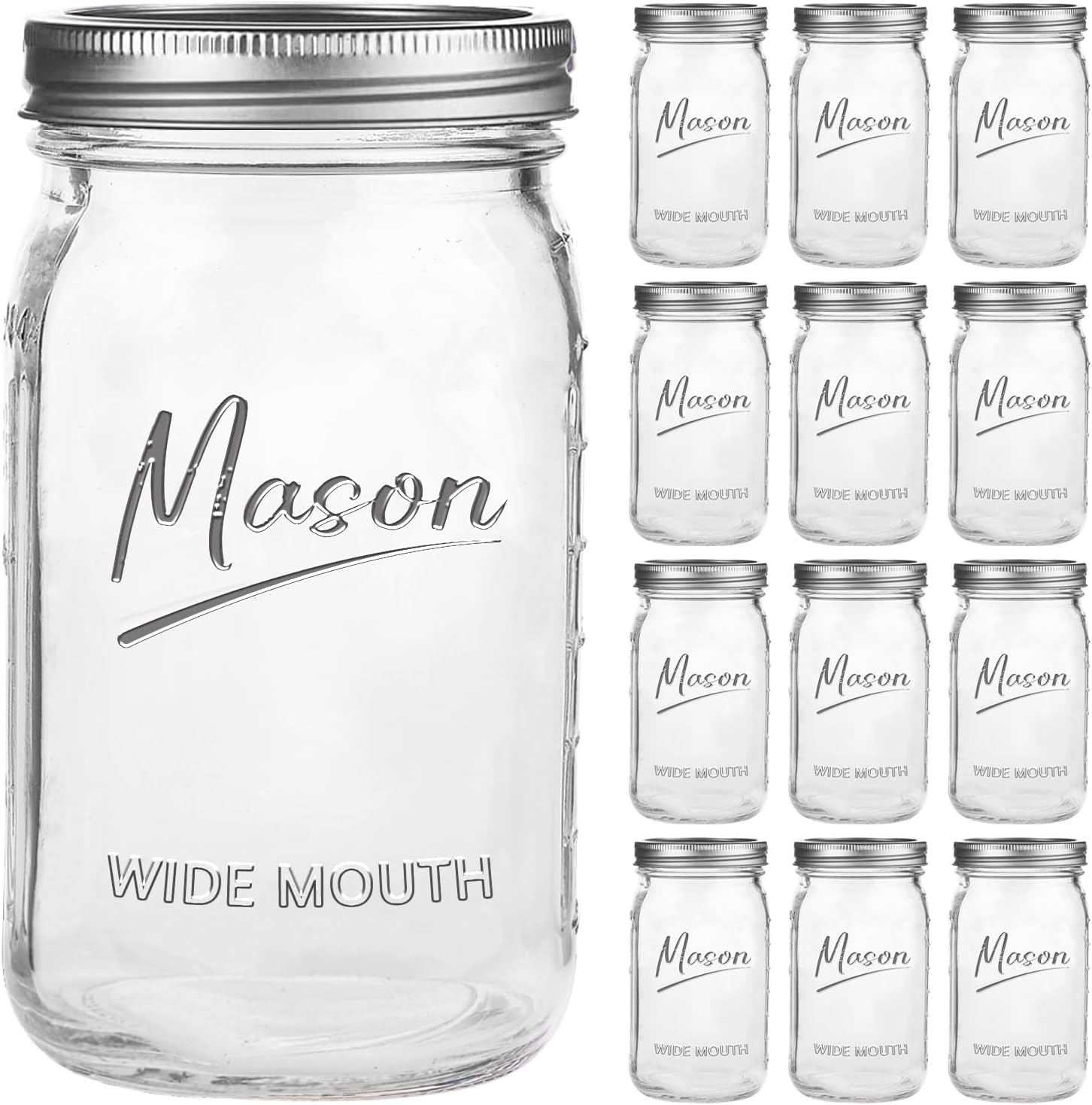
32 oz Wide Mouth Mason Jars — 12 Pack
A quart-size option if you intentionally scale the whole refrigerator recipe. Keep the scaled jar refrigerated and maintain the recipe proportions.
View on Amazon
Ball 64 oz Wide Mouth Jars — 6 Pack
For large refrigerator batches only. A half-gallon jar needs much more brine and fridge space, and jar size never substitutes for a tested canning process.
View on AmazonAffiliate links · Your price stays the same.
Quick pickles vs. fermentation vs. canning
These three methods can all produce tangy vegetables, but they are not interchangeable. The simplest way to avoid confusion is to match the method name to the process actually used.
| Method | Where acidity comes from | Typical storage logic | Use this site section |
|---|---|---|---|
| Quick refrigerator pickles | Vinegar added directly | Refrigerated | Quick Pickles |
| Fermentation | Microbial fermentation in a controlled salt/brine process | Recipe-specific; often refrigerated after active fermentation | Fermentation |
| Shelf-stable canning | Recipe-defined ingredients paired with a tested heat process | Pantry only after the complete tested process | Canning guides |
Table notes
If you want a living salt-brine method, go to the Fermentation guides. If your goal is room-temperature pantry storage, use a current tested recipe in Canning & Preserving instead of adapting this refrigerator batch.
FAQ
Quick pickled red onions: common questions
How long do quick pickled red onions last in the refrigerator?
For this recipe, keep the jar refrigerated and use it within two weeks. The cited University of Maine refrigerator-pickle guidance uses the same two-week window.
Can I use apple cider vinegar instead of white vinegar?
Yes, when it is a commercial vinegar labeled 5% acidity. The cited extension sour-brine formula lists both white and apple cider vinegar at 5% acidity.
Can I make pickled red onions without sugar?
This recipe contains a small amount of sugar for flavor balance. If you omit it, treat that as a refrigerator flavor variation, keep the batch refrigerated, and do not infer that the altered formula is appropriate for shelf-stable canning.
Are quick pickled red onions fermented?
No. Quick pickles receive acidity directly from vinegar. Fermentation develops acidity through microbial activity in a controlled salt or brine process.
Why are my pickled red onions not bright pink?
Color varies naturally. Acid affects the onion’s anthocyanin pigments, but onion variety, pigment level, slice thickness, and time all influence the final shade. Pinkness is not a safety test.
How do I keep quick pickled onions crisp?
Start with a firm onion, cut even slices, avoid crushing them into the jar, and keep the batch refrigerated. If you prefer an especially raw, firm snap, use a separate cooled-brine culinary recipe rather than assuming it is identical to the extension procedure used here.
Can I process this exact recipe for shelf-stable storage?
No. This guide is written for refrigerator storage. Shelf-stable onion pickles need a research-tested recipe with its own ingredient proportions, jar size, headspace, and boiling-water processing instructions.
Does cloudy brine mean the onions are spoiled?
Not by itself. Salt additives and ground spices can make pickle brine cloudy. Discard for clearer spoilage signs such as visible mold, slime, a strong unexpected off odor, or unexpected active gas/fizzing in this vinegar quick pickle.
What are the best ways to serve quick pickled red onions?
Use them on tacos, burgers, sandwiches, barbecue, grain bowls, salads, avocado toast, eggs, nachos, and other savory dishes that benefit from acidity and crunch.
Sources & safety references:
The brine and refrigerator-storage method are cross-checked against University of Maine Cooperative Extension guidance: 5%-acidity white or apple cider vinegar, equal parts vinegar and water in the sour brine, canning/pickling salt, a 2-minute brine boil, refrigeration, 1–2 days for flavor development, and use within two weeks. Shelf-stable canning is kept separate and cross-checked against the National Center for Home Food Preservation, which publishes recipe-specific onion pickling and boiling-water processing instructions. This article does not convert the refrigerator recipe into a canning process.