Which carrots make a useful pantry batch?
Choose firm, sound carrots rather than using canning as a rescue for produce that is deteriorating. Smaller roots are easier to prepare into consistent pieces; very large, fibrous centers may be disappointing when the jars are opened. Wash away soil before peeling and keep the clean preparation area separate from unwashed roots.
Think about the meal you want later. Dice are convenient in soup; slices are easy to portion as a side dish. Keep the cut consistent through the batch, and save irregular trimming pieces for another appropriate meal. This article makes plain carrots so you can decide on the final seasoning when you serve them.
What should be ready before you peel?
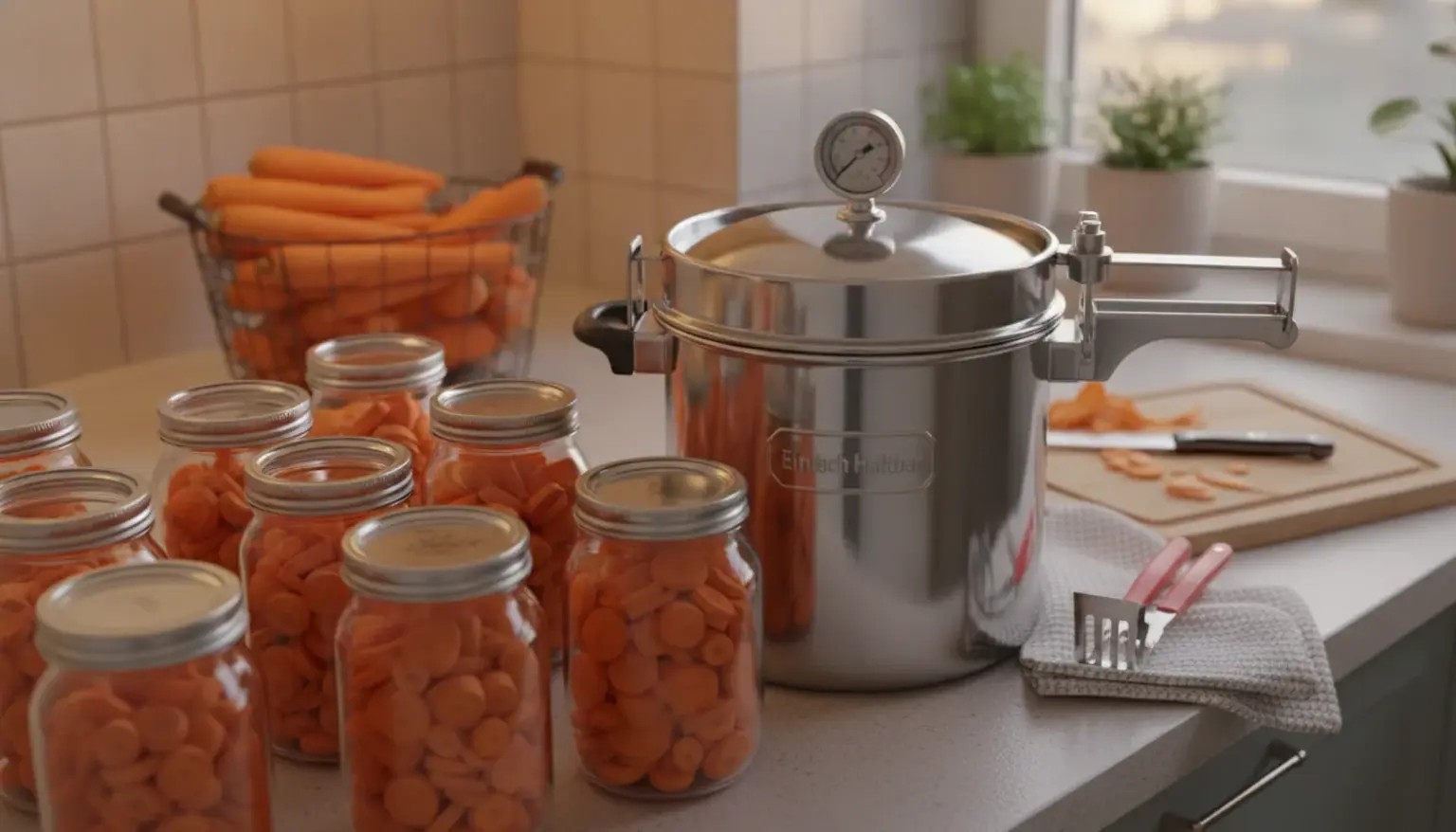
Have the appropriate pressure canner, its rack, supported canning jars, closures, a jar lifter and a headspace measure ready. Put a clean towel or rack in a draft-free place for the finished jars. Read the canner manual and the full source procedure before filling anything.
Choose pints or quarts deliberately. A large jar is convenient for a family soup, while a smaller jar may be easier to finish for a side dish. Buying quart jars does not commit every batch to quarts. Keep the timer note beside the selected jars so you are not deciding the process after loading the canner.
A compact setup for pressure-canning carrots
The canner establishes the right kind of process, the jars must match the recipe, and the handling tools help you work cleanly. These are existing EN product options, not a claim of comparative product testing.
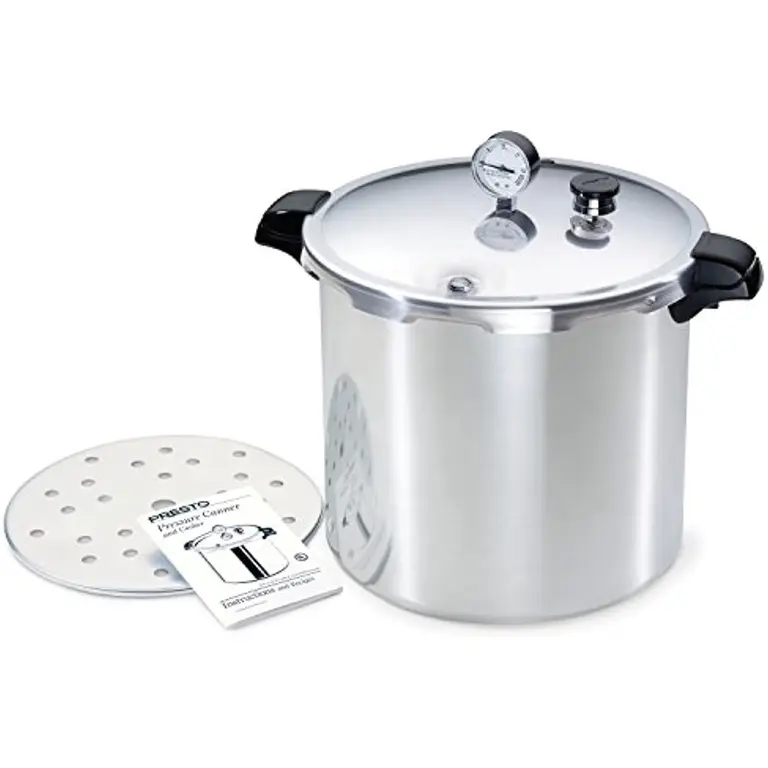
Presto 01781 · 23-Quart Pressure Canner
For tested low-acid recipes, operated with the source directions and the exact canner manual.
View on Amazon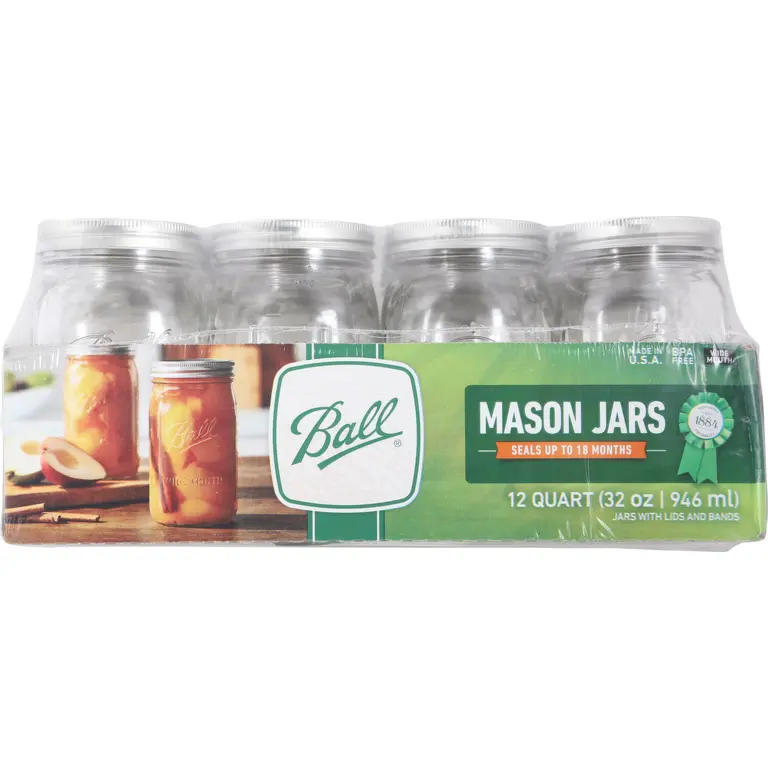
Ball Wide-Mouth 32-oz Mason Jars
A listed jar size for this carrot method; use its quart processing time and your correct pressure.
View on Amazon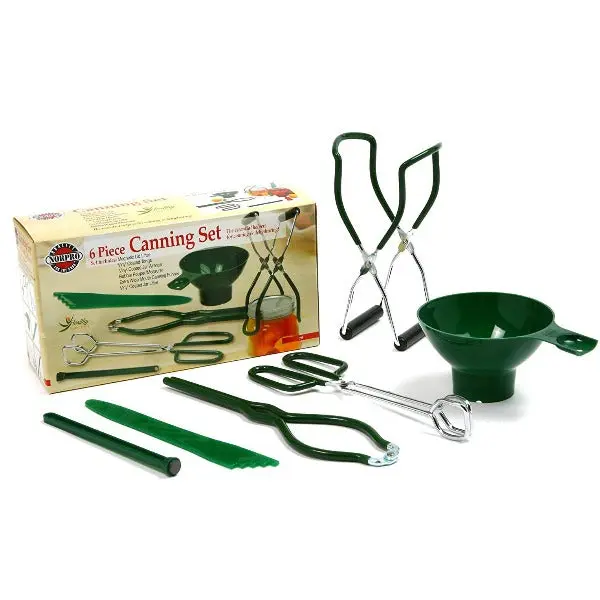
Norpro Canning Essentials Set
Tools for moving hot jars and managing the filling area without improvising with kitchen tongs.
View on AmazonAffiliate links · Your price stays the same.
Check the exact jar size and canner compatibility before buying. The recipe determines the method; an accessory cannot make an unsupported process suitable for pantry storage.
Why use one clearly defined hot-pack workflow?
The NCHFP carrot method includes both hot and raw packs. Here the visible workflow consistently uses hot pack: prepared carrots are simmered before jars are filled. Keeping one route on the kitchen checklist prevents preparation instructions from drifting between methods.
Set the peeled roots beside your board, the cut pieces beside the pan, and the jars beside the filling area. You can work in manageable portions without accumulating a mountain of peelings around clean equipment. Do not use leftover seasoned carrots from dinner for this plain-vegetable recipe; those ingredients would belong to another tested process.
- Fresh carrots Sound roots, washed, peeled, rewashed and sliced or diced.
- Water For hot-pack cooking and the liquid in the jars.
- Salt, optional The plain-carrot method does not require salt for preservation; season to taste after opening if preferred.
NCHFP estimates about 11 pounds of topped carrots for 9 pints; actual yield varies with trimming and packing.
Hot-pack simmer: 5 minutes. Pressure process: pints 25 minutes; quarts 30 minutes. Preparation, venting, pressurization and natural cooling are additional.
Which time and pressure apply?
Use the following values only for the linked plain sliced-or-diced carrot method, with its specified preparation and liquid. Match the gauge type first; the elevation thresholds for the two gauge systems differ. If your elevation is outside a listed dial-gauge range, obtain appropriate extension guidance before starting.
| Jar size | Processing time |
|---|---|
| US pint | 25 minutes |
| US quart | 30 minutes |
| Elevation | Pressure |
|---|---|
| 0–2,000 ft | 11 psi |
| 2,001–4,000 ft | 12 psi |
| 4,001–6,000 ft | 13 psi |
| 6,001–8,000 ft | 14 psi |
| Elevation | Pressure |
|---|---|
| 0–1,000 ft | 10 psi |
| Above 1,000 ft | 15 psi |
Open the original carrot processing tables before you start. The processing time is not the whole session; heating, venting and natural cooling remain part of the method.
Hot-pack carrots in seven steps
Check the full process
Confirm jar size, elevation, gauge type and pressure. Prepare the pressure canner and closures as directed.
Prepare the carrots
Wash, peel and rewash. Slice or dice the sound carrots into consistent pieces.
Heat the hot pack
Cover the prepared carrots with boiling water, bring to a boil and simmer for 5 minutes.
Fill the jars
Add hot carrots and hot cooking liquid or water, leaving 1 inch headspace. Remove air bubbles, recheck headspace, clean rims and apply lids correctly.
Vent, pressurize and process
Vent a steady stream of steam for 10 minutes before pressurizing. At the required pressure, time pints for 25 minutes or quarts for 30. If pressure falls below the requirement, return to pressure and restart the full time.
Allow natural cooling
Turn off the heat and let pressure return to zero naturally. Once completely depressurized, remove the weight or open the petcock as directed, wait 10 minutes, then open the lid away from you. Lift jars upright and cool undisturbed for 12–24 hours; do not retighten lids.
Check and label
Remove bands, check seals and label correctly processed jars. Handle any failed seal promptly under the source instructions; refrigerate after opening.
Why does headspace deserve its own check?
Measure from the rim rather than estimating from the shoulder of the glass. Different jar shapes make the same space look different. After releasing trapped bubbles, check again: the liquid level can shift as the pieces settle. Wipe the rim so the closure meets a clean sealing surface.
Do not pack an extra handful into the last jar simply to empty the pan. Keep the recipe’s fill and liquid arrangement consistent. A small remainder can become part of a meal. Finishing every carrot in the same canner load is less important than keeping each jar within the method you selected.
How should you cool, check and store the batch?
The cooling and seal-check sequence belongs to the process. Leave the hot lids alone rather than tightening them again. Follow NCHFP’s cooling guidance and use the storage source below for prompt handling of a failed seal. A closure problem and an invalid process are different problems; do not assume a sealed jar fixes the latter.
Write the food, date and batch reference on each jar, and retain the recipe used. Store sound jars where labels remain visible and where you can rotate the oldest suitable batch first. Keep a note of the actual portion your household used after opening. That information is useful when deciding whether to prepare pints or quarts next time.
How can you use the carrots without changing the canning recipe?
Turn an opened jar into a side dish with the butter, herbs or other seasonings you enjoy, or add the carrots to a properly cooked soup. Keeping those additions until mealtime gives you flexibility without changing the preserved food’s formula. Drain according to the dish you are making rather than assuming the entire jar liquid belongs in every meal.
For a different texture or flavor, choose another preservation project from the beginning. Pickled carrots and dried carrots have their own methods. Do not transform this filled plain-carrot jar into a pickle by adding vinegar, and do not purée before canning with the same schedule.
Questions about pressure-canning carrots
Can I water-bath plain carrots?
No. Use the appropriate pressure-canning method for this low-acid food.
Do I have to add salt?
Salt is optional for plain canned carrots. Omitting it does not remove the need for the full pressure process.
Can I leave the peel on?
The referenced method specifies washing, peeling and rewashing; keep that preparation step.
Can I can carrot purée with the same time?
No. This process covers slices or dice, not purée or a thickened carrot dish.
When does the processing timer start?
After the canner has been vented and reached the pressure required for your gauge and elevation. Keep that pressure for the full process.
What if pressure drops?
Restore the required pressure and restart the complete processing time, following the pressure-canner source instructions.
Sources and editorial notes
Written for US home canning using the primary sources below, checked on September 11, 2026. These are editorial explanations, not an independently tested recipe or product trial. Product options are compared by their stated function and fit for this guide; they have not been tested by Einfach Haltbar. Accuracy cannot be guaranteed; verify the complete current source instructions before preserving food.
- NCHFP: Carrots — Sliced or Diced
- NCHFP: Using Pressure Canners
- NCHFP: Cooling Jars and Testing Jar Seals
- NCHFP: Storing Home Canned Foods
AI-generated food illustrations; they do not document an in-house preservation test.