What do you want to eat later?
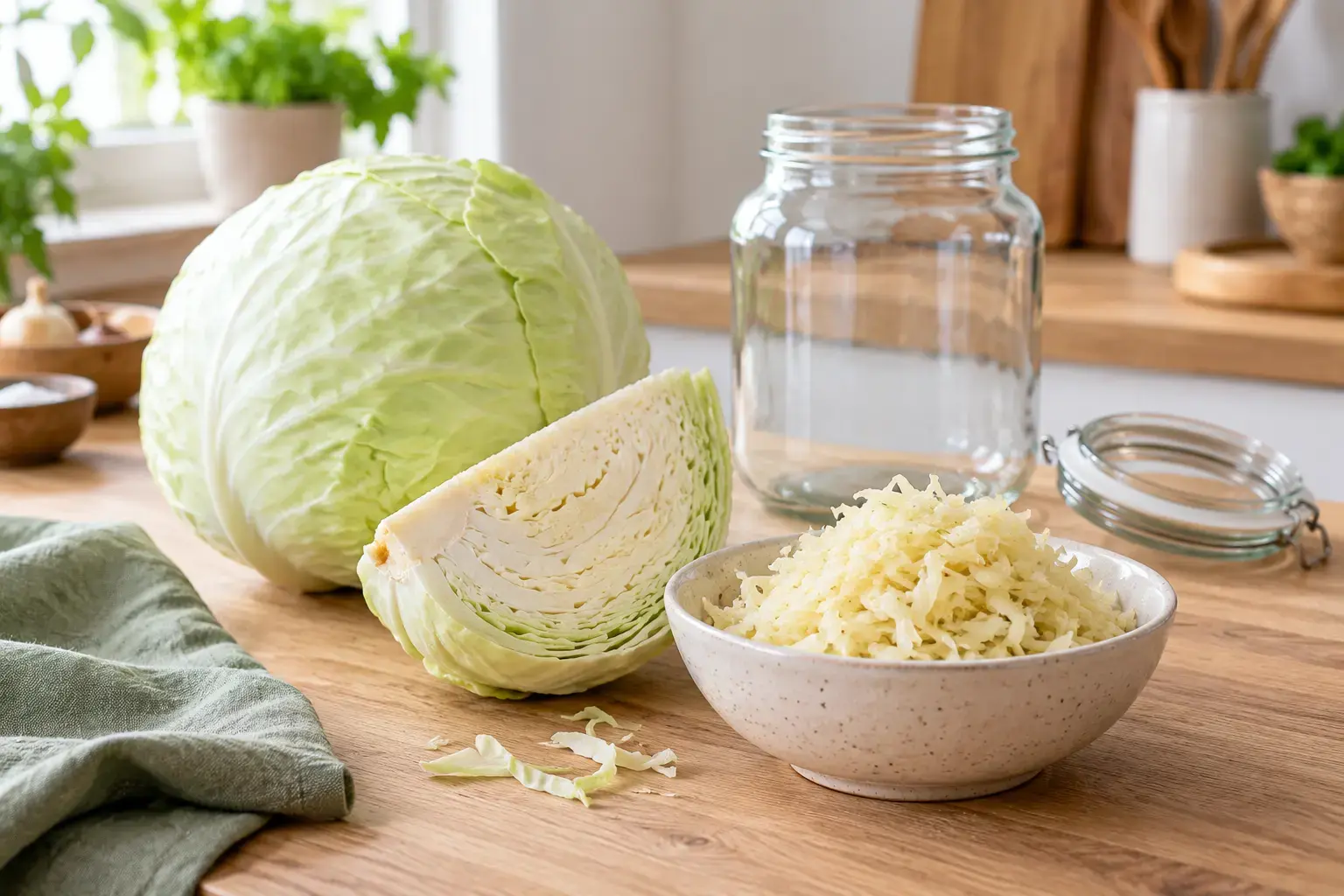
Picture the meal before the jars: tangy sauerkraut beside sausages, a sweet-and-sour cabbage side, or mild cabbage folded into a winter soup. These are different foods, even when all three begin with the same head. A preservation plan works best when it keeps that distinction visible.
Write the dish name at the top of your recipe printout. Next, write where you want to store it. A small refrigerated batch for this week can be useful without becoming a shelf-stable canning project. If the freezer already suits your cooked cabbage, buying a pressure canner does not improve that plan by itself.
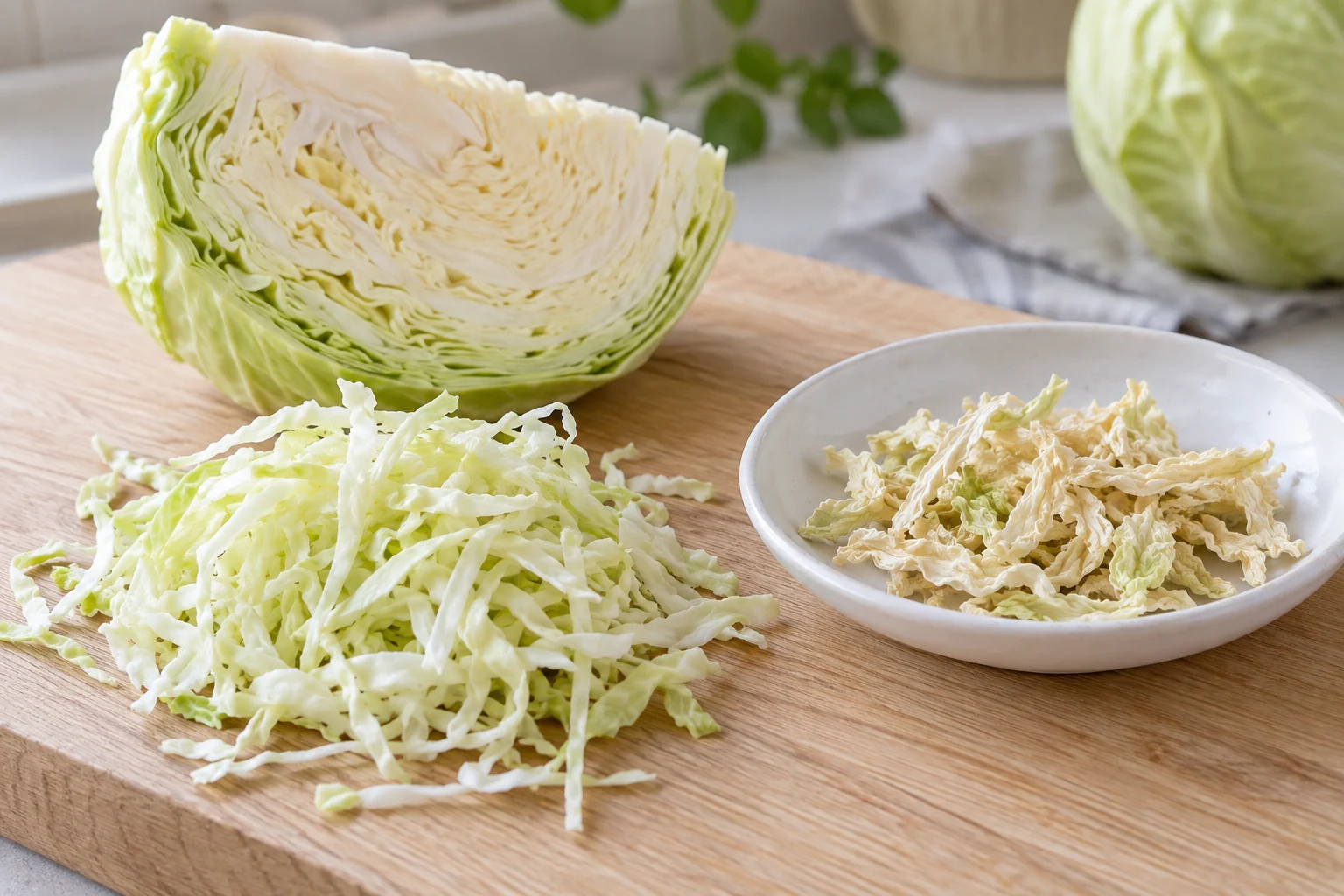
Can you water-bath or pressure-can plain cabbage?
Washington State University Extension’s cabbage guide states that USDA processing times are not available for cabbage except sauerkraut. A jar of plain cabbage in water therefore has no process in this guide. Heating it longer, packing it more loosely or adding a little vinegar does not supply the missing validation.
This matters especially when a pressure-canner manual lists many vegetables. The machine provides a controlled environment; the food still needs an appropriate process. A sealed lid tells you about the closure, not whether the food received a safe heat treatment. Keep plain cabbage for another preservation route instead of choosing the time for a different vegetable.
When is sauerkraut a canning option?
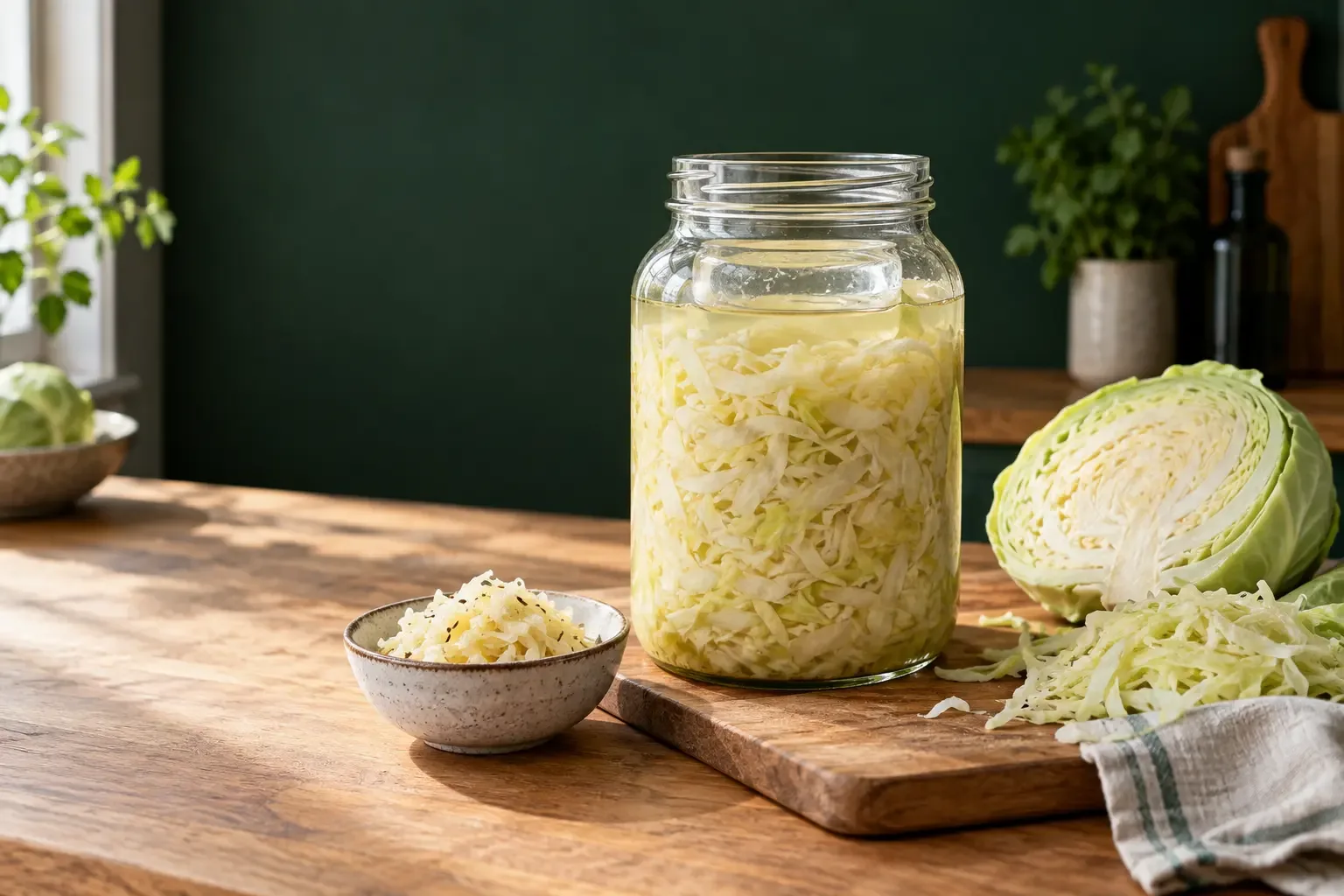
The NCHFP sauerkraut method covers fermentation followed, if desired, by canning. It includes different hot-pack and raw-pack processing schedules and adjusts them for jar size and elevation. Start with correctly prepared, fully fermented sauerkraut; fresh salted cabbage is not an immediate substitute.
For a beginner, our small-batch sauerkraut guide is a useful place to understand the fermentation stage. Decide whether you prefer refrigerated fermented kraut or a heat-processed pantry product before making a large batch. Canning adds another session of work and changes the product’s character; it is not a required finish for every fermentation project.
Which jars fit the route you choose?
Choose the jar size from the actual recipe, then check what will fit in your canner. Pint jars may be easier to finish after opening; quart jars are convenient only when both the recipe and your household’s portions suit them. The size of the cabbage head is not a reason to upsize the jar.
Lay out the lids, bands, jar lifter and clean work area before preparing food. Avoid assembling a collection of special-purpose lids first and looking for a method afterward. A fermentation lid serves a different stage from a two-piece canning closure. Keep those supplies separate so the next task is obvious.
Useful supplies after you choose a tested recipe
These existing EN canning options serve different jobs. The water-bath set is relevant to tested sauerkraut or pickled-cabbage processes; it does not provide a plain-cabbage method.
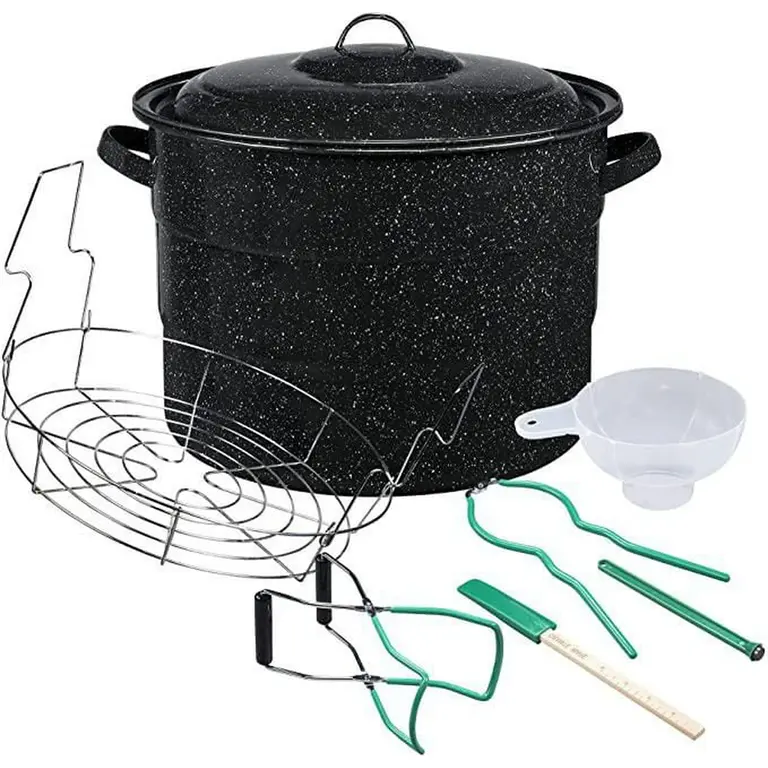
Granite Ware Water-Bath Canner Set
A water-bath setup for the tested acid-food process you have selected; check stovetop and jar capacity.
View on Amazon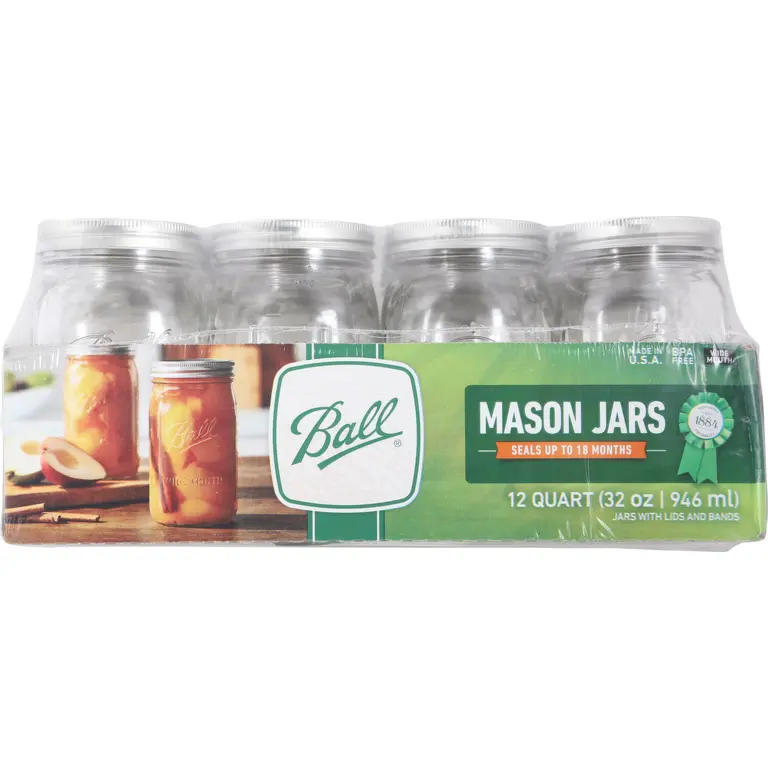
Ball Wide-Mouth 32-oz Mason Jars
Quart jars only where the chosen sauerkraut or pickle recipe includes that size.
View on Amazon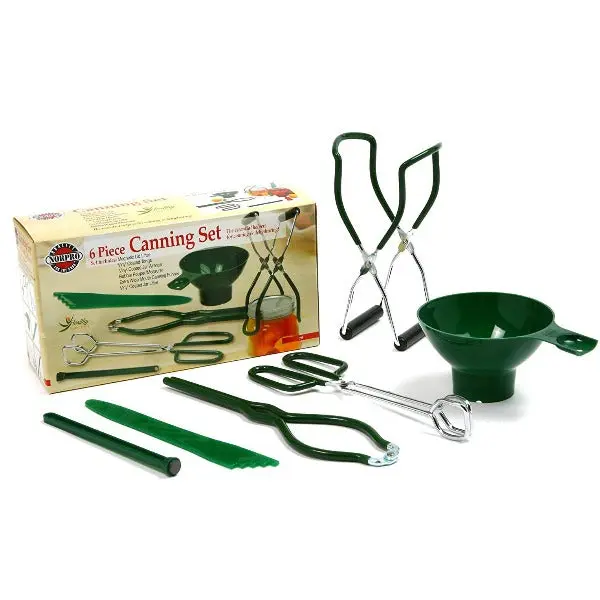
Norpro Canning Essentials Set
A separate jar lifter and filling-tool set if your canner package does not already include them. Check the Granite Ware bundle before adding duplicate tools.
View on AmazonAffiliate links · Your price stays the same.
Check the exact jar size and canner compatibility before buying. The recipe determines the method; an accessory cannot make an unsupported process suitable for pantry storage.
Your cabbage-preserving decision in seven steps
Name the finished food
Write plain cooked cabbage, fully fermented sauerkraut or a particular cabbage pickle. Do not combine their instructions.
Choose storage
Decide between refrigeration, freezing and a tested pantry product before preparing the batch.
Open the complete recipe
Keep its ingredients, preparation, jar size, process and storage directions together.
Match the ingredients
Check cabbage type, quantities, acid or salt requirements and allowed changes. A family recipe needs its own validation.
Check containers and equipment
Confirm the recipe-supported jars, closures and canning method. Put other lids and jars aside.
Plan the whole session
Allow for preparation, any fermentation, heating, the complete process and undisturbed cooling.
Change route if a piece is missing
Freeze or refrigerate an appropriate batch rather than filling gaps with another vegetable’s processing time.
What about a favorite sweet-and-sour red cabbage recipe?
A family pot of red cabbage may contain apples, onions, wine, butter and vinegar in proportions chosen for dinner. That does not make it a tested canned pickle. Ask Extension’s answer about German red cabbage distinguishes a specified tested spiced-cabbage recipe from an unvalidated favorite and suggests freezing the latter.
Keep the familiar recipe intact for the meal you love. If you want pantry jars, choose a published cabbage preserve from the start and expect its flavor to be its own. Do not copy only the processing time from the tested recipe while keeping the ingredients from your family version. Those two decisions belong together.
Does extra vinegar solve the problem?
No household splash can convert an unknown mixture into a validated canned food. The amount of vegetable, the acid strength, the preparation and the heat process form one recipe. A sour taste cannot tell you that the complete product is safe for pantry storage.
For a milder flavor, select another tested recipe or season the food when serving. This is more practical than trying to correct a filled jar. If you enjoy a refrigerator slaw, keep it clearly labeled as a refrigerated dish and use its own handling directions. Similar jars should not conceal different storage rules.
What can you do with the rest of the cabbage?
Divide the harvest according to meals rather than forcing everything into one technique. Reserve a fresh portion for slaw, choose an appropriate freezing preparation for future cooked dishes, and consider fermentation if you enjoy tangy cabbage. The WSU guide linked below includes freezing and drying as well as sauerkraut.
A simple batch note helps: record the source, the quantity prepared, the date and the meals you expect to make. Put the oldest suitable portions where you will find them first. After using the first batch, adjust how much you preserve next time. An organized small supply is more useful than shelves or freezer drawers filled with food nobody reaches for.
Questions about canning cabbage
Can I use the carrot pressure-canning time for cabbage?
No. A process for one vegetable is not a general vegetable schedule. This guide provides no process for plain cabbage.
Can I can sauerkraut immediately after adding salt?
No. The NCHFP canned-sauerkraut method begins with fully fermented kraut; salting and canning are not interchangeable steps.
Does a sour cabbage dish count as a tested pickle?
No. Use an identified tested recipe and its full ingredient and processing directions. Sourness alone does not establish a method.
Should I buy a pressure canner just for plain cabbage?
Not for that purpose. Find a supported recipe first; the appliance does not create a safe process for a food without one.
Can I preserve my family’s cooked red cabbage?
Choose freezing when no tested canning recipe matches the dish. Follow suitable cooling and freezing guidance rather than altering a canning recipe by guesswork.
What is the easiest useful next project?
A small sauerkraut batch or a refrigerator-pickle recipe can help you decide what you actually enjoy eating before planning a larger harvest batch.
Sources and editorial notes
Written for US home canning using the primary sources below, checked on September 11, 2026. These are editorial explanations, not an independently tested recipe or product trial. Product options are compared by their stated function and fit for this guide; they have not been tested by Einfach Haltbar. Accuracy cannot be guaranteed; verify the complete current source instructions before preserving food.
- Washington State University Extension: Preserve Skagit — Cabbage
- NCHFP: Sauerkraut
- Ask Extension: Canning German Red Cabbage
- NCHFP: Recommended Canners
AI-generated food illustrations; they do not document an in-house preservation test.