The most useful fermentation setup depends on whether you already own jars, how much food you make and how you want to manage the batch. Here we compare three different approaches already featured in our English fermentation guides: accessories for Mason jars, a dedicated kimchi-style container and a traditional water-seal crock.
This is an editorial comparison of use cases and documented features, not a hands-on durability or fermentation test. There is no single winner for every kitchen. Check the exact size, contents and care instructions in the offer before buying. If you have not settled on jar size or lid type, begin with How to Choose Fermentation Jars.
Three starting points
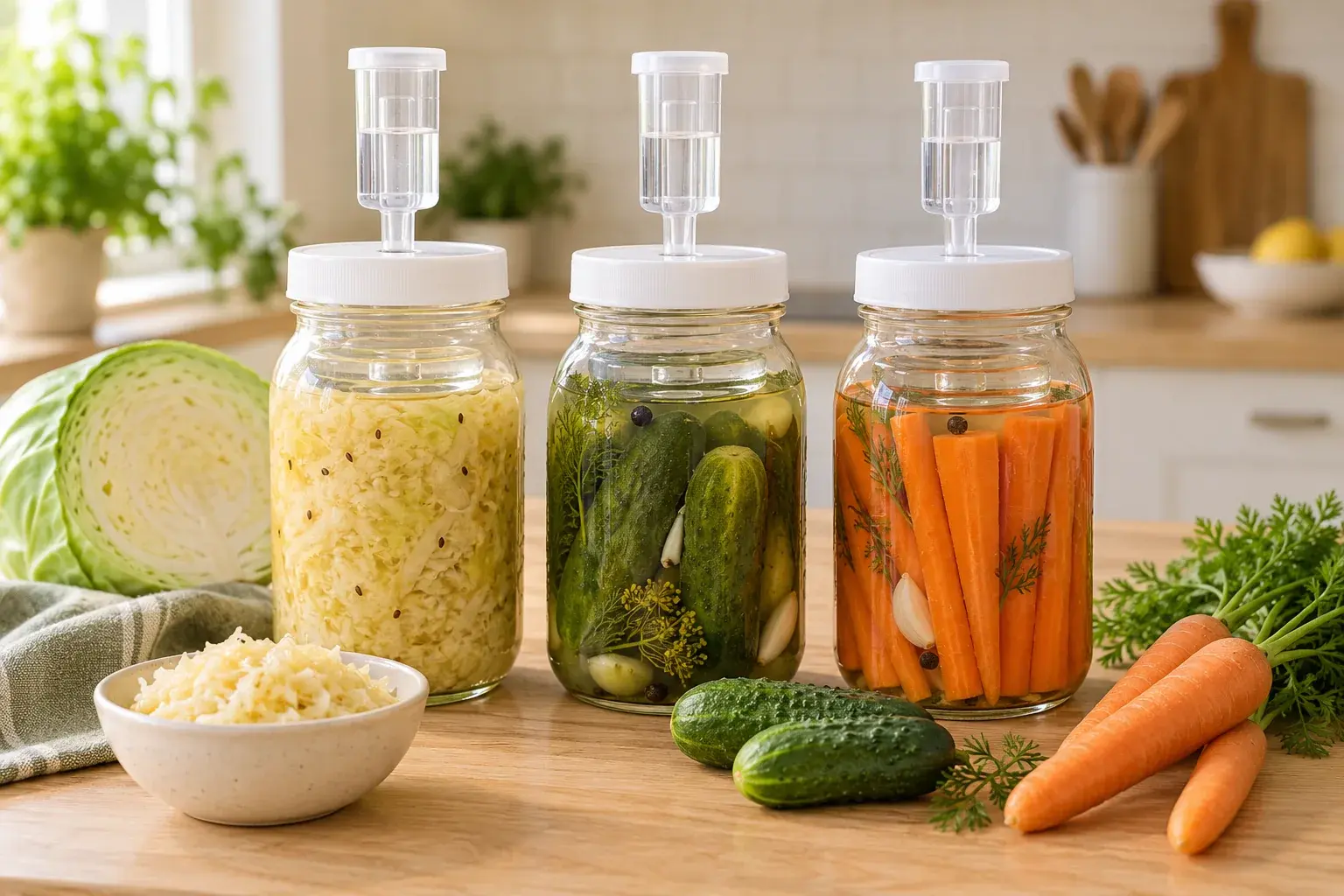
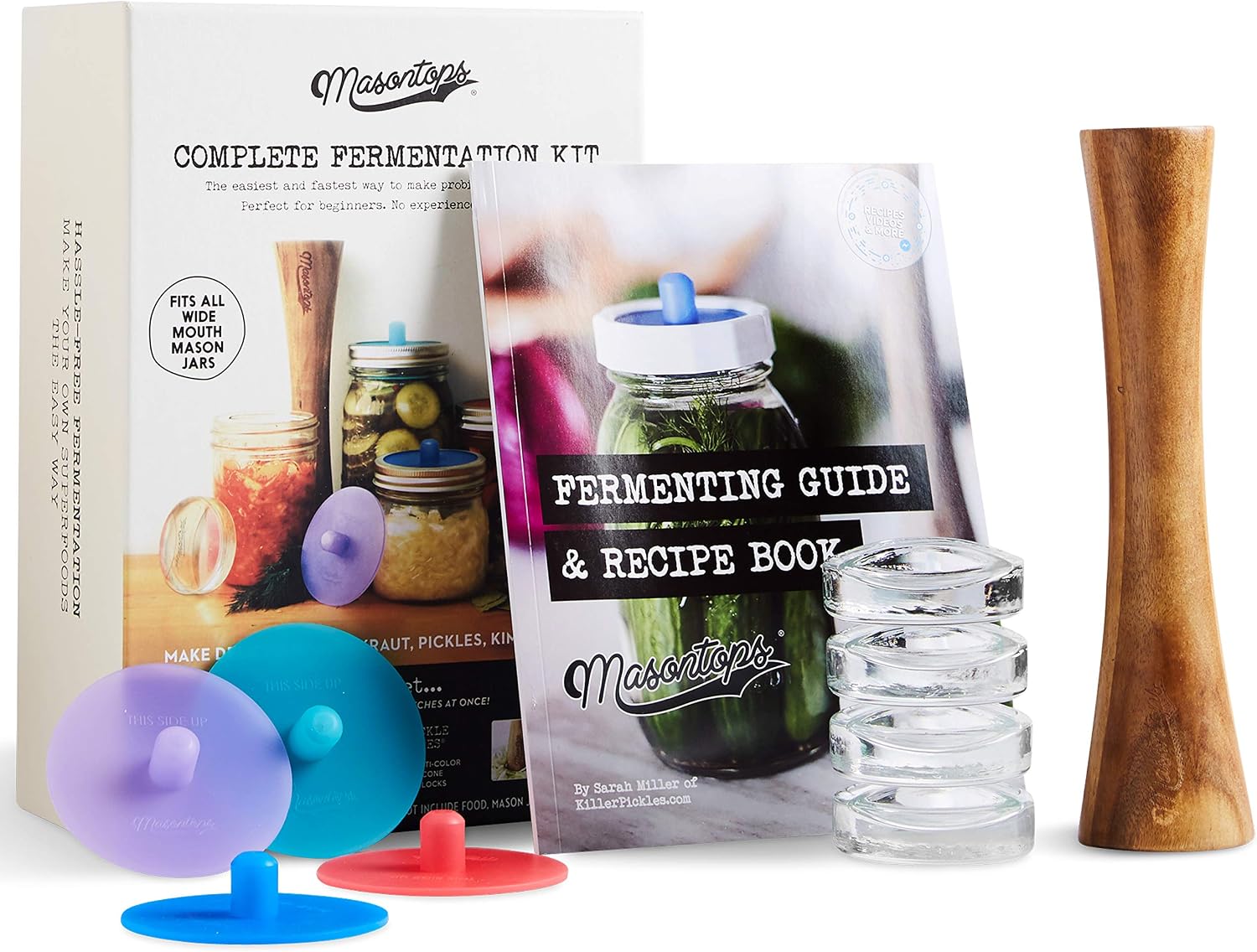
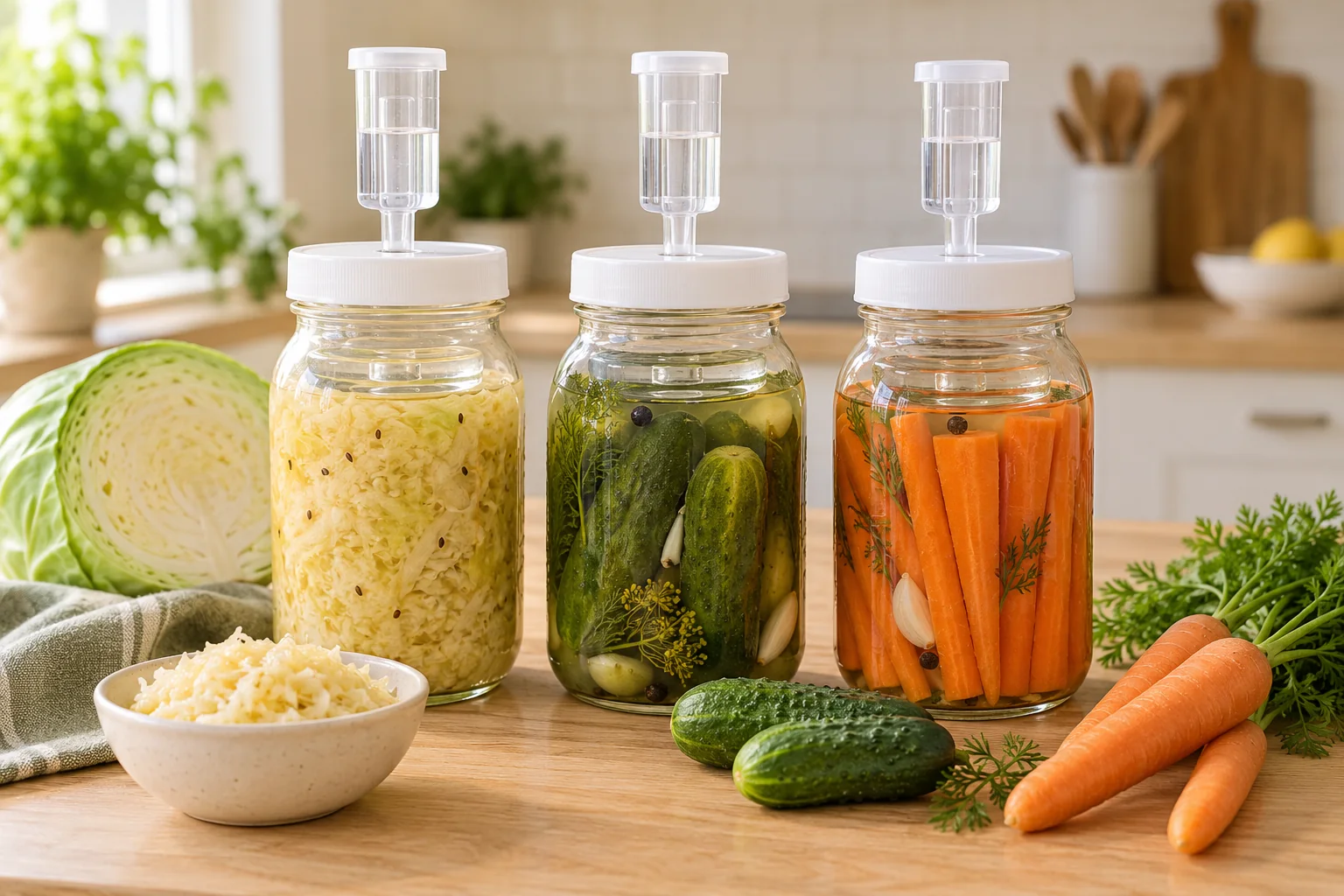
Already have Mason jars: Masontops Complete Mason Jar Fermentation Kit
This is an accessory route for people who want to use compatible jars they already own. Masontops lists a tamper, glass weights and silicone airlock lids, with regular-mouth and wide-mouth versions available. The manufacturer notes that the valve lids need screw bands; verify jars and bands separately. Masontops: complete kit.
Its main appeal is flexibility. You can separate recipes into individual jars, retire a finished batch while another continues and keep using familiar jars for appropriate storage jobs. Its limitation is compatibility: buying the wrong mouth size leaves you with useful-looking parts that do not form a working setup.
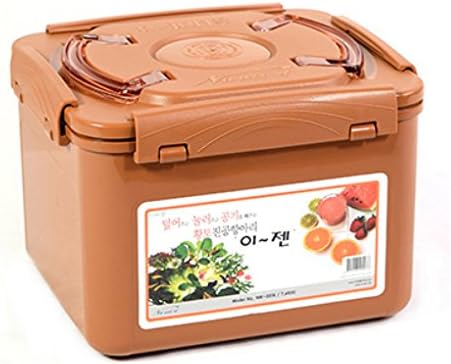
Prefer a dedicated container: Premium Kimchi & Sauerkraut Fermentation Container
This existing option uses a container with an inner lid rather than a Mason jar and separate screw-on fermentation lid. It is worth considering if you prefer packing food in one dedicated vessel and want to assess that layout against a jar-based setup.
Start with the actual offer, since similar-looking containers are sold in different sizes. Check the product identification, the way the inner lid is used and cleaned, and whether its dimensions fit the place you intend to store it. Do not infer material, usable capacity or dishwasher compatibility from the color or a general product-family description.
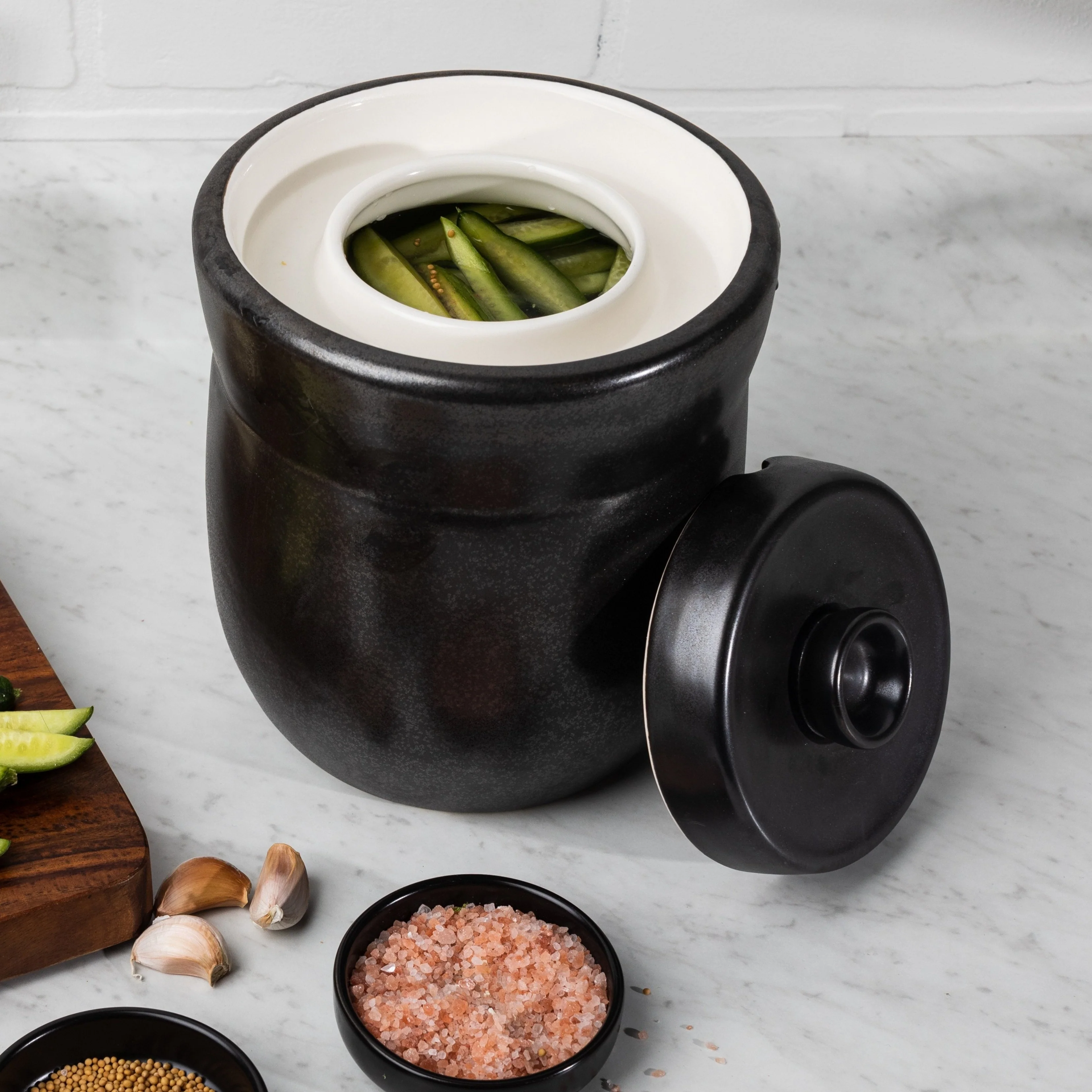
Make larger batches: TOMO 7L Fermentation Crock with Weights
TOMO lists a stoneware crock with a waterlock, two ceramic weights and a wooden tamper. The linked model is the 7-liter option; confirm the selected size because the brand also lists another capacity. Those are manufacturer-described features, not a claim that we tested its seal or capacity with a particular recipe. TOMO: fermentation crock.
A crock is the most deliberate commitment of these formats. Before choosing it, decide where it will stand during the batch, how you will clean it and how you will store the finished food. It makes more sense when your normal recipe genuinely needs a larger vessel than when you simply want to try fermenting for the first time.
A water-seal crock with weights and a tamper for a planned larger batch. Check filled handling, sink access and the space needed for the finished ferment.
Use compatible Mason jars for separate small batches
Jar mouth, bands, included accessories and their care
Flexible, but you must match the parts correctly
Dedicated kimchi-style container
Pack a batch into one purpose-made container
Exact model, selected size, inner-lid instructions and cleaning
A different packing and monitoring routine from a clear jar
TOMO 7L crock
A dedicated vessel for planned larger batches
Selected capacity, waterlock care, included weights and storage
More vessel to handle and clean
How the options change your everyday routine
Several smaller jars keep projects separate
If you want cabbage this week and a separate pickle project later, a collection of compatible jars can be easier to organize than one large fermenter. Give each batch its own label and recipe notes. Consistent jar mouths are useful because replacement lids and weights are easier to track.
That convenience does not mean that one recipe can simply be divided among any number of containers. Use a recipe that supports your intended setup, and keep its preparation and fermentation instructions together. The jar's volume is a purchasing detail; the recipe remains the basis for the food process.
A dedicated container needs a home in your kitchen
Before choosing a rectangular or inner-lid container, sketch its footprint on paper and compare it with the actual shelf or refrigerator compartment. Leave room to reach and remove it without moving a stack of unrelated food. Decide whether you will store the finished ferment in the same vessel or transfer it according to the recipe's storage instructions.
When comparing listings, look for clear photographs of the container disassembled. The inner lid may look simple in the assembled product photo, while the cleaning routine involves seals or grooves. Buy only when you understand how the pieces come apart and go back together. That is a useful purchasing question even when a listing promises easy cleaning.
A crock suits a repeated batch plan
A crock can be a satisfying permanent part of a preserving kitchen, but its usefulness comes from the batches you actually make. Work out how much produce you normally prepare in one session and what happens to the food afterward. A household that makes a familiar batch repeatedly has a clearer reason to choose a crock than one still discovering which fermented vegetables it likes.
For the TOMO option, plan to follow the manufacturer's waterlock instructions and care for the different components as directed. Do not let a water-seal design or an included weight become a reason to stop checking the batch. The closure and the food are separate things to monitor.
What we would buy for different situations
If you already have compatible Mason jars and want separate small batches, the accessory kit is the most direct fit here. First check your mouth size and bands; then decide whether you need the complete set or only a replacement component.
If your priority is one dedicated container, compare the inner-lid option with the storage space you actually have. The important decision is whether you like that workflow, not whether its headline capacity is larger than a jar's. Verify the exact offer before purchasing, particularly when the same page allows size changes.
If you already make larger batches regularly, the crock is the clearest candidate in this group. Buy it because the recipe, batch size and handling routine suit it. If those decisions are still uncertain, a smaller existing food-safe setup may be enough to learn what you need before upgrading.
Before checkout: five checks that prevent awkward purchases
Check the complete usable setup, not the number of items in the photograph. Identify which jars, bands, lids and weights are actually included. Compare dimensions with your shelf and sink. Read cleaning and replacement-part instructions. Finally, open your intended recipe and verify that this equipment lets you follow it without inventing a different closure, packing arrangement or fermentation process.
For fermented cabbage and cucumbers, the National Center for Home Food Preservation describes suitable containers and ways to keep the vegetables below brine. Its guidance also makes clear that food-contact materials matter. Equipment selection should support those requirements. NCHFP: suitable containers, covers and weights.
Your next batch
Once you have chosen a setup, use a complete food-specific method. Start with Fermentation for Beginners, then follow sauerkraut in a Mason jar or fermented pickles, as appropriate for your equipment. A useful purchase makes the preparation easier to repeat; it does not replace the recipe.
 EXISTING MASON JARS
 DEDICATED CONTAINER
 PLANNED LARGER BATCHES
 Fermentation for BeginnersChoose a recipe and build a repeatable first batch.