Best Food Dehydrators
Three starting points for home drying
An everyday cabinet, a larger batch machine or an expandable stackable unit. Start with the amount you normally prepare.
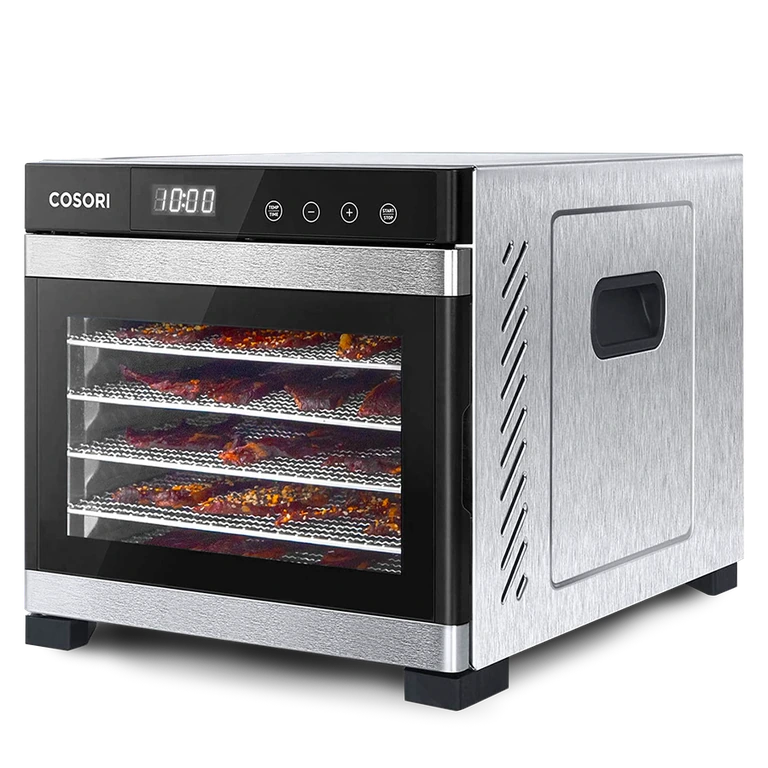
EVERYDAY BATCHESCOSORI CP267-FD
A front-loading cabinet for regular fruit, herb and snack batches.
View on Amazon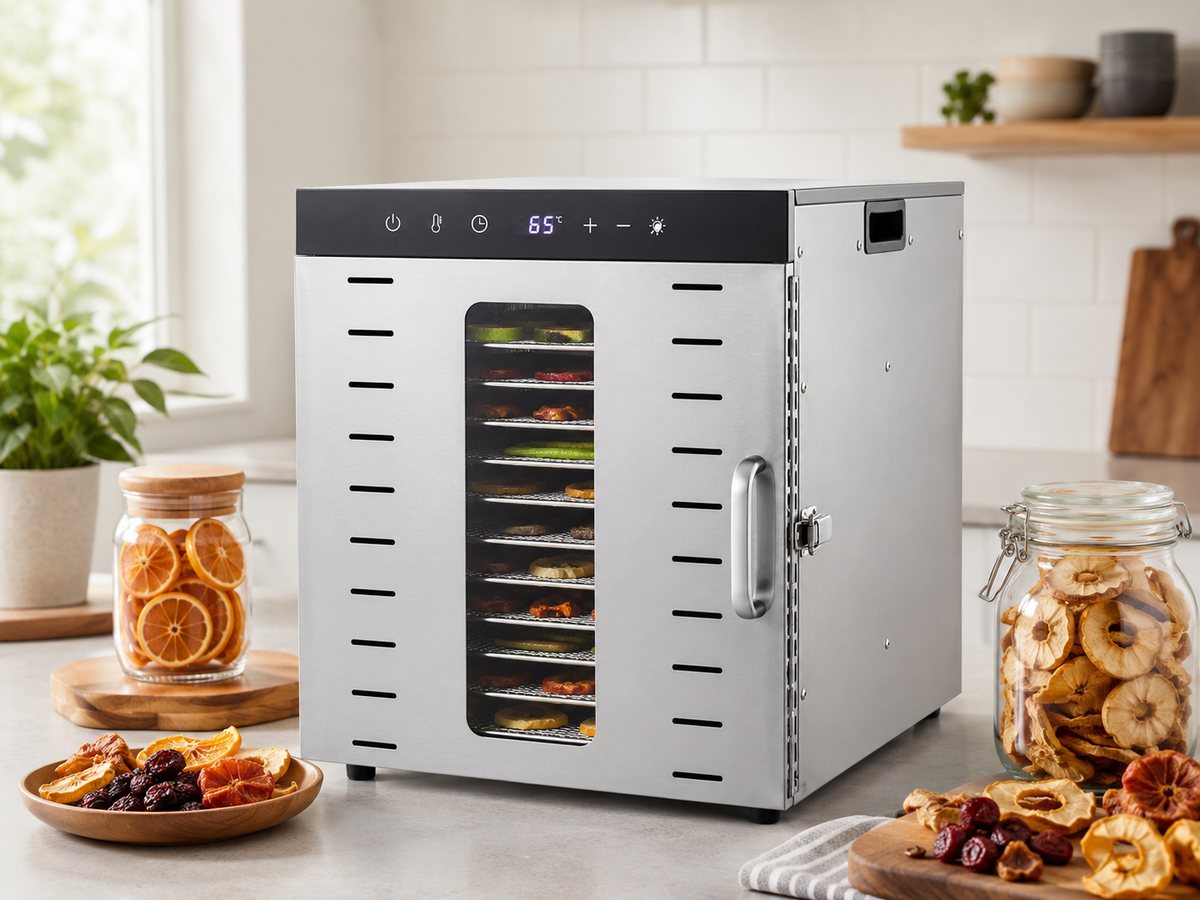 LARGER LOADS
VEVOR SS-10X
More loading space when a smaller dehydrator means several separate runs.
View on Amazon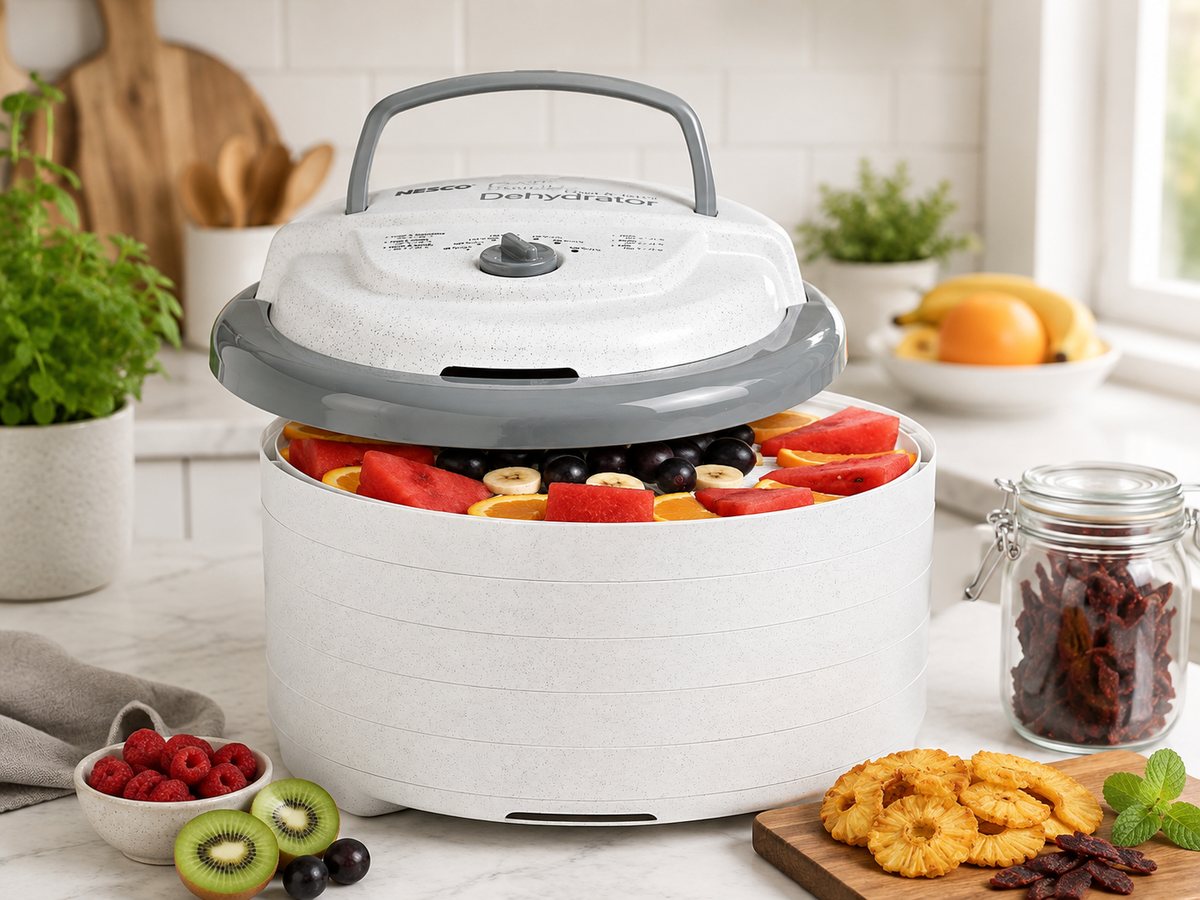 EXPANDABLE
NESCO FD-75A
A stackable format for a simpler start and room to expand.
View on AmazonAffiliate links · Your price stays the same.
The first successful batch is often what makes a food dehydrator feel useful rather than gimmicky. You prep the food, load the trays, set the temperature, and let controlled heat and airflow do most of the work. For gardeners, bulk shoppers, campers and jerky makers, the right machine can turn seasonal produce or larger grocery buys into practical dried foods.
Capacity is where many first-time buyers misjudge their needs. A compact unit is easier to store, but if you regularly process garden produce, make jerky or dry food for trips, extra drying area can save you from running batch after batch.
This guide is built around one question: what are you actually going to dry, and how often? We compared seven US-market options using documented capacity, temperature range, airflow design, controls, cleanup, footprint and value.
Keep common temperatures and approximate drying times within reach while you dehydrate.
1. COSORI CP267-FD — Best Overall
If you want one versatile dehydrator for fruit, herbs, jerky and everyday home use, the COSORI CP267-FD is our best overall pick. COSORI lists six stainless-steel trays, 600W power, a 95°F–165°F temperature range and a digital timer adjustable up to 48 hours.
The appeal is straightforward: digital controls make repeat batches easier, the front-loading trays are convenient to check, and the temperature range covers the kinds of foods most home users want to dry. A timer is useful for long runs, but it does not replace checking the food for proper dryness.
The trade-off: six trays are plenty for normal household batches, but gardeners or hunters processing larger volumes may want more drying area. The stainless-steel cabinet is also bulkier than a lightweight stackable unit.
the most balanced choice here for household versatility, digital control and stainless-steel trays.
2. VEVOR SS-10X 10-Tray — Best Large Capacity
The VEVOR SS-10X is the pick for people whose main problem is volume. VEVOR currently lists ten 304 stainless-steel trays, 1000W power, an 86°F–194°F temperature range and a 0.5–48 hour timer.
The cabinet-style layout makes sense when you want to load more food at once, and the glass door and internal light make it easier to monitor a batch without repeatedly opening the unit. VEVOR also states that the model uses 360° airflow designed for even drying without tray rotation.
The trade-off: size. This is a much larger countertop appliance than a five- or six-tray stackable model. Measure the space where it will run and the space where it will live when not in use.
a better fit for gardeners, hunters and households that regularly process larger loads.
3. NESCO FD-75A — Best Expandable Beginner Pick
The NESCO FD-75A Snackmaster Pro is a practical beginner option because it keeps the controls simple without locking you into a tiny capacity forever. NESCO lists five BPA-free trays, 600W power and adjustable temperature control from 95°F to 160°F.
The standout feature is expandability. The unit starts with five trays and can expand to twelve, so you can add capacity later instead of replacing the whole dehydrator. NESCO also states that this model is designed to dry without tray rotation.
The trade-off: a round stackable design is less convenient for bulky ingredients than a front-loading cabinet, and buyers who strongly prefer metal racks may favor a stainless-steel model instead.
simple temperature control, expandable capacity and a lower-commitment path into dehydrating.
More capacity or a simpler starting point
Compare premium tray space, family-size loading and a lower-commitment machine for occasional use.
 LARGE TRAY AREA
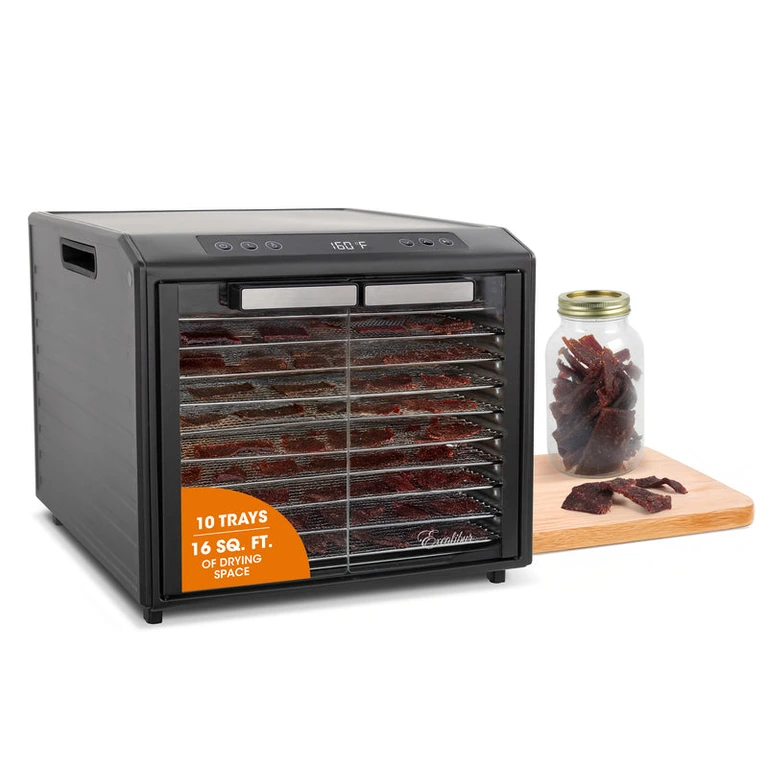
Excalibur DH10SCSS13
Ten chrome trays and 16 sq ft of drying area for frequent, larger batches.
View on Amazon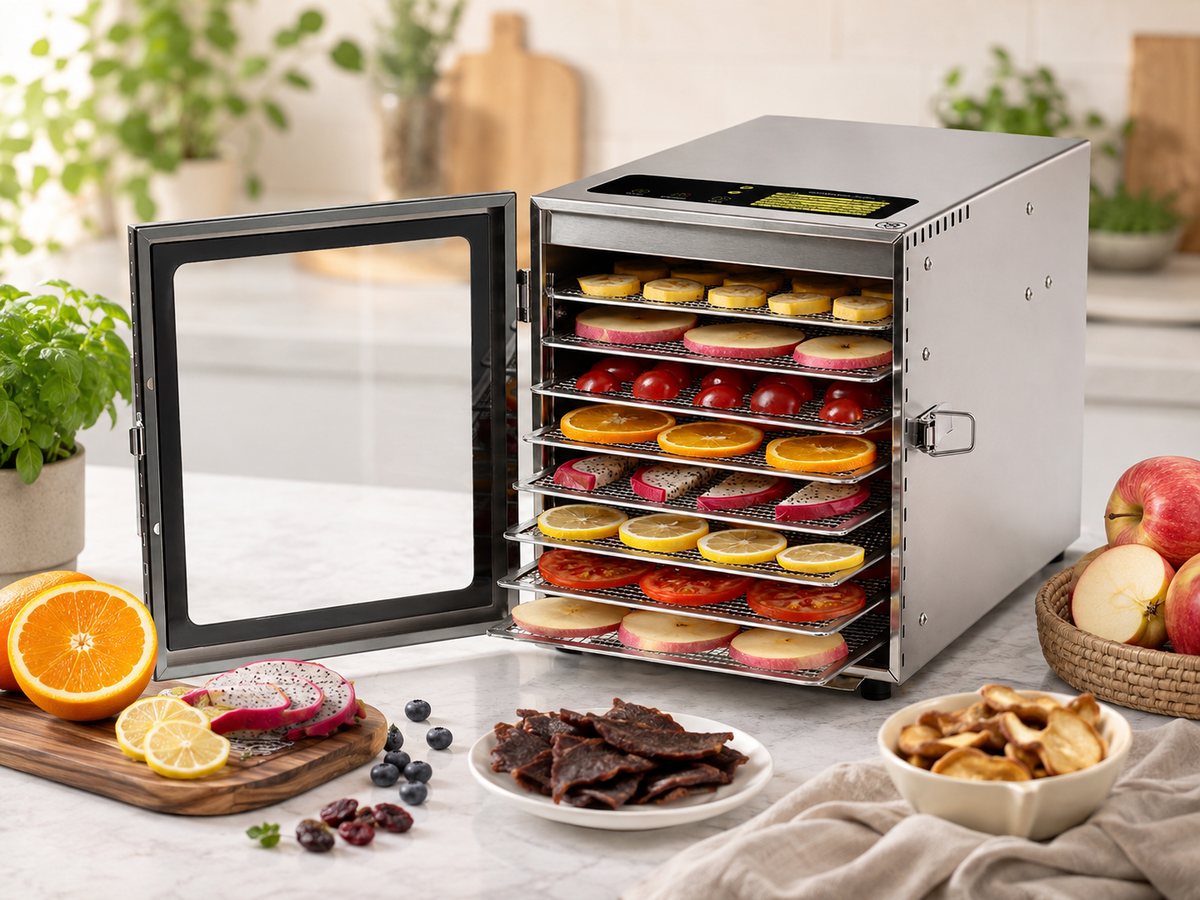 FAMILY-SIZE
Cercker 8-Tray
An eight-tray cabinet between a compact starter and a larger ten-tray machine.
View on Amazon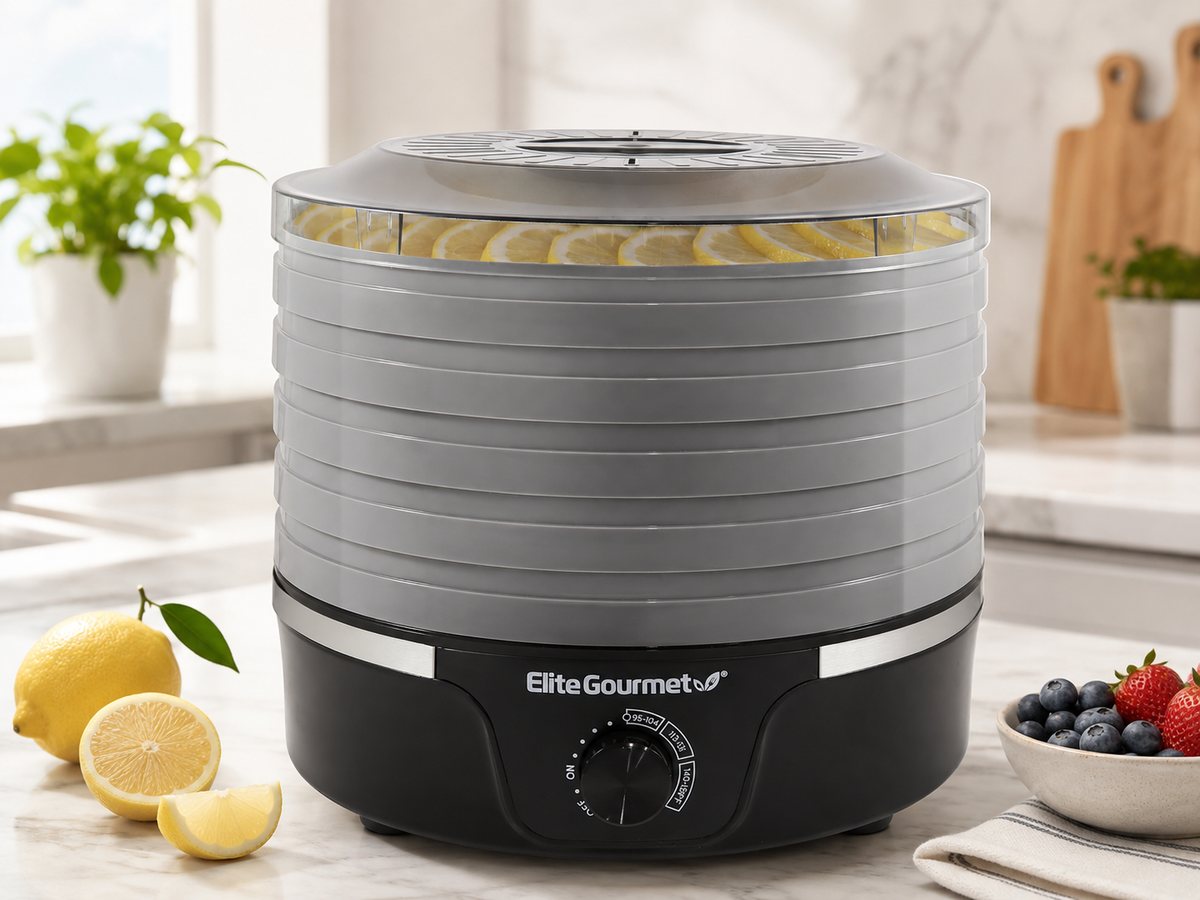 OCCASIONAL USE
Elite Gourmet EFD319DKG
A simpler stackable option when you dry smaller batches occasionally.
View on AmazonAffiliate links · Your price stays the same.
4. Excalibur DH10SCSS13 — Best Premium
Excalibur is one of the longest-established names in home dehydrating, and the DH10SCSS13 10-Tray Select is the premium choice in this group. Excalibur lists 16 square feet of drying space, ten dishwasher-safe chrome trays, 800W power, a rear fan and an 85°F–165°F temperature range with a timer up to 60 hours.
The major upgrade is the horizontal airflow system. Excalibur says its Hyperwave and Horizontal Parallex Air Flow are designed for even drying without tray rotation. The front-loading French-door layout also lets you remove or check one tray without unstacking the rest.
The trade-off: price and footprint. This is a several-hundred-dollar appliance aimed at people who already know they will use a dehydrator regularly. Also note that the cabinet is stainless steel, while the included trays are chrome — an important distinction that many product summaries blur.
premium capacity, horizontal airflow, long timer range and front-loading convenience.
5. Elite Gourmet EFD319DKG — Best Budget
If you are not sure yet whether dehydrating will become a regular habit, the Elite Gourmet EFD319DKG is the lower-cost direction in this list. The linked model uses five BPA-free trays and an adjustable temperature range from 95°F to 158°F.
For basic fruit, herbs and other everyday drying, a simple stackable unit can be enough. What you give up compared with the more expensive cabinet models is usually some combination of drying area, metal trays, timer convenience and more advanced airflow design.
The trade-off: this is a simpler stackable model with less drying area and fewer convenience features than the larger cabinet-style picks.
a lower-commitment option for buyers who want five trays and adjustable temperature control without jumping straight to a large stainless cabinet.
6. Cercker 8-Tray — Best for Jerky and Family-Size Batches
Cercker 8-Tray is a practical stainless-steel pick for buyers who want a jerky-friendly dehydrator with more room than a basic round starter model. The linked Cercker listing features eight stainless-steel trays, 500W power, a digital 24-hour timer and a temperature range that goes up to 190°F.
That setup makes it useful for meat, fruit, mushrooms, herbs and vegetables, while the cabinet design is easier to load and clean than many stackable tray models.
The trade-off: it offers less total capacity than the largest 10-tray cabinets, so it is a better fit for jerky lovers and family-size batches than for very high-volume preserving.
a solid stainless-steel option for jerky, fruit and family-size dehydrating, with a hotter top-end temperature than many entry-level models.
7. Commercial Chef CHD200S — Compact Format, Voltage Check Required
US buying status: verify before ordering. The linked listing currently says 240 V in its title but 120 V in its specification table and product description. We cannot confirm which electrical rating will be supplied. Keep this option on hold until the seller confirms the exact US version and its rating label.
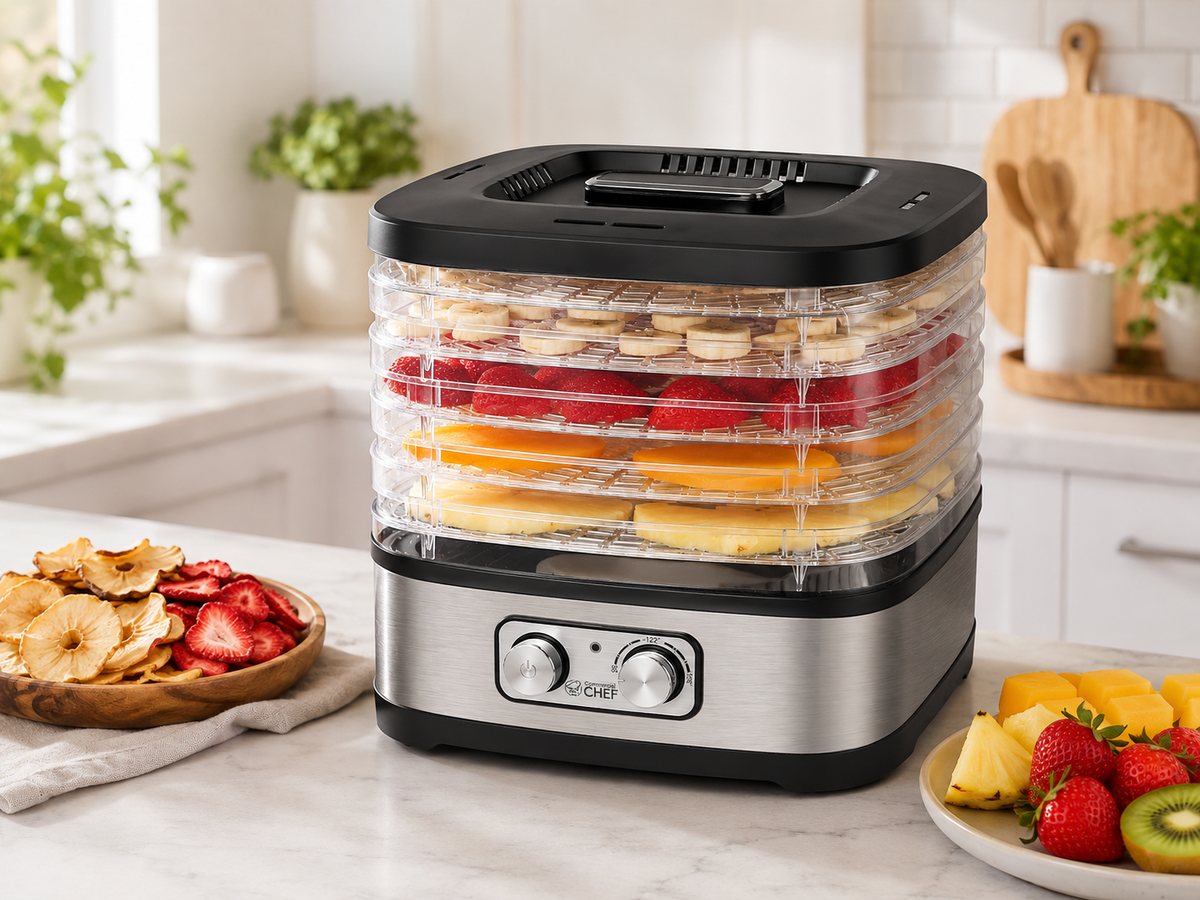
The Commercial Chef CHD200S is a compact-format option retained for comparison, with US voltage details that need to be resolved before buying. The linked model uses five removable trays and adjustable temperature control from 95°F to 158°F in a compact format.
That setup makes the most sense for herbs, fruit slices and smaller snack batches. It is easier to store than the large stainless cabinet models and gives one- or two-person households a simpler entry point.
The trade-off: limited capacity and basic controls. It is not the model to choose for a garden harvest or repeated large jerky batches.
A compact format with conflicting voltage details in the linked listing. Confirm the exact supplied electrical rating before ordering.
Keep common temperatures and approximate drying times within reach while you dehydrate.
Put your dehydrator to work
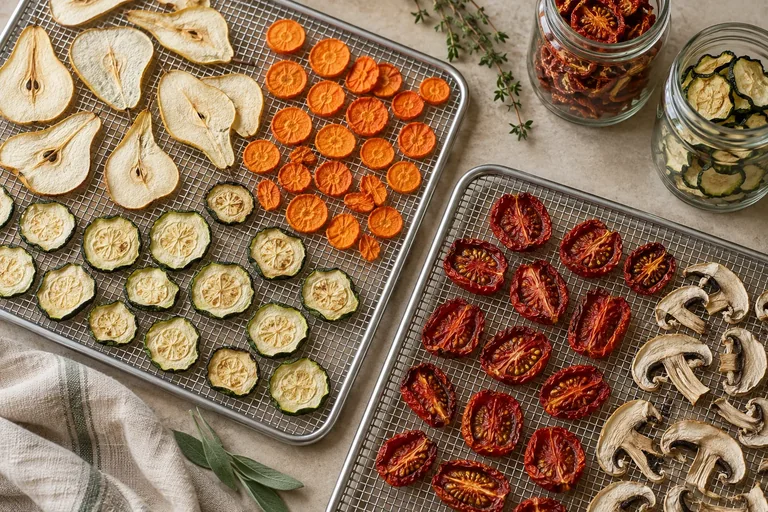 Dehydrating for beginnersPrepare food evenly, choose the right drying method and learn how to cool, condition and store each batch.