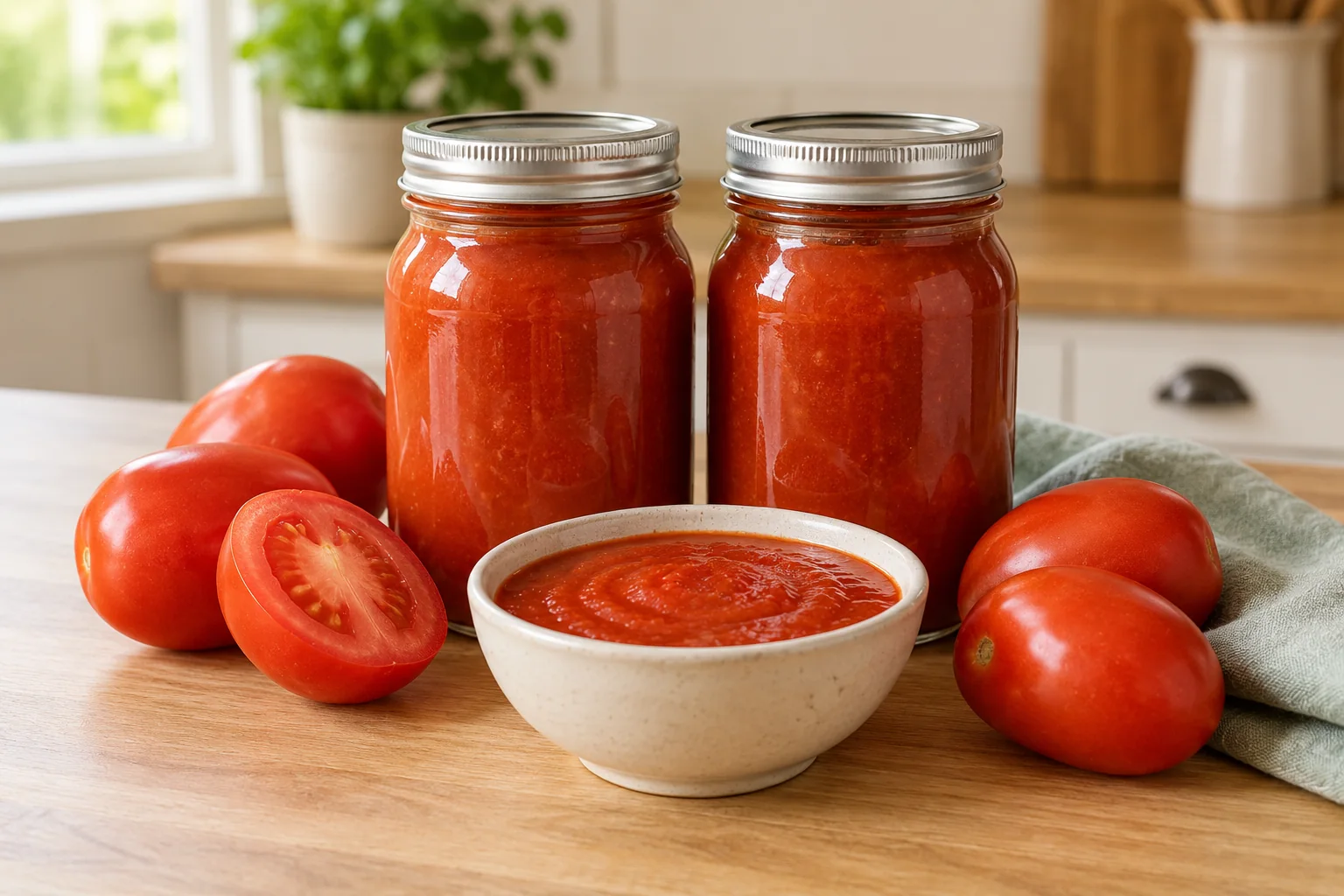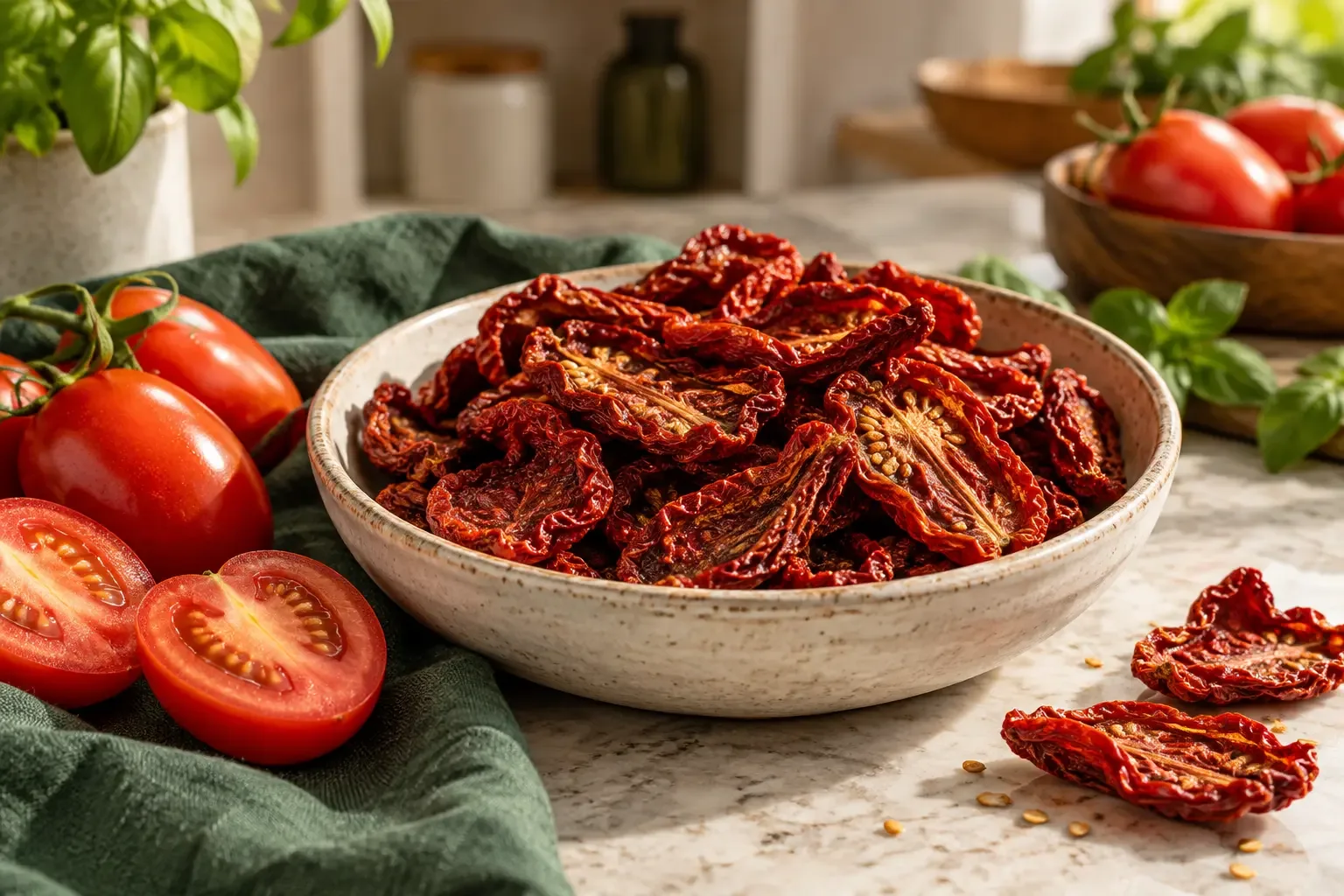
Dehydrating tomatoes is one of the easiest ways to preserve a summer harvest while concentrating their natural flavor. With a food dehydrator, you can turn fresh tomatoes into a compact pantry ingredient for pasta, soups, sauces, snacks and more.
The key is not a single exact drying time. Tomato variety, water content, slice thickness, humidity and your dehydrator all matter. This guide shows you the best temperature range, realistic drying times, how to test for doneness and how to store dehydrated tomatoes properly.
Keep common temperatures and approximate drying times within reach while you dehydrate.
Best Tomatoes for Dehydrating
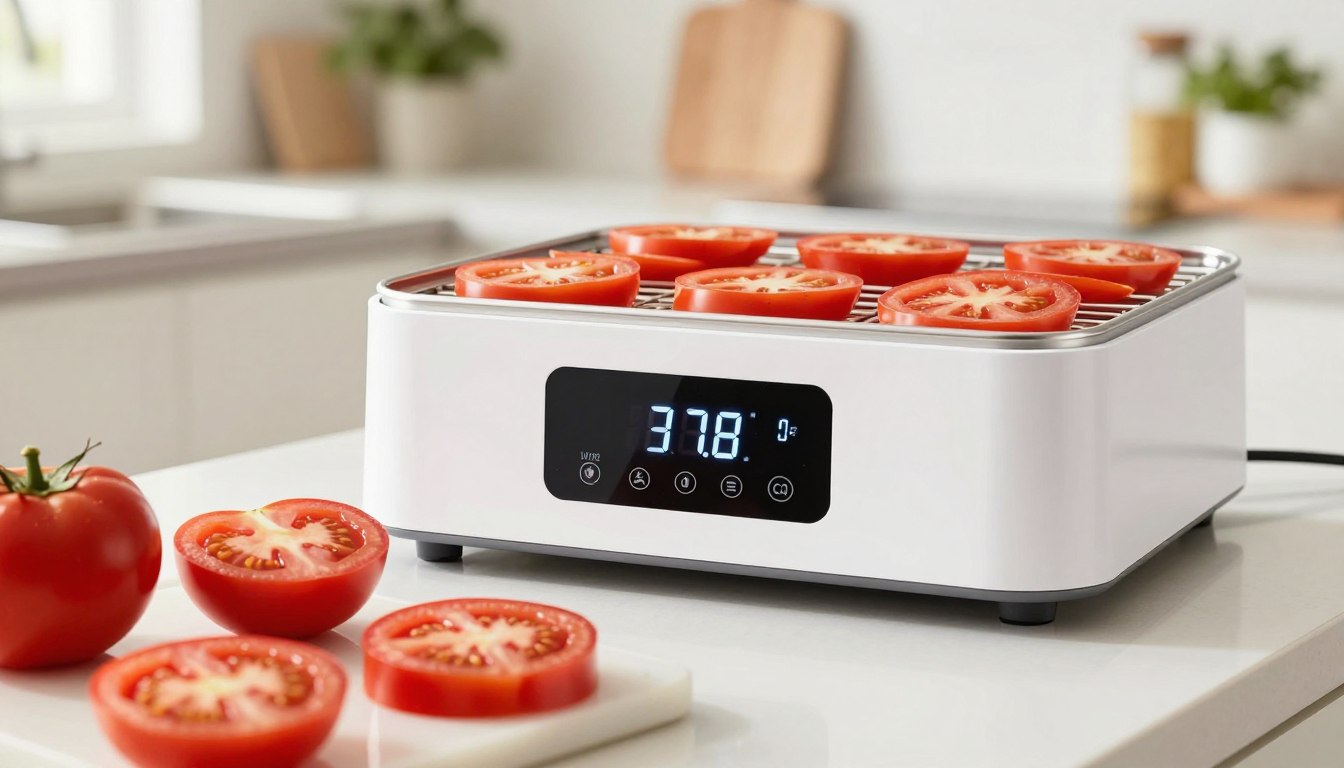
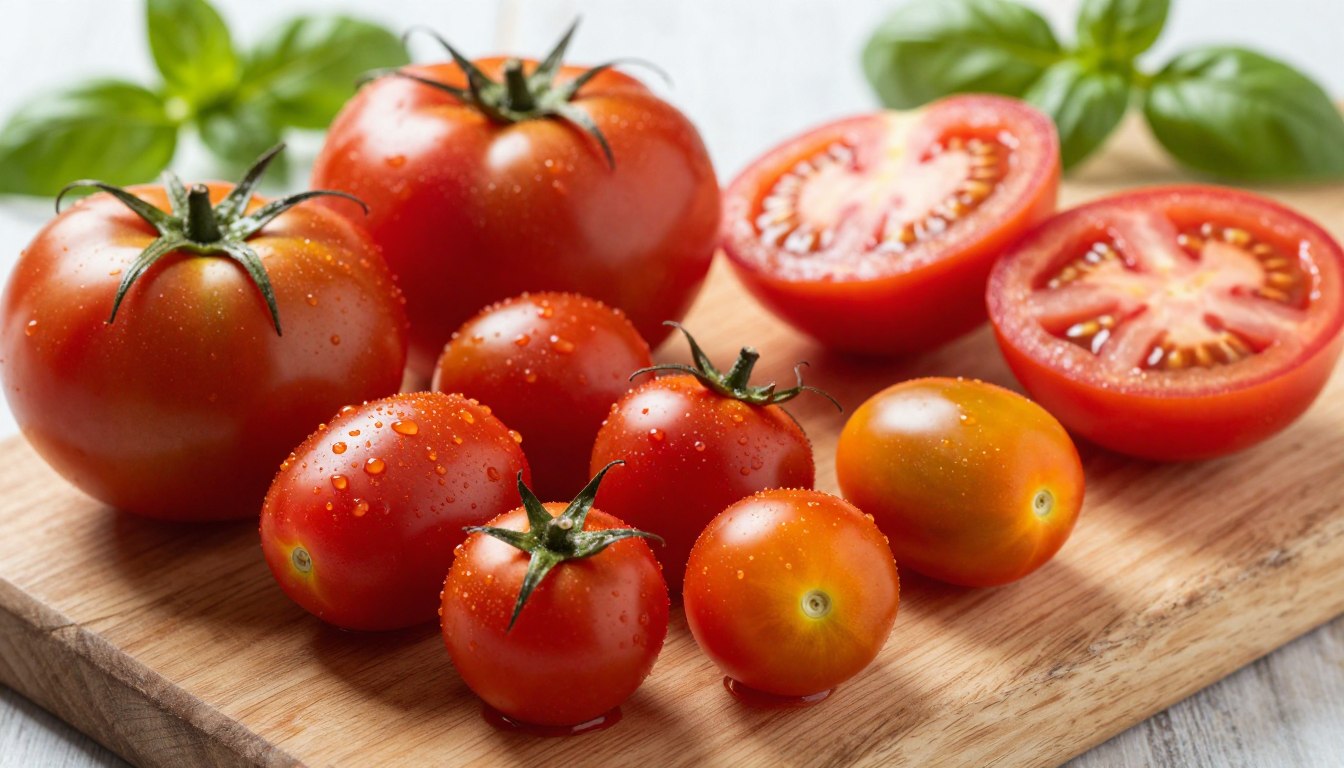
You can dehydrate almost any tomato, but meaty varieties with less water are easier and usually finish faster. Roma, plum and San Marzano tomatoes are especially convenient because they have dense flesh and fewer watery seed cavities.
| Tomato type | Best use | What to expect |
|---|---|---|
| Roma / plum | Slices or halves | Meaty, relatively low moisture, beginner-friendly |
| San Marzano | Halves or thick slices | Rich flavor and firm flesh |
| Cherry / grape | Halved | Sweet, flavorful, often needs longer than expected |
| Large slicing tomatoes | Thin slices | Higher water content and longer drying time |
How to Prepare Tomatoes for Dehydrating
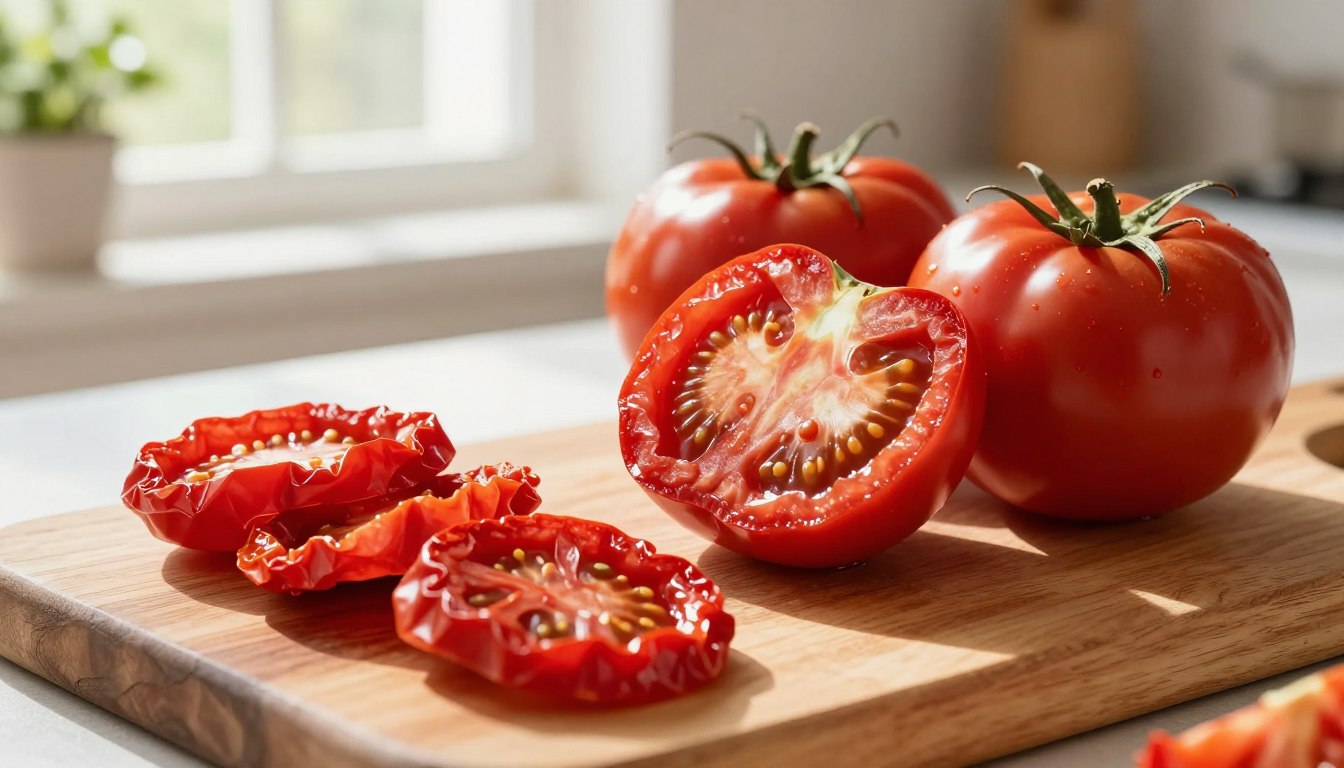
Wash, trim and inspect
Wash the tomatoes under running water, dry them, remove the stem core and cut away bruised or damaged areas. Start with sound, ripe produce for the best quality.
Should you remove the seeds?
You do not have to remove the seeds. With very juicy tomatoes, scooping out some of the watery gel can shorten drying time. Leaving the seeds in is also fine and gives you a more rustic final texture.
Best slice thickness
For larger tomatoes, aim for roughly 1/4 to 1/2 inch thick slices. More important than the exact measurement is consistency: pieces of similar size and thickness dry more evenly.
How to Dehydrate Tomatoes in a Food Dehydrator
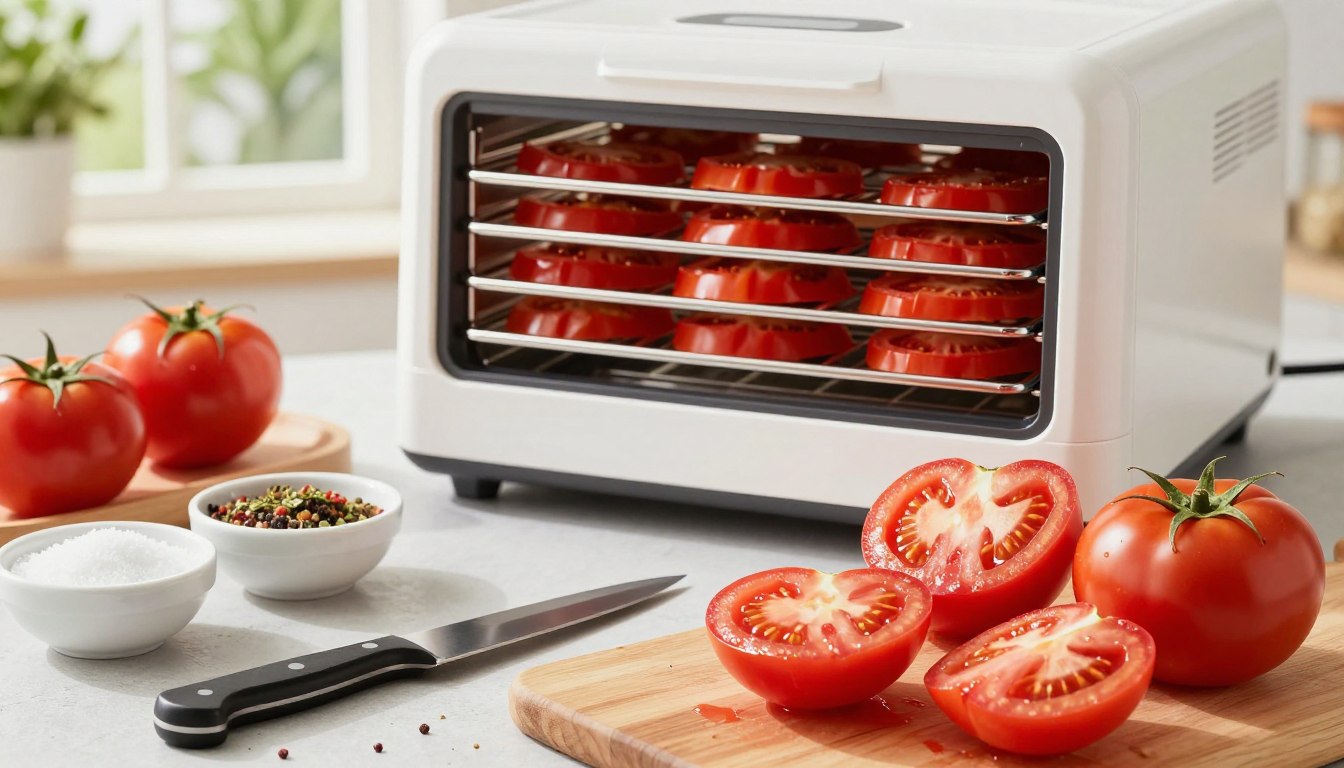
- Prepare and cut the tomatoes into uniform pieces.
- Arrange them in a single layer with space between pieces.
- Preheat the dehydrator if your model recommends it.
- Dry at about 135–140°F (57–60°C).
- Check periodically and remove smaller pieces that finish early.
- Cool a test piece before judging doneness.
- Continue drying until no wet or mushy areas remain.
What temperature should you use?
A steady range around 135–140°F works well for tomatoes. Some preservation guidance recommends briefly starting produce with surface moisture at a slightly higher temperature, then reducing the heat for the remainder of drying. Always follow your dehydrator manufacturer's instructions if they differ.
How long do tomatoes take to dehydrate?
Expect a wide range. Thin slices may finish in around 6–10 hours, while thicker pieces or halved cherry, Roma or San Marzano tomatoes can take 10–18 hours or longer. Humidity and airflow can change the time considerably.
| Cut | Temperature | Approx. time | Target texture |
|---|---|---|---|
| Thin slices | 135–140°F | 6–10 hr | Leathery to nearly crisp |
| Thicker slices | 135–140°F | 8–14 hr | Leathery and dry |
| Cherry / grape halves | 135–140°F | 10–18+ hr | Dry with no wet center |
| Large tomato halves | 135–140°F | 12–24 hr | Leathery to crisp |
How to Tell When Dehydrated Tomatoes Are Done
Do not judge a tomato while it is still warm. Remove one of the thickest pieces and let it cool for a few minutes. Then bend or cut it and check the center. Fully dried tomatoes should be leathery to crisp and should not release moisture when pressed.
If any pieces still have wet, sticky or mushy centers, keep drying them. Pieces that finish earlier can be removed while the rest continue.
How to Dry Tomatoes in the Oven
An oven works if you do not own a dehydrator. Use the lowest practical setting—around 140–150°F when your oven allows it—and arrange tomatoes in a single layer. Moisture needs a way to escape, so follow your oven manufacturer's guidance for low-temperature drying and ventilation.
Oven drying can take roughly 6–24 hours depending on the tomatoes and the appliance. It is best for occasional batches; a dehydrator is generally easier to control for repeated low-temperature drying.
Keep common temperatures and approximate drying times within reach while you dehydrate.
Food Dehydrator vs. Oven for Tomatoes
| Feature | Food dehydrator | Oven |
|---|---|---|
| Low-temperature control | Designed for dehydrating | Depends heavily on the model |
| Airflow | Dedicated continuous airflow | More variable |
| Multiple trays | Common | Limited by rack space |
| Best for | Regular or larger batches | Occasional small batches |
Tray capacity, airflow, temperature range, timer controls and cleanup all matter when choosing a machine.
Find Your Dehydrator →7 Common Tomato Dehydrating Mistakes
- Using too much heat: the outside can harden before the center is dry.
- Cutting pieces unevenly: some pieces finish long before others.
- Overcrowding trays: restricted airflow slows and unevenly dries the batch.
- Relying only on the clock: texture matters more than a fixed number of hours.
- Packing warm tomatoes: residual heat can create condensation.
- Storing pieces with wet centers: remaining moisture raises the risk of spoilage.
- Ignoring your dehydrator manual: airflow and temperature behavior vary by model.
How to Store Dehydrated Tomatoes
Let fully dried tomatoes cool for about 30–60 minutes, then place them in clean, dry, airtight containers. Store them in a cool, dark and dry location. Properly dried foods generally keep best for several months, with quality depending heavily on temperature, moisture and packaging.
Check stored tomatoes occasionally, especially during the first days. If you see condensation, the batch needs additional drying. Discard tomatoes that develop mold, an off odor or unexpected moisture.
How to Use Dehydrated Tomatoes
Fully dried tomatoes can be used as-is when you want concentrated flavor, or rehydrated before cooking. To soften them, cover with warm water and soak until pliable, then drain and use as needed.
- pasta sauces and soups
- pizza and focaccia
- grain bowls and salads
- pesto and savory spreads
- bread doughs
- powdered as a concentrated tomato seasoning
Is a Food Dehydrator Worth It for Tomatoes?
If you only dry one small batch each year, your oven may be enough. If you regularly preserve tomatoes, fruit, herbs or vegetables, a dedicated dehydrator is more convenient because it is designed for controlled low heat and continuous airflow.
If you are comparing models, see the Best Food Dehydrators buying guide for tray capacity, temperature controls and other buying criteria.
Three dehydrators for tomato batches
Compare the exact model, size and included parts before ordering. Equipment supports the process; follow the food-specific method and safety checks.

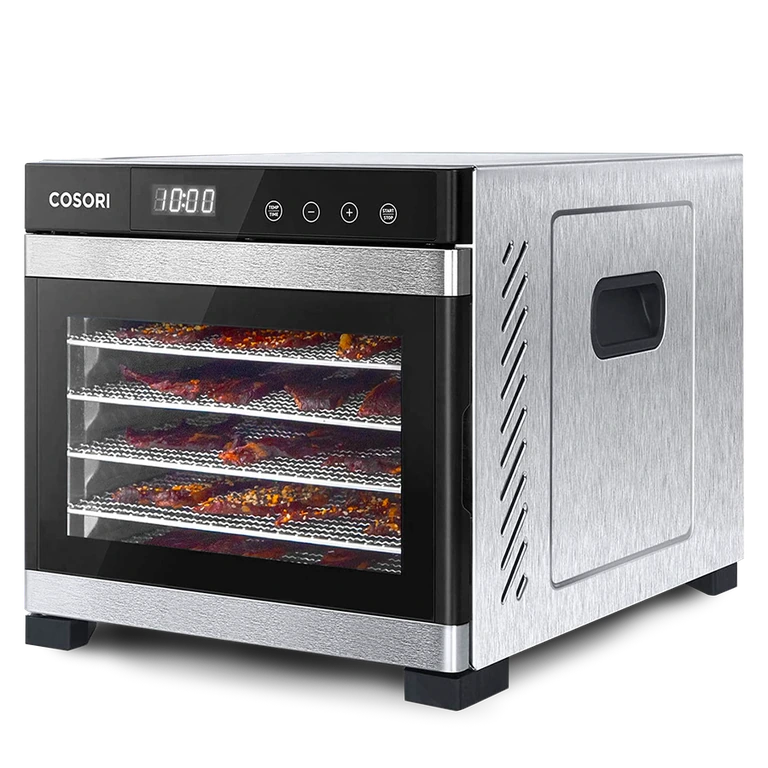
COSORI CP267-FD Food Dehydrator*
A six-tray, digitally controlled dehydrator from our U.S. dehydrator buying guide. Its adjustable temperature range covers the low-heat fruit-drying temperatures discussed in this guide.
View on Amazon
NESCO FD-75A Snackmaster Pro*
A stackable dehydrator that starts with five trays and can expand. It is a practical option when you want to begin with smaller apple batches and add capacity later.
View on Amazon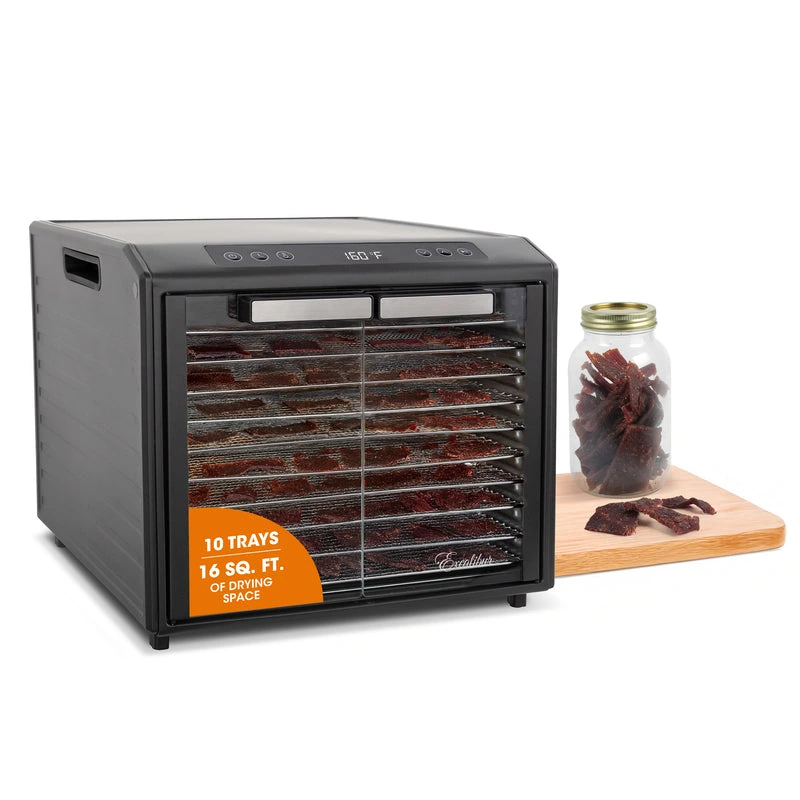
Excalibur Performance Series 10-Tray
Ten stainless steel trays, adjustable temperature control and a glass-door cabinet format suit readers who regularly prepare larger batches.
View on AmazonAffiliate links · Your price stays the same.
Frequently Asked Questions About Dehydrating Tomatoes
What temperature should I dehydrate tomatoes at?
About 135–140°F (57–60°C) is a practical range for most tomato batches. Follow your dehydrator manufacturer's instructions if they recommend a different setting.
How long does it take to dehydrate tomatoes?
Roughly 6–18 hours is common for many sliced or halved tomatoes, but large, juicy pieces can take up to 24 hours. Slice thickness, humidity, variety and airflow all affect drying time.
Do I need to remove tomato seeds before dehydrating?
No. Removing watery seed gel can shorten drying time for very juicy tomatoes, but it is optional.
Can I dehydrate tomatoes with the skin on?
Yes. Small Roma and cherry tomatoes can be dried with the skin on. Larger tomatoes can also be dried with the skin, although some preservation methods peel larger tomatoes first.
How should I store dehydrated tomatoes?
Cool fully dried tomatoes before placing them in clean airtight containers. Keep them in a cool, dry and dark location and watch for condensation or moisture.
Can I dry tomatoes in the oven?
Yes. Use a low setting around 140–150°F when your oven supports it and make sure moisture can escape according to the appliance manufacturer's guidance.
Final Thoughts
Learning how to dehydrate tomatoes is mostly about consistency: start with good produce, cut pieces evenly, use steady low heat and judge doneness by texture rather than the clock. A range around 135–140°F works well for most batches, while drying time can vary from several hours to most of a day.
For long-term storage, the tomatoes need to be fully dried, cooled and packed in airtight containers in a cool, dry, dark place. Once you have the process dialed in, dried tomatoes are an easy way to preserve a large harvest in very little storage space.