Affiliate disclosure: The Amazon links in this guide are affiliate links. As an Amazon Associate I earn from qualifying purchases; your price stays the same.
What do you actually want on your pantry shelf?
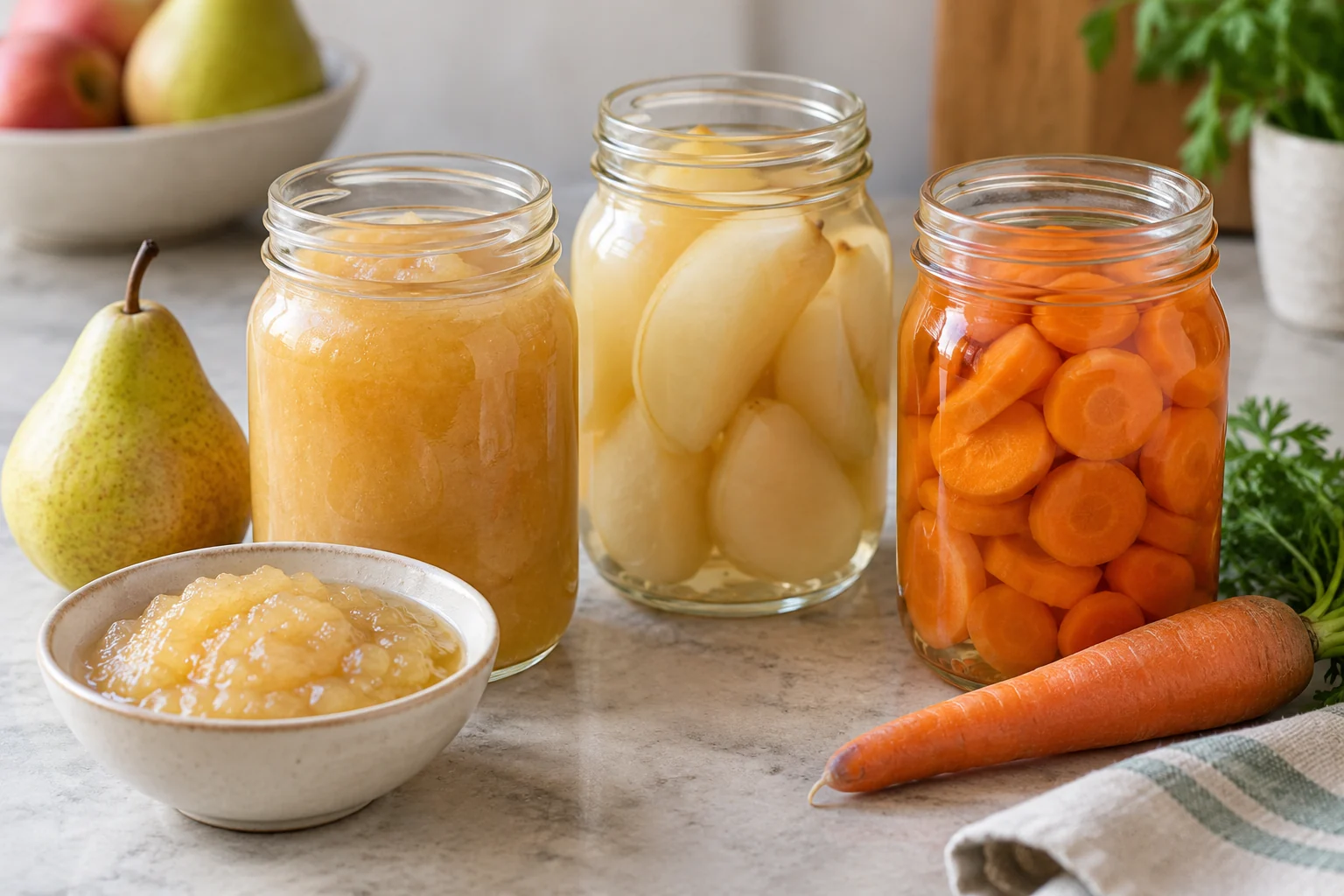
Start with two realistic projects. Applesauce and pear halves point toward one kind of canning session; plain carrots and pumpkin cubes point toward another. Naming the food is more helpful than deciding that you want the appliance with the most programs.
Next, find the complete tested recipes and write down their canning methods. The choice may become obvious before you compare any products. If your main interest is a small jar of refrigerator pickles, you may not need a canner for that project at all. Our beginner canning guide gives you the method overview before you invest in equipment.
What does a water-bath canner do?
A boiling-water setup holds jars on a rack beneath boiling water. The pot must be deep enough for the water coverage required by the process, with space for boiling. It is useful for suitable tested fruit and acidified-food recipes; it is not a universal vegetable-preserving machine. NCHFP’s recommended-canner guidance explains the equipment distinction.
For a first purchase, consider where the pot will sit during use and where you will store it afterward. A large pot that blocks every other burner may be awkward when the recipe also needs a pan of hot fruit or liquid. Check the burner and canner instructions together rather than assuming every combination is suitable.
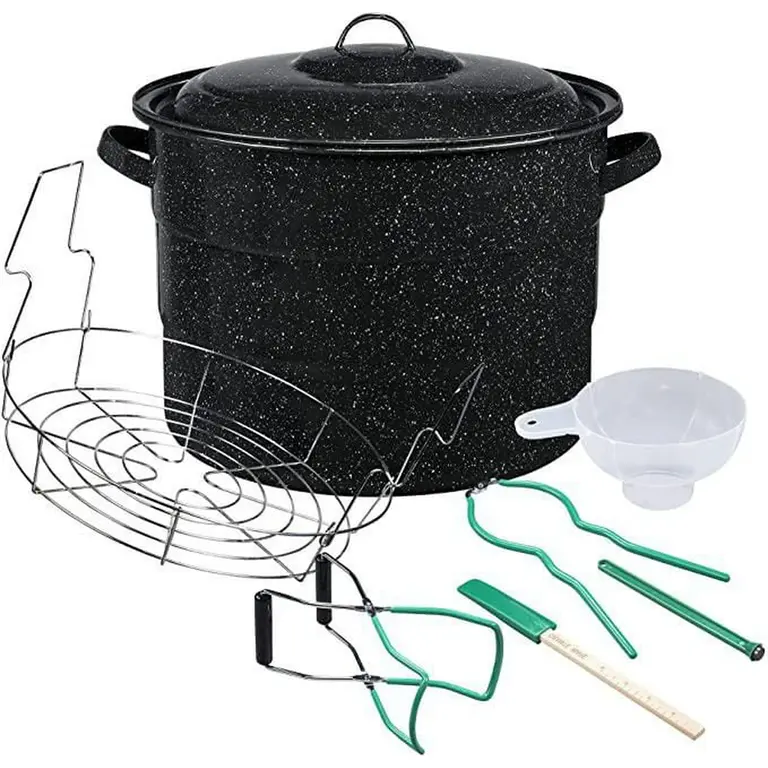
For a tested boiling-water recipe, compare the Granite Ware water-bath canner set on Amazon. Check the rack, required water coverage and compatibility with your range before choosing the set.
Electric temperature controls need a separate check. Before choosing the WantJoin electric water-bath canner, confirm in its manual how to maintain a continuous boil with the intended load. Start the recipe’s processing time only once the water is boiling; a dial setting or automatic countdown does not replace that observation. Use the recipe’s elevation adjustment.
The WantJoin listing currently says 33 quarts in its title and 30 quarts in its feature text. Confirm the actual vessel and permitted jar load before ordering; neither capacity claim establishes the required water coverage above the jars.
What makes a pressure canner different?
A pressure canner is used with a recipe that specifies controlled pressure processing. Gauge type, elevation and the complete heating-and-cooling sequence matter. USDA schedules are based on suitable canners, not simply any appliance whose display shows pressure. NCHFP’s pressure-canner instructions describe the required operating sequence.
Before buying, decide whether you can give the session your attention and arrange the workspace so the gauge or regulator remains easy to observe. Add the manufacturer’s manual to your recipe folder. A canner becomes easier to use when its routine is familiar; extra features do not remove the need to understand what the equipment is doing.
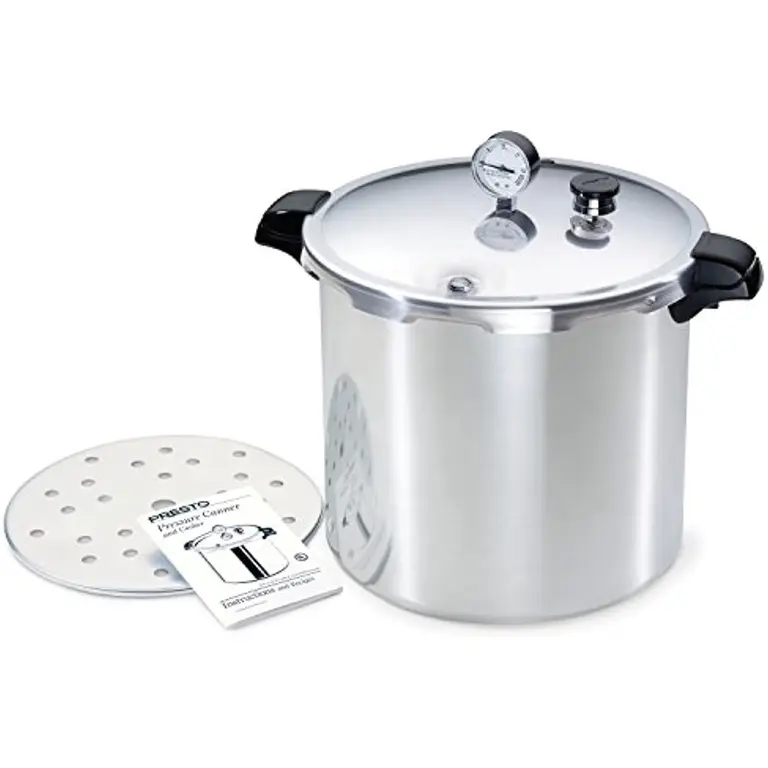
If your tested recipe requires pressure canning, compare the Presto 01781 23-quart pressure canner on Amazon. Match the exact model to the manufacturer’s manual, and plan for gauge care and the full heating and cooling sequence.
The All American 921 in Kelp offers a metal-to-metal seal and regulator weight. The manufacturer’s 921 specifications distinguish it from the dial-gauge Presto above. Check the precise model and range guidance; the All American is not induction-compatible.
Why is a pressure cooker a different decision?
A pressure cooker can be useful for dinner. That does not give it a canning process. Small pressure saucepans are not the equipment covered by USDA home-canning schedules, and copying the pressure setting alone does not recreate the tested heating and cooling behavior.
Read product descriptions with the intended job in mind. “Pressure,” “multifunction” and “preserve” can appear in marketing without answering whether the exact device has appropriate canning instructions for your food. Ask for the manual and validated process information before treating a new electronic or small-format appliance as equivalent. If that information is missing, keep it for its documented cooking functions.
The CAREY card below is a cooking comparison, not a recommendation for USDA pressure canning. The CAREY DPC-9SS is marketed with canning programs, but that claim does not establish that USDA stovetop schedules apply. NCHFP does not recommend its pressure-canning processes for electric pressure multicookers. Heating and cooling behavior matter as well as the displayed pressure.
How should you compare the equipment you need?
Make a short list with four practical columns: supported recipe, compatible stovetop, usable jar capacity and storage location. Measure the space before reading color options. Include the full canner height with its lid and the room you need to lift jars out safely.
Look at the permitted jars per load, not just the capacity printed in quarts for the vessel itself. A tall container may accommodate different arrangements from a wide one. Confirm any stacking arrangement with the manual. Think about the weight of the filled equipment as well: a manageable routine is more useful than maximum capacity you seldom use.
For filling and moving hot jars, the Norpro Canning Essentials tool set on Amazon is a practical accessory option. Check what is already included with your canner before buying a second set.
Two kit limits change the purchase. The stainless steel starter kit listing limits canning jars to 12 oz or less; do not choose it for pint or quart projects. Use only a jar size supported by your tested recipe and verify water coverage. The Granite Ware set’s listing excludes glass cooktops and induction. Confirm what the set already includes before adding the Norpro tools.
Water-bath canners: three setups for acid-food recipes
Compare these only for a tested recipe that permits boiling-water processing. Check the exact jar size, required water coverage and heat source before choosing.
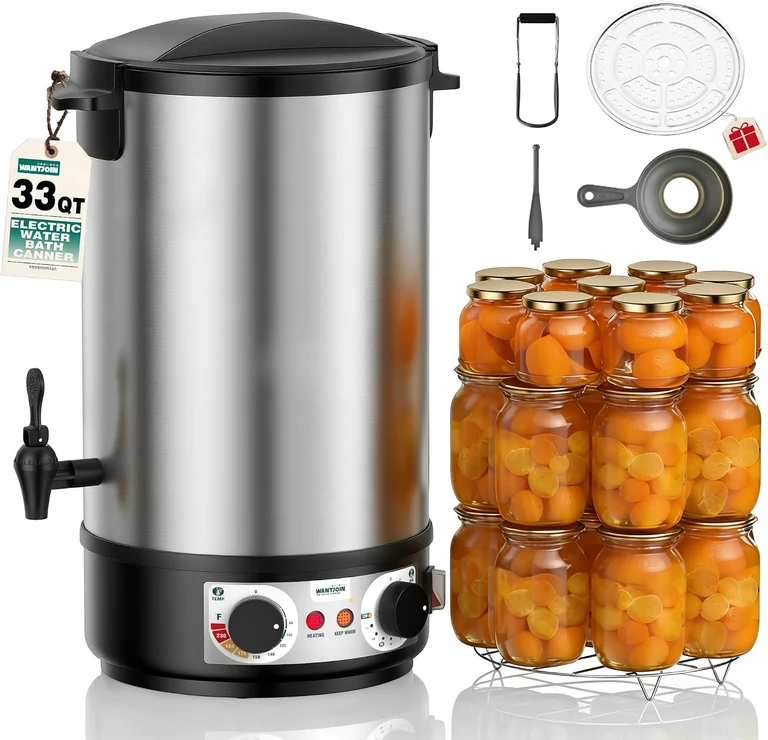
WantJoin Electric Water-Bath Canner · 1800 W
Countertop water-bath option. Confirm the manual allows a continuous boil with your jar load; its temperature dial and timer do not validate a canning process.
View on Amazon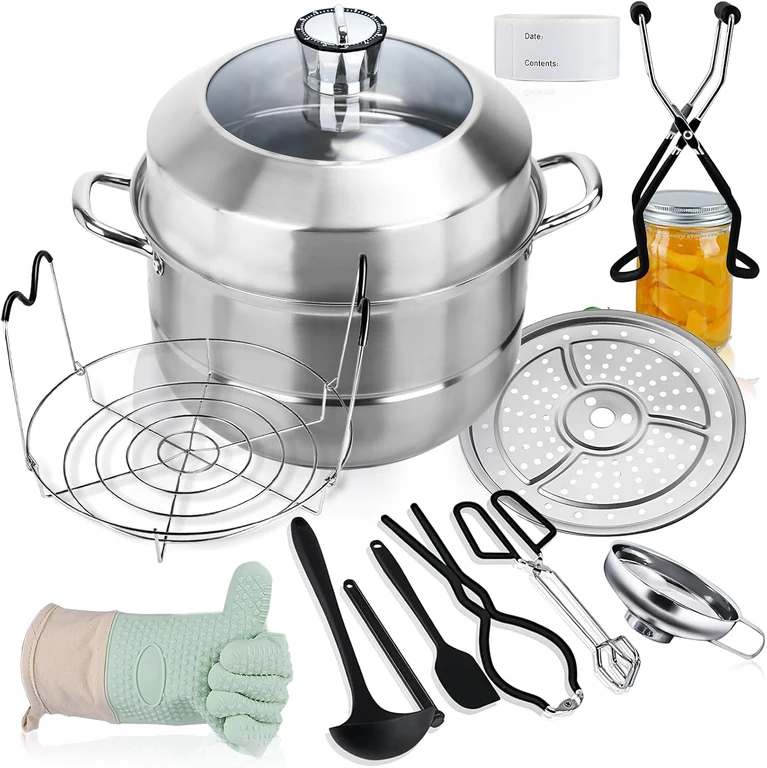
Stainless Steel Water-Bath Starter Kit
Small-jar kit: the listing limits canning jars to 12 oz or less. Check depth with a recipe-supported jar size; this is not a pint- or quart-jar setup.
View on Amazon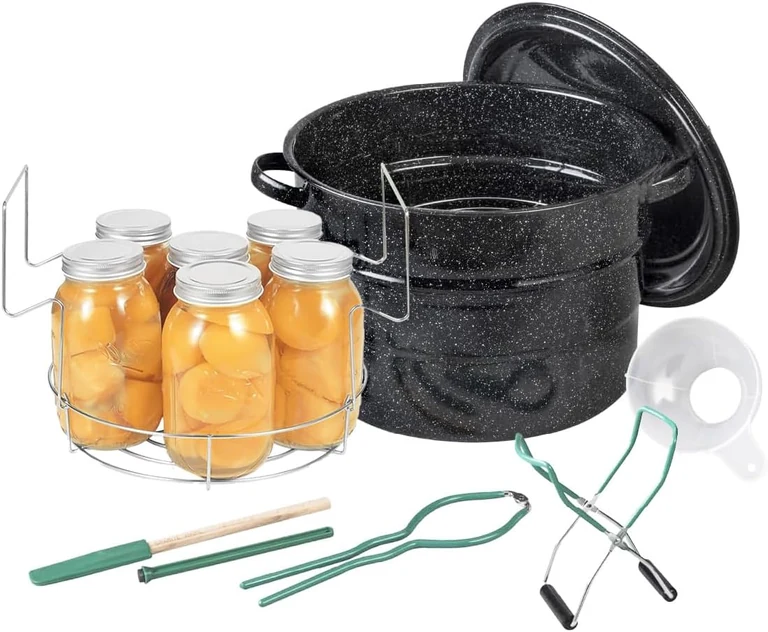
Granite Ware Water-Bath Canner Set
Enamel-on-steel pot, rack and handling tools for suitable boiling-water recipes. The listing excludes glass cooktops and induction.
View on AmazonAffiliate links · Your price stays the same.
Pressure equipment: check the process first
All American and Presto are stovetop canners to match to a tested process. The CAREY is included as an electric cooking comparison with a different limit: we do not recommend applying USDA pressure-canning schedules to it.
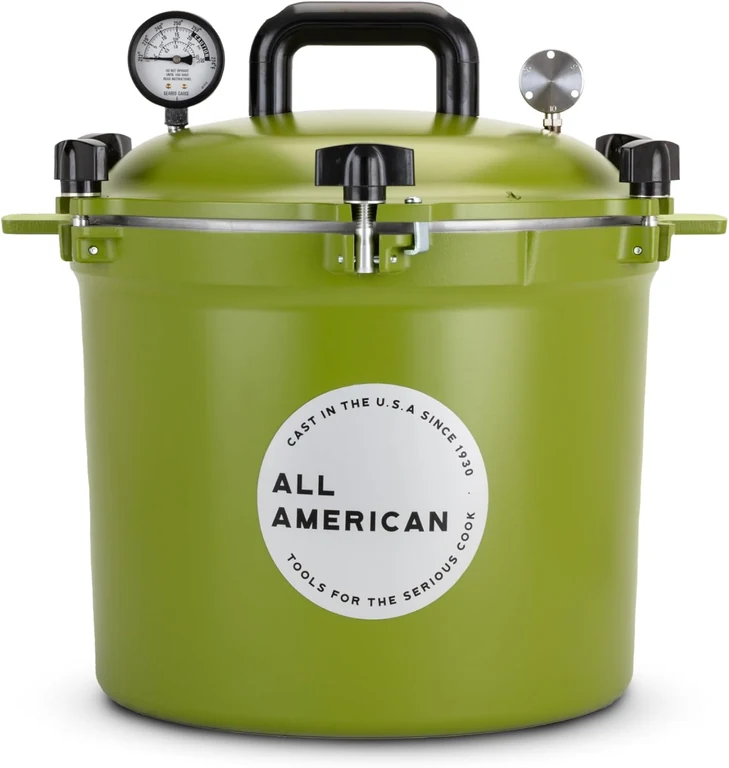
All American 1930 · 921 Kelp · 21.5 Quart
Cast-aluminum canner with a metal-to-metal seal and regulator weight. Match the tested pressure process and range instructions; it is not induction-compatible.
View on Amazon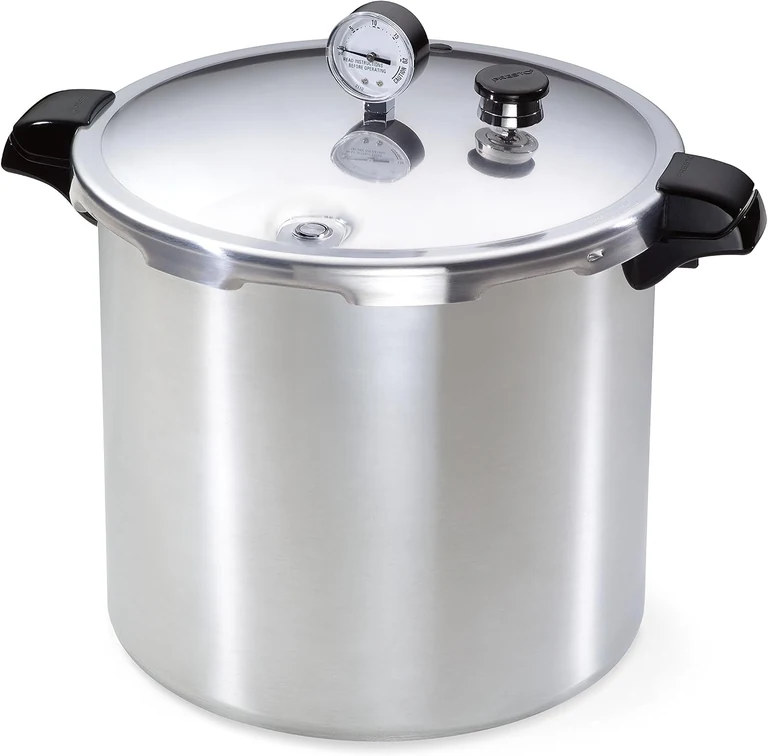
Presto 01781 · 23-Quart Pressure Canner
A dial-gauge canner with rack for suitable pressure-canning processes. Plan for gauge checks, the correct elevation setting and the full heating and cooling sequence.
View on Amazon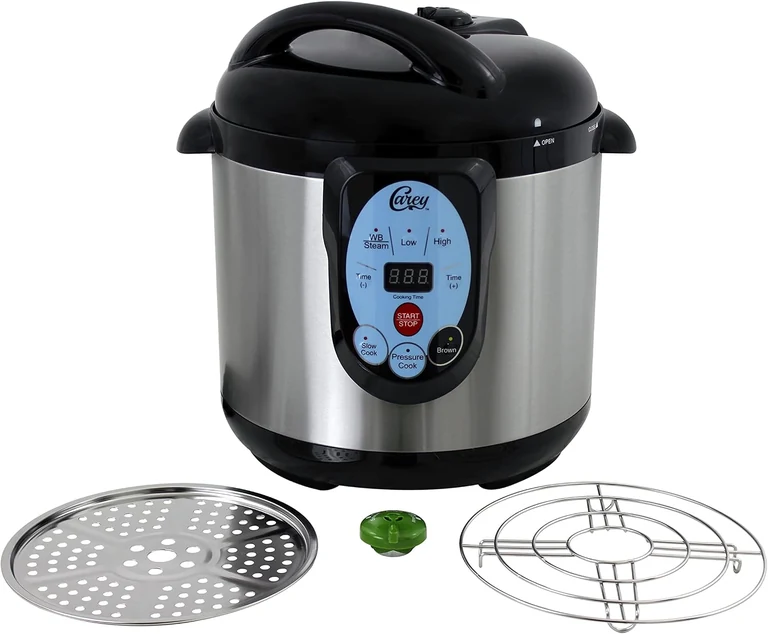
CAREY DPC-9SS · 9.5-Quart Electric Cooker/Canner
Not recommended here for USDA pressure-canning processes. Compare its documented cooking functions; do not transfer stovetop canning schedules to this electric model.
View on AmazonAffiliate links · Your price stays the same.
Check the exact jar size and canner compatibility before buying. The recipe determines the method; an accessory cannot make an unsupported process suitable for pantry storage.
Choose your canner in seven practical steps
Name your first food
Choose a specific preserve you genuinely plan to eat, rather than an appliance category.
Choose the tested recipe
Identify the exact food, preparation, jar sizes and required processing method.
Check what you own
Read the manuals for your pot, rack, canner and range. Do not infer suitability from appearance.
Plan a realistic batch
Choose a recipe-supported jar size and a load you can prepare and monitor comfortably.
Measure the work and storage space
Allow room for preparation, the heated canner, lifting jars and undisturbed cooling.
Compare the exact models
Match the product identity, compatible heat source, gauge arrangements and available replacement parts.
Learn the routine before preserving
Read the complete canner manual and source method before food is ready to go into jars.
Which jars and closures belong with the canner?
Use the jar types, sizes and closures supported by your tested process. Quart jars make sense only when that size is included and the portion suits your household. A different closure system may need its own manufacturer instructions; do not translate from a neighboring volume by rounding.
Inspect the jars before shopping for more equipment. A sound collection in the right sizes can be worth more than a matching set of new accessories. Store lids and bands where you can identify them easily, and keep preparation tools in one box. This reduces the small interruptions that make a canning session feel unnecessarily complicated.
When the tested recipe permits the size, compare Ball regular-mouth pint jars (16 oz) on Amazon for smaller portions or Ball wide-mouth quart jars (32 oz) on Amazon for a larger portion. Choose the recipe’s permitted jar size first, then match the lids and bands to the mouth size. Review NCHFP’s jar and lid guidance before preparing the jars.
Match the jar recommendation to the actual pot. The pint and quart jars above require a canner with sufficient usable depth and a recipe that permits those sizes. They do not fit the stainless starter kit’s stated 12 oz maximum.
Does the faster appliance always save more time?
Compare the whole session rather than the processing timer alone. Washing, preparation, preheating, loading, processing and cooling all occupy your kitchen. A pressure canner must cool according to its instructions; planning to hurry that stage undermines the method.
For the first batch, leave the afternoon flexible and keep another meal simple. Once you know the routine, note which stage actually caused delays. The useful improvement may be a better work surface or a smaller batch, not a new appliance. Choose equipment you can operate calmly and repeatably.
Three assumptions that cause avoidable mistakes
“The lid sealed, so the method worked.” A closure does not validate an inappropriate process. Keep the recipe and canner record, not just the jars.
“One vegetable time will cover the rest.” The food’s preparation and packing belong to its tested method. A canner does not create a universal schedule.
“More programs mean less responsibility.” Convenience features still need documented limits. Choose the equipment whose instructions match your intended food instead of buying on the basis of a generic promise.
Questions about canners and pressure cookers
Can a regular stockpot be used for water-bath canning?
Only if it meets the method’s requirements, including a suitable rack, lid, depth and water coverage, and is compatible with the heat source. Check the complete water-bath instructions.
Can I use a small pressure cooker for USDA canning times?
No. The standard schedules are not established for small pressure saucepans. Use an appropriate pressure canner and its correct process.
Do I need a pressure canner for applesauce?
A tested applesauce recipe can use boiling-water processing. Follow the recipe you selected rather than buying a pressure canner solely because it sounds more powerful.
Can I water-bath plain carrots or pumpkin?
Those plain low-acid products need the appropriate pressure-canning methods. They are not covered by a fruit-canning water bath.
Are dial-gauge and weighted-gauge settings the same?
Not necessarily. Select the correct gauge-type table and elevation row for the recipe, and follow the canner manual.
Which appliance should a beginner buy first?
Choose the first tested food project, check existing suitable equipment, then buy only what that complete method requires. There is no single best appliance for every preserve.
Sources and editorial notes
Written for US home canning using the primary sources below. Product destinations and the added jar guidance were checked on September 12, 2026. These are editorial explanations, not an independently tested recipe or product trial. Prices, sellers and availability can change. Accuracy cannot be guaranteed; verify the complete current source instructions before preserving food.
- NCHFP: Recommended Canners
- NCHFP: Using Pressure Canners
- NCHFP / University of Georgia: Using Boiling Water Canners
- NCHFP: Cooling Jars and Testing Jar Seals
- NCHFP: Recommended Jars and Lids
- NCHFP: Canning in Electric Multi-Cookers
- All American 1930: The 921 — specifications and manual
- Presto: 01781 23-Quart Pressure Canner — specifications and manuals
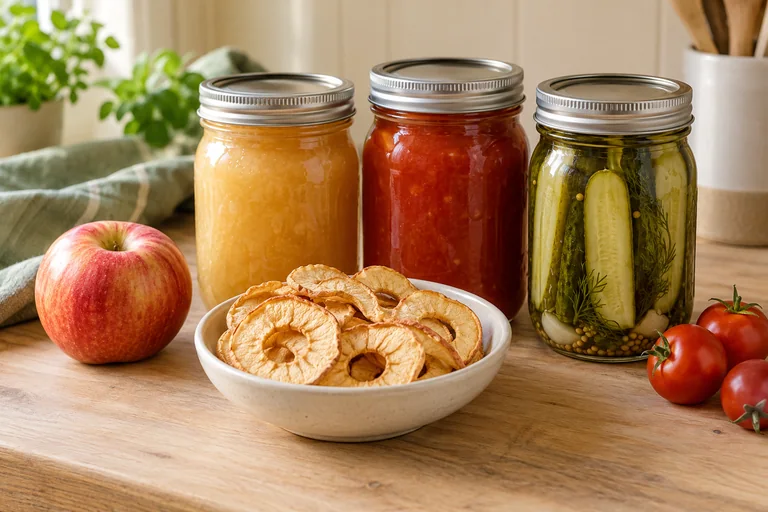
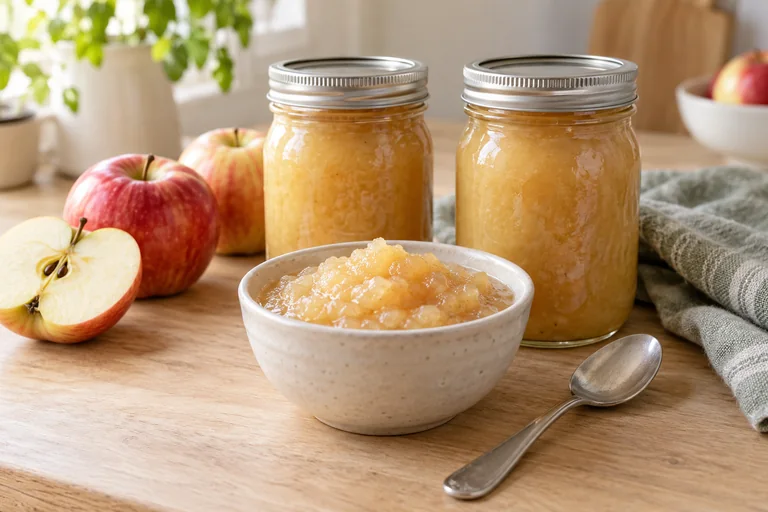
AI-generated food illustrations; they do not document an in-house preservation test.