RECIPE · CANNING & PRESERVING
Easy homemade applesauce is one of the simplest fruit projects to put into jars, but shelf-stable canning has one important rule: cooking the applesauce and filling hot jars is only the first part. For room-temperature pantry storage, the filled jars still need to be processed with a tested canning method.
This guide follows the current National Center for Home Food Preservation (NCHFP) applesauce method for U.S. pint and quart Mason jars. You will learn how to choose apples, make smooth or chunky sauce, leave the correct headspace, adjust water-bath processing time for altitude, check the seal, store the jars, and avoid the most common canning mistakes.
What are the best apples for homemade applesauce?
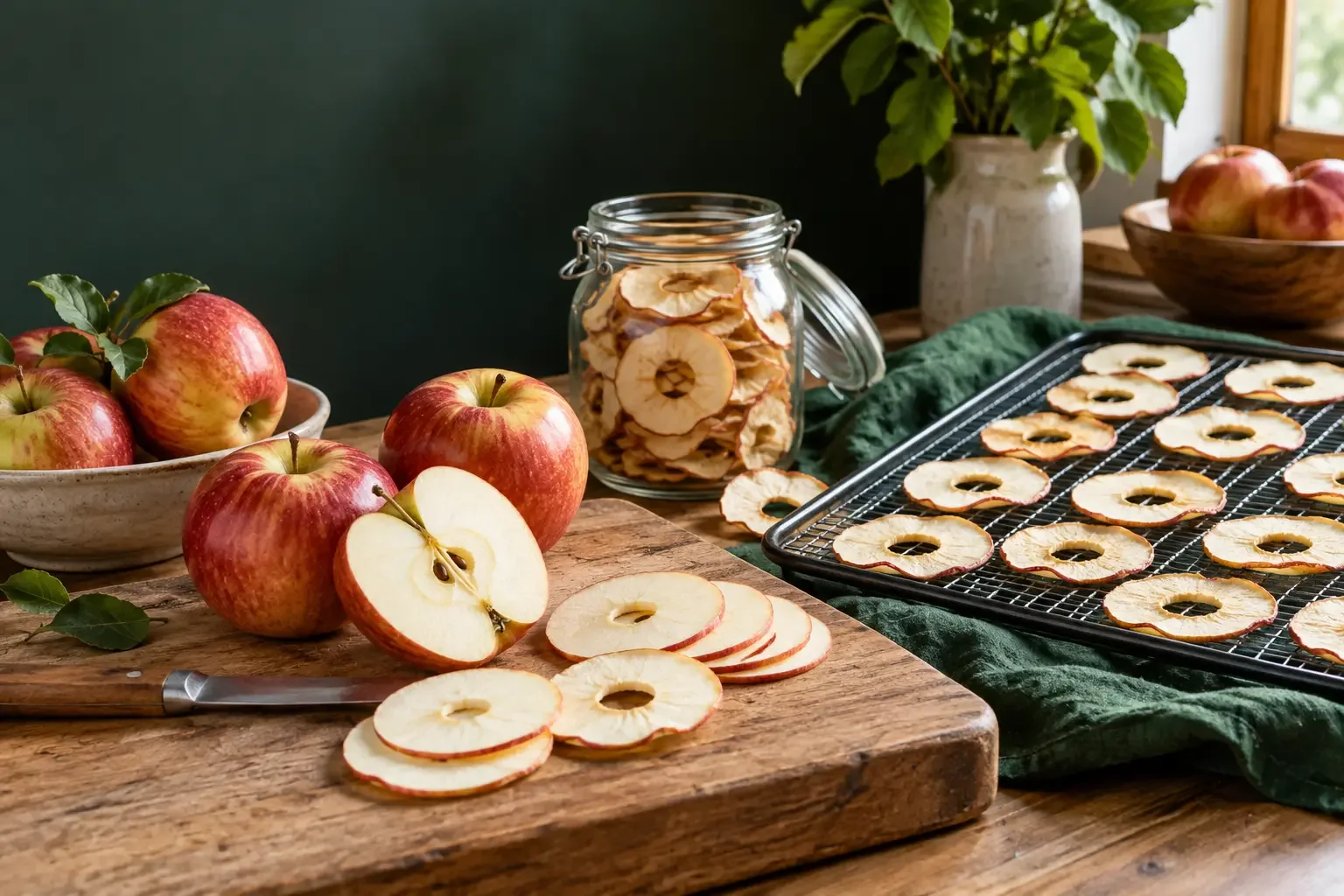
NCHFP recommends apples that are sweet, juicy, and crisp. If you want a more tart sauce, its tested guidance suggests adding about 1–2 lb of tart apples for every 3 lb of sweeter fruit. That gives you room to balance flavor without relying on added sugar.
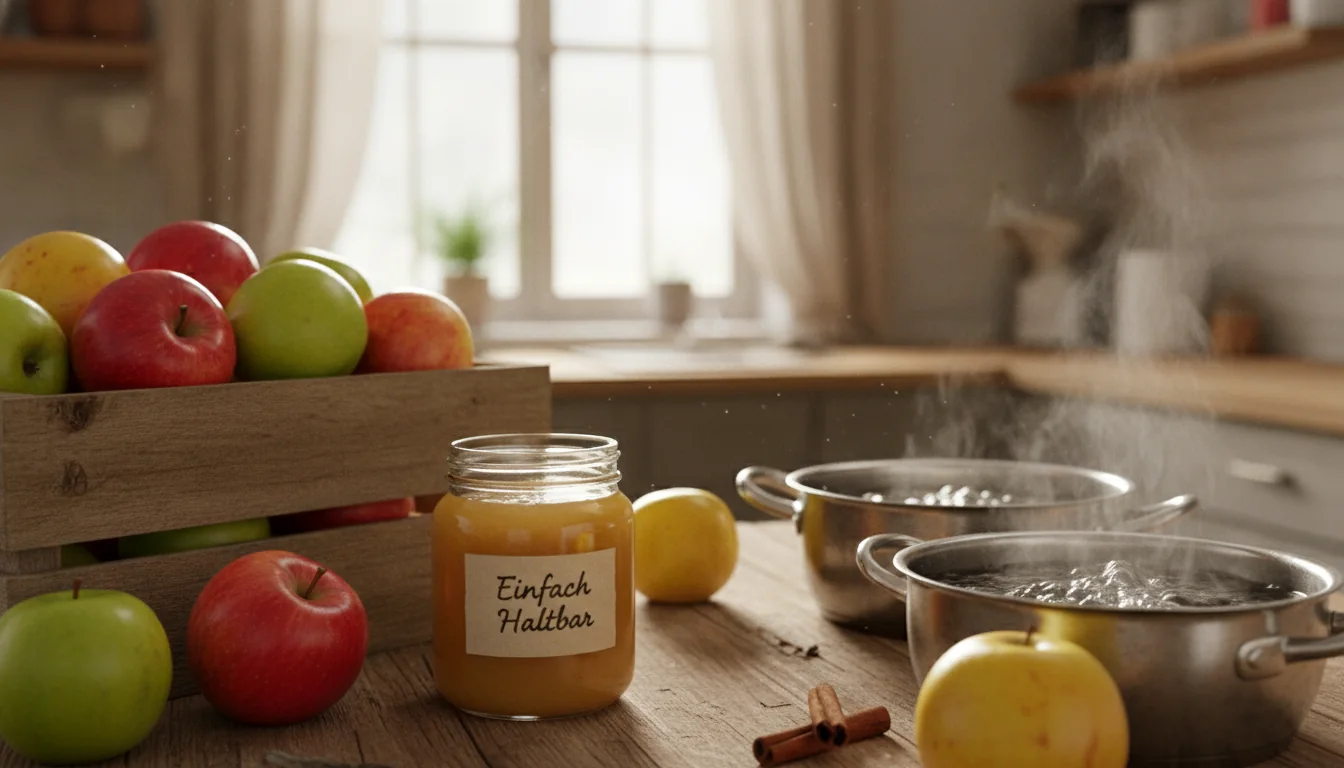
For a U.S. kitchen, a mix such as Gala, Fuji, Golden Delicious, Honeycrisp, McIntosh, Jonathan, or Granny Smith can work well depending on the flavor and texture you like. Softer apples tend to break down quickly; firmer apples can give the sauce a little more body. The most important point for canning is quality: start with sound fruit and discard rotten or badly damaged portions.
| Apple style | What it adds | How to use it |
|---|---|---|
| Sweet / mellow | Natural sweetness and a softer flavor | Use as the base when you want little or no added sugar. |
| Tart | Brighter acidity and a fresher finish | Blend with sweeter apples instead of making the whole batch sharply tart. |
| Mixed batch | More balanced flavor and texture | A practical choice when processing several varieties from one harvest. |
Easy homemade applesauce: a practical tested-method batch
NCHFP reports an average of about 3 lb of apples per quart of finished sauce. A practical home batch is therefore about 6 lb of apples, which will often land near two quarts, although actual yield changes with variety, trimming, and how thick you make the sauce.
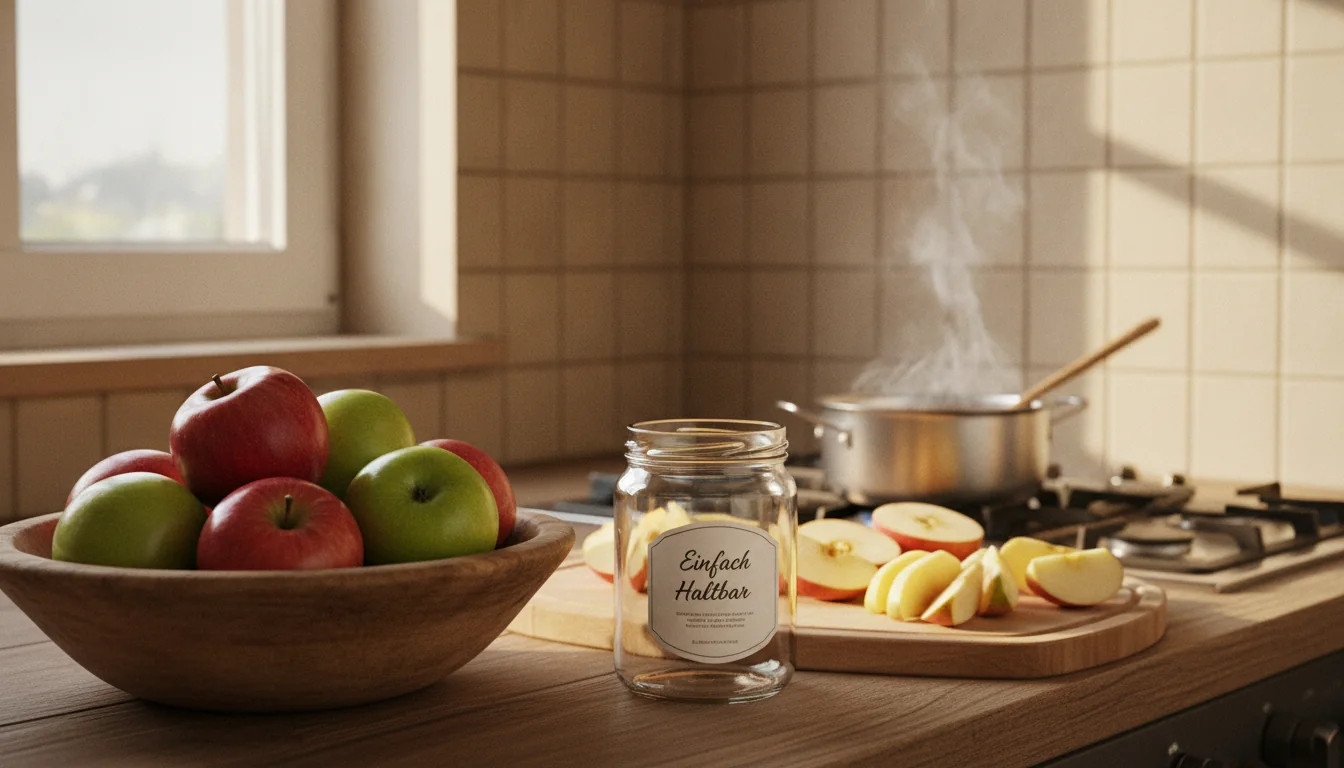
If you are making applesauce only for immediate eating, you can season it more freely. For shelf-stable jars, do not turn a tested applesauce method into a different product by adding starch, dairy, butter, or large amounts of other ingredients before canning. If you want cinnamon or vanilla, the conservative approach is to add it when serving unless you are following a tested recipe that specifically includes that addition.
Can you can applesauce without sugar?
Yes. In the NCHFP applesauce procedure, sugar is a flavor option, not the preservation step. You can pack the sauce without sugar as long as you follow the rest of the tested hot-pack and processing directions.
Wash, peel, core, and cut the apples
Wash the apples, peel them, remove the cores, and cut the fruit into pieces that will soften at roughly the same rate. NCHFP's tested applesauce procedure uses peeled and cored apples. If color matters to you, the sliced apples can be held in an ascorbic-acid solution before cooking to reduce browning.
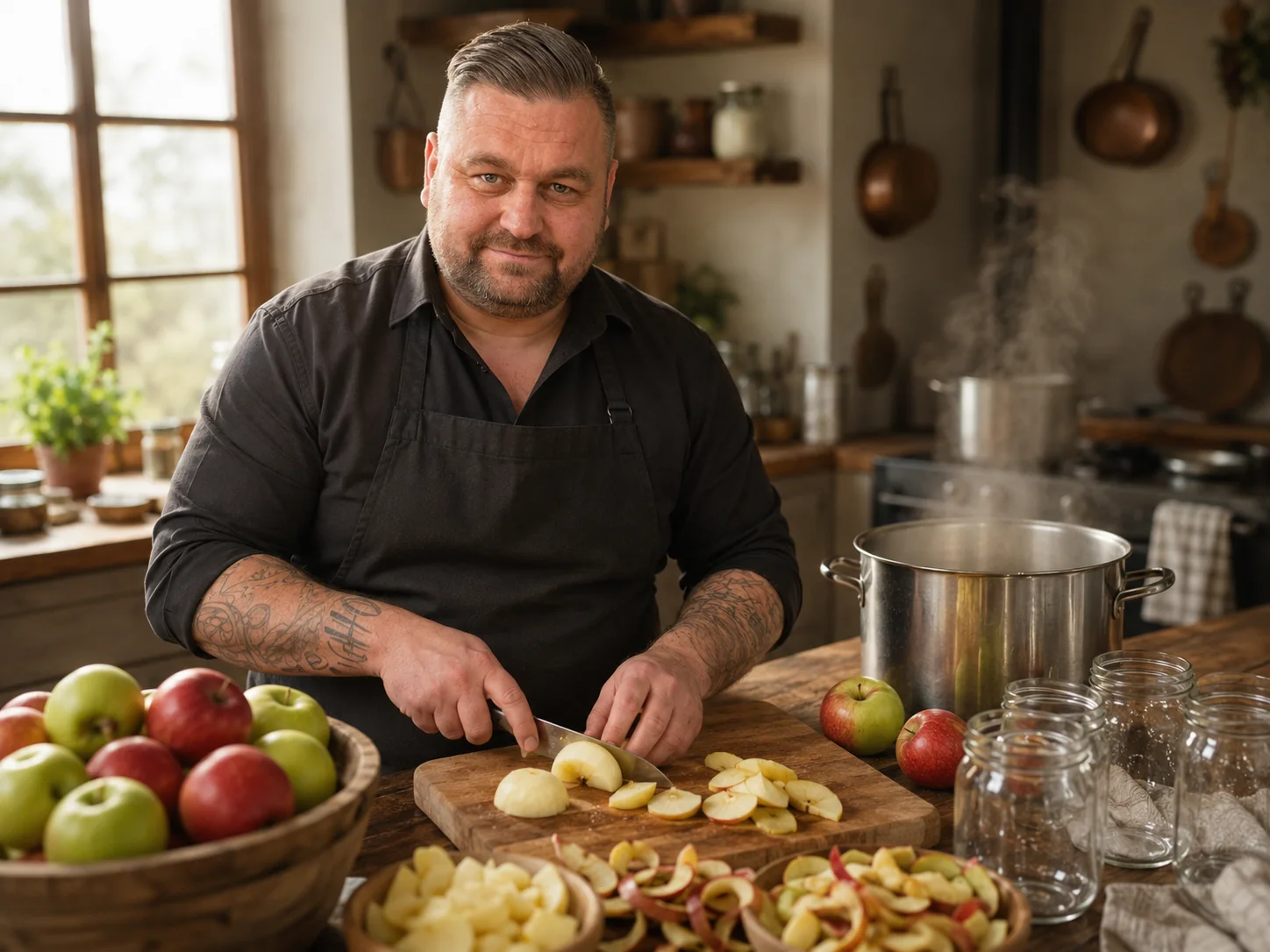
For one small batch, a knife, peeler, and corer are enough. If you process boxes of apples every fall, prep tools can save a lot of repetitive work.
Tools that can speed up bigger batches
You do not need all of these. Choose the level of prep help that matches your batch size. We did not personally test these products.

Chrome Cast-Iron Apple Peeler / Slicer / Corer*
A suction-base crank tool for peeling, coring, and slicing many apples in sequence.
View on Amazon
5-in-1 Apple Peeler / Slicer / Corer*
Another crank-style option when you want several prep steps combined in one tool.
View on Amazon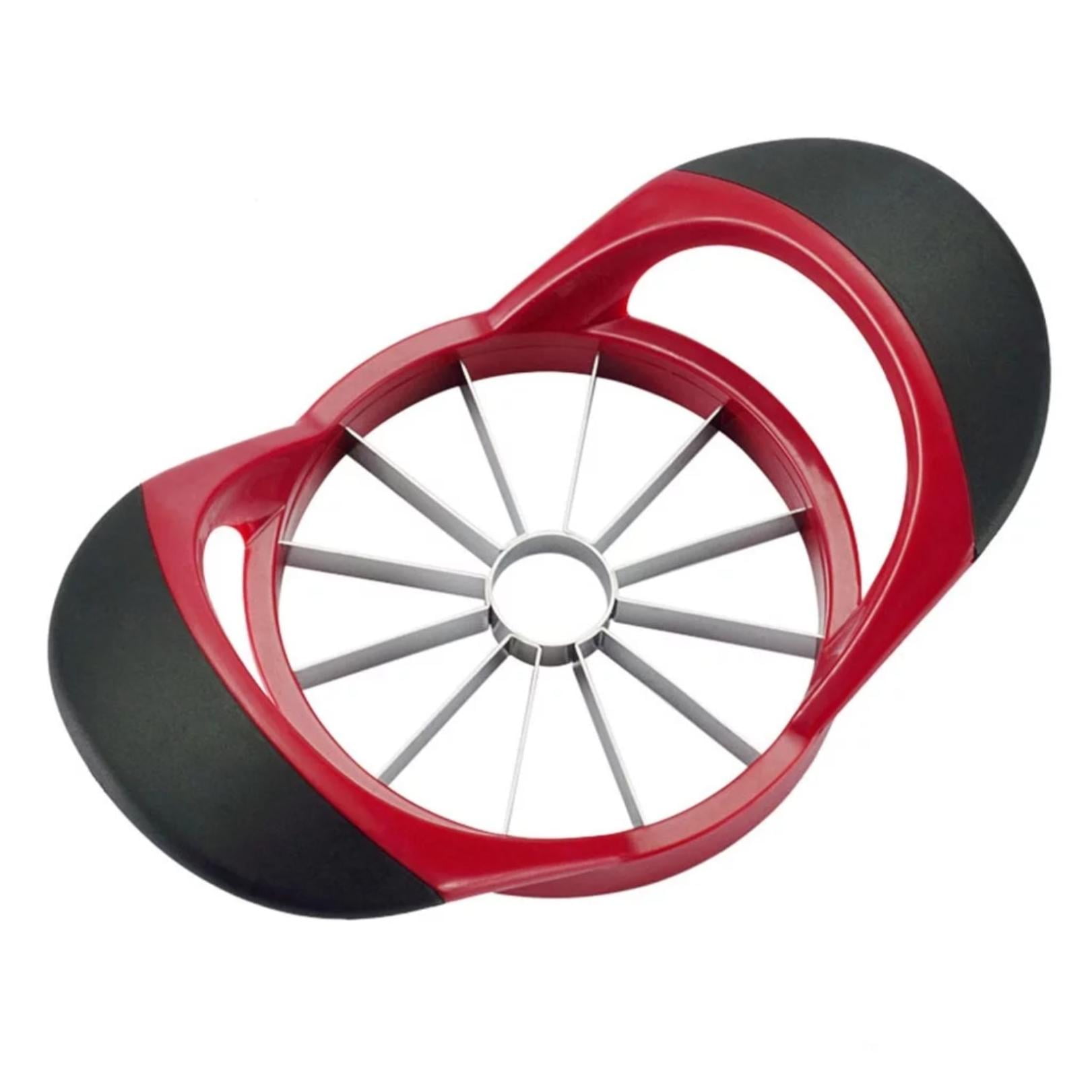
12-Slice Heavy-Duty Apple Divider*
Useful when the apples are already peeled and you want quick, fairly even wedges before cooking.
View on AmazonAffiliate links · Your price stays the same.
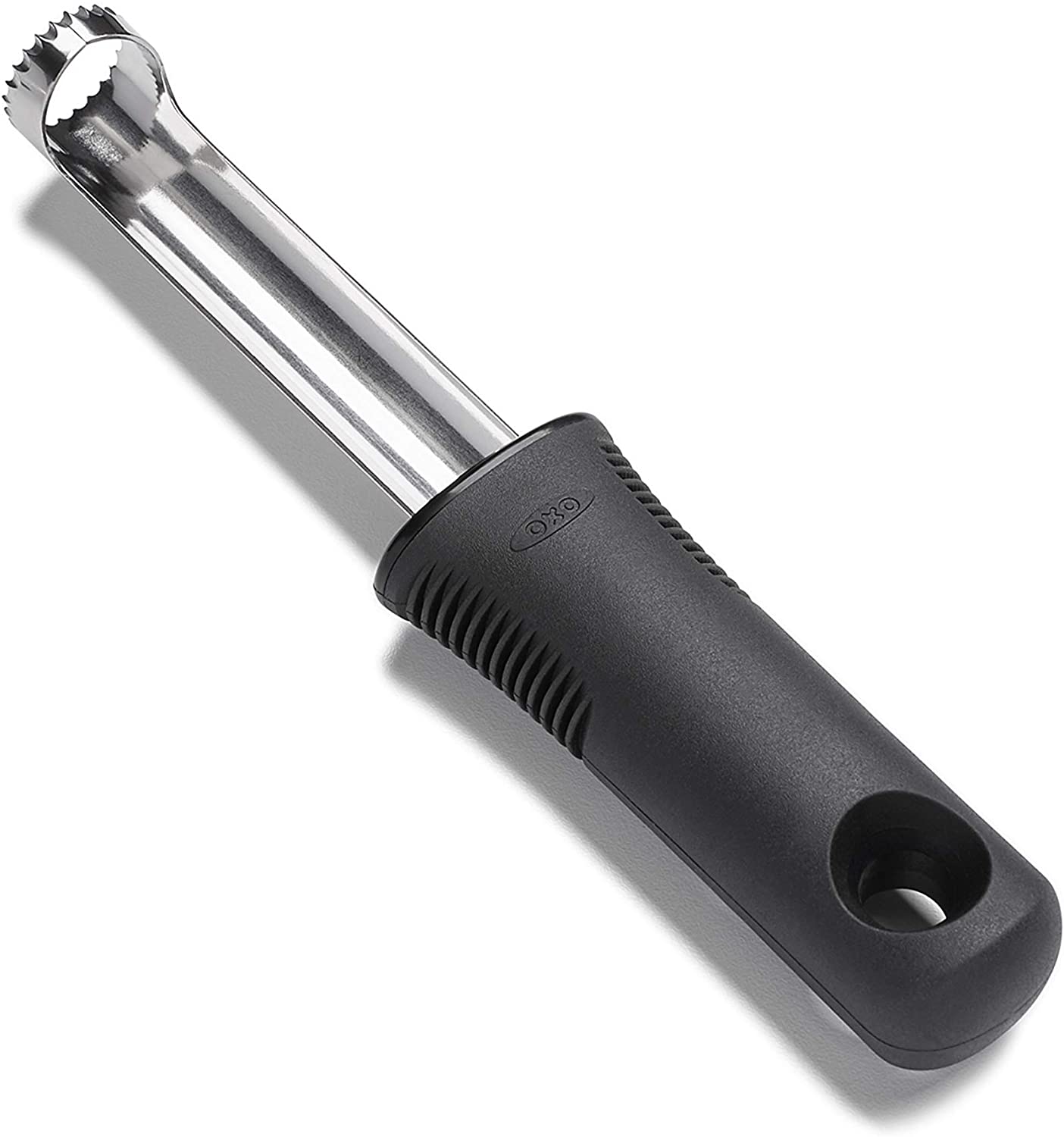
OXO Good Grips Apple Corer*
A compact stainless-steel corer for cooks who prefer to peel and cut apples by hand.
View on AmazonCook the apples until tender, then choose your texture
Put the drained apple slices in an 8–10 qt pot, add ½ cup water, and heat quickly while stirring occasionally to prevent scorching. NCHFP gives a broad tenderness window of about 5–20 minutes because apple maturity and variety make a real difference.
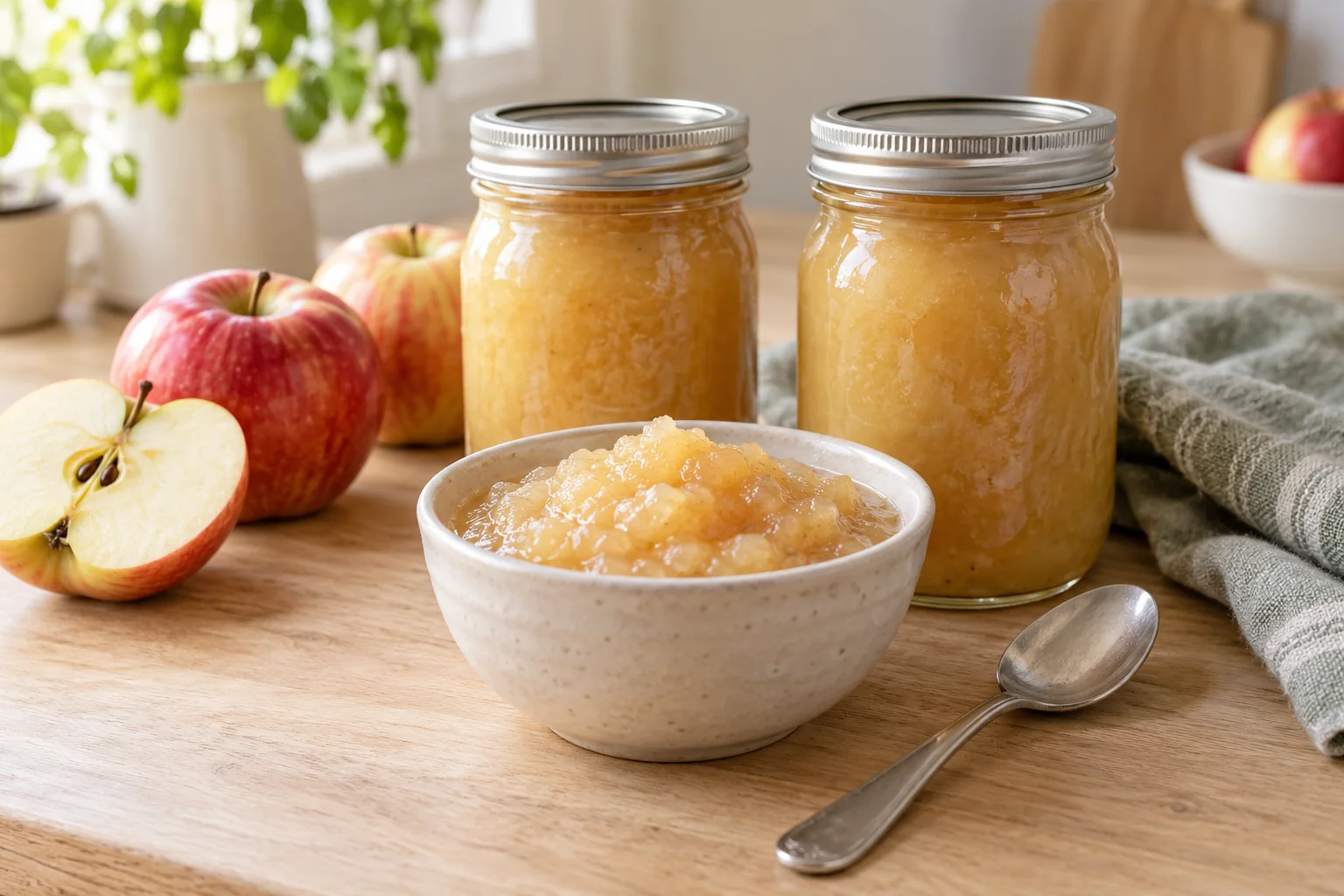
For smooth applesauce, press the cooked apples through a sieve or food mill. For chunky sauce, NCHFP allows you to skip the pressing step. If you use an immersion blender, blend only as much as needed for the texture you want and keep the sauce hot.
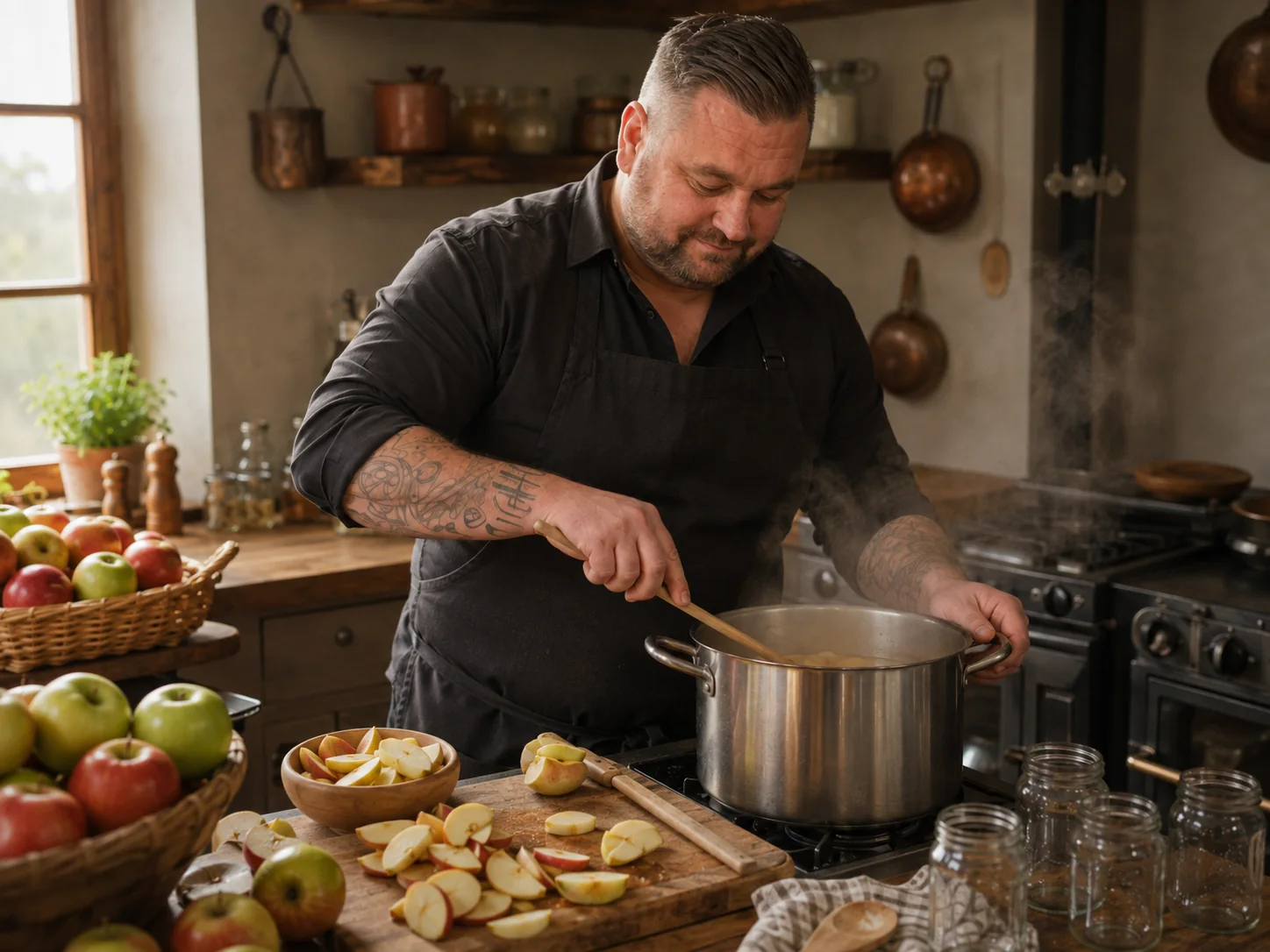
Useful options for large batches and smooth sauce
A heavy pot and one smoothing tool are enough for most kitchens. Food processors are optional prep tools, not required canning equipment. We did not personally test these products.

Stainless-Steel Food Mill with 3 Discs*
A traditional way to make a consistent puree without relying on high-speed blending.
View on Amazon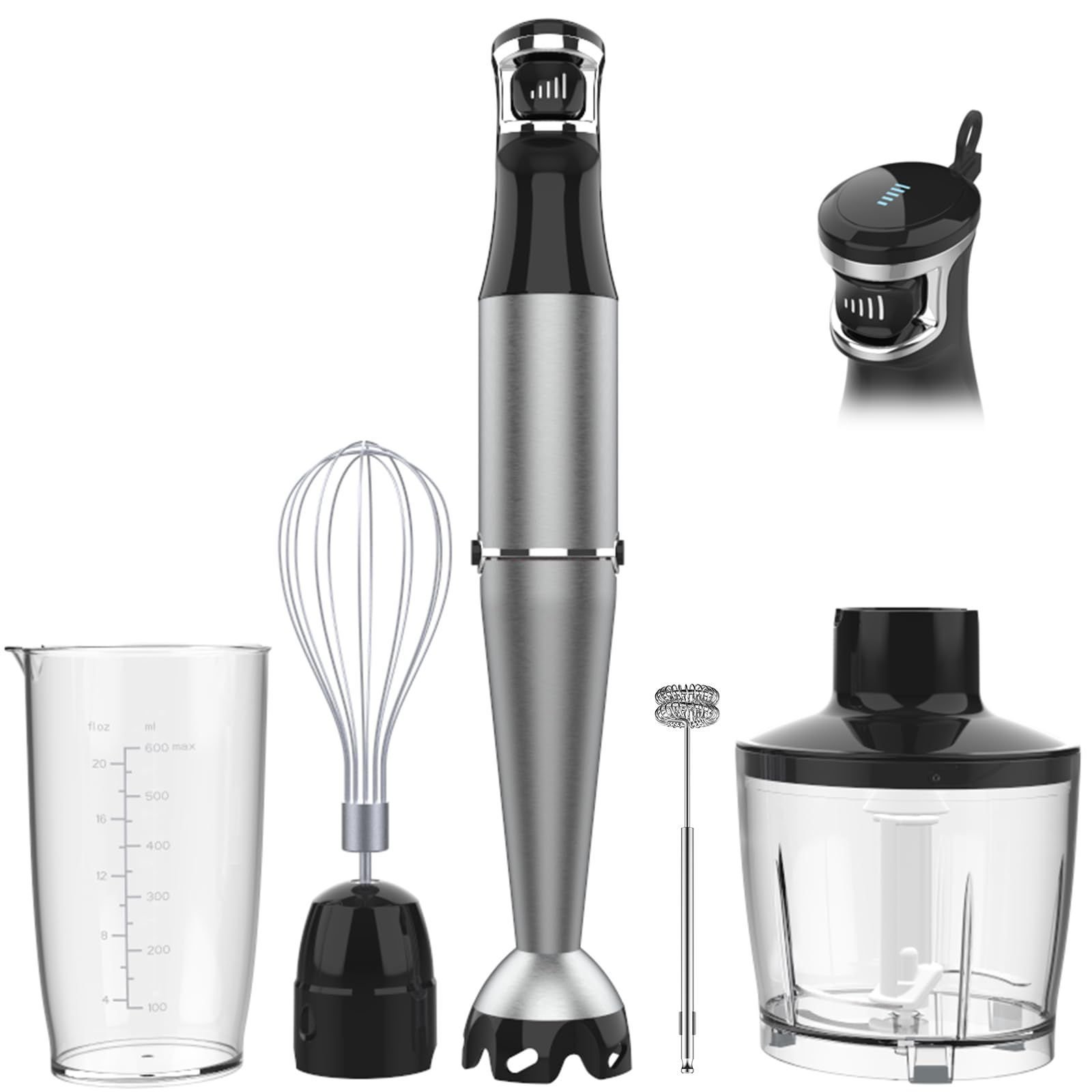
Turelar 1100W 5-in-1 Immersion Blender*
A multi-attachment hand blender for cooks who want to puree directly in the pot.
View on Amazon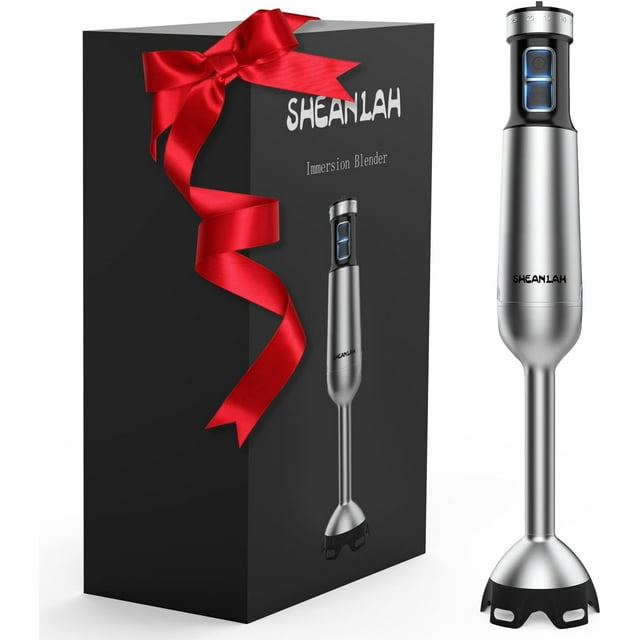
Heavy-Duty Corded Immersion Blender*
A second immersion-blender option if you prefer a straightforward corded tool.
View on AmazonAffiliate links · Your price stays the same.
Additional equipment for this workflow
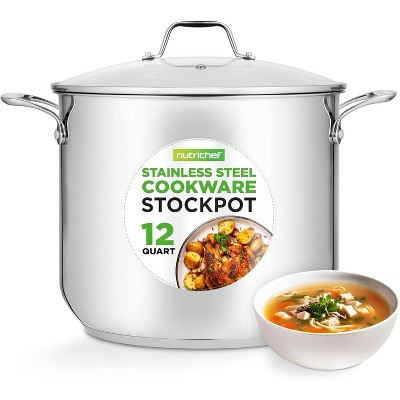
NutriChef 12-Quart Stainless-Steel Stockpot*
Extra cooking capacity for softening a larger batch of apples before you fill jars.
View on Amazon
Kirecoo 12-Quart Stainless-Steel Stockpot*
Another large stockpot option for cooking applesauce. This is a cooking pot; canning still requires a rack and proper water coverage.
View on Amazon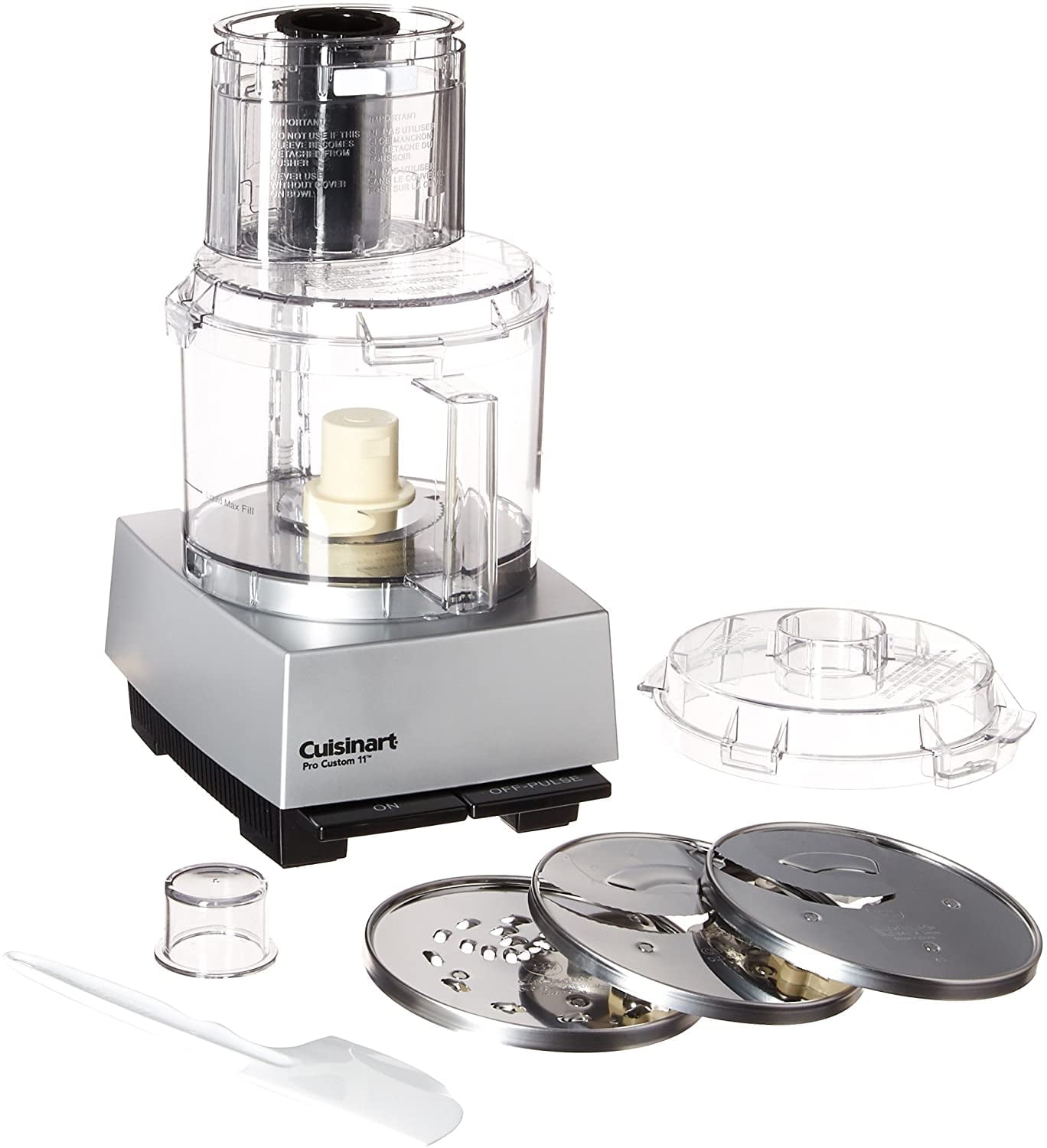
Cuisinart Pro Custom 11-Cup Food Processor*
Useful for high-volume kitchen prep if you already prefer a food processor workflow; not necessary for applesauce.
View on AmazonAffiliate links · Your price stays the same.
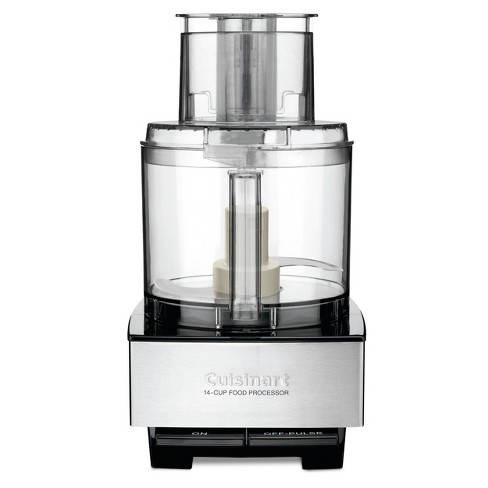
Cuisinart 14-Cup Food Processor*
A larger-capacity prep option for cooks who routinely process large quantities of produce.
View on AmazonWhich jars and canning equipment should you use?
For the NCHFP method in this guide, use Mason-type home-canning jars with appropriate self-sealing lids. NCHFP identifies regular- and wide-mouth Mason jars with two-piece lid systems as the best choice for home canning. Inspect every jar rim for chips or cracks and follow the lid manufacturer's current preparation directions.
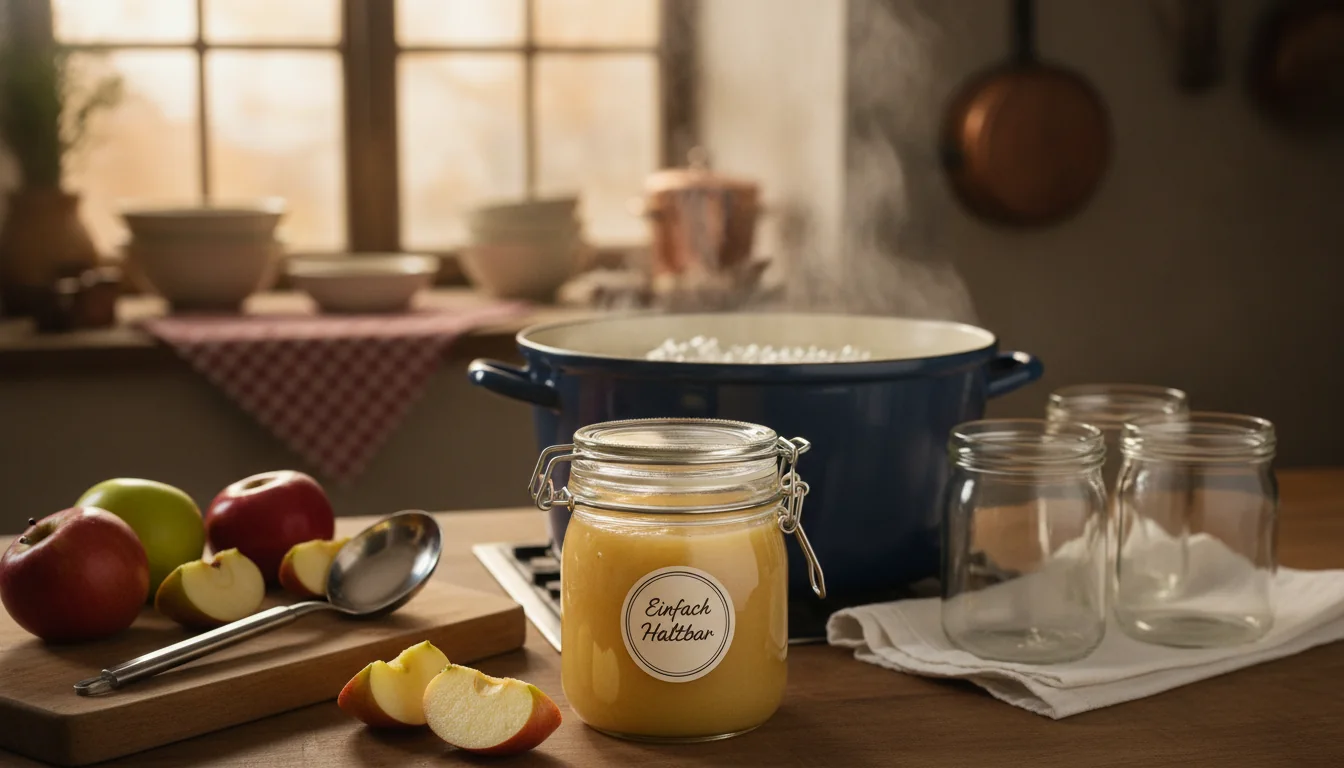
A jar lifter, canning funnel, and rack make hot-pack canning easier to control. A dedicated boiling-water canner is convenient, but a deep pot can work if it has a rack, can be covered, and is deep enough to keep the required water level above the jar tops throughout processing.
What is actually useful for applesauce canning?
The water-bath canner, quart jars, funnel, and jar-handling tools are the most directly useful items. A pressure canner is optional because NCHFP also provides a tested boiling-water method for applesauce. We did not personally test these products.
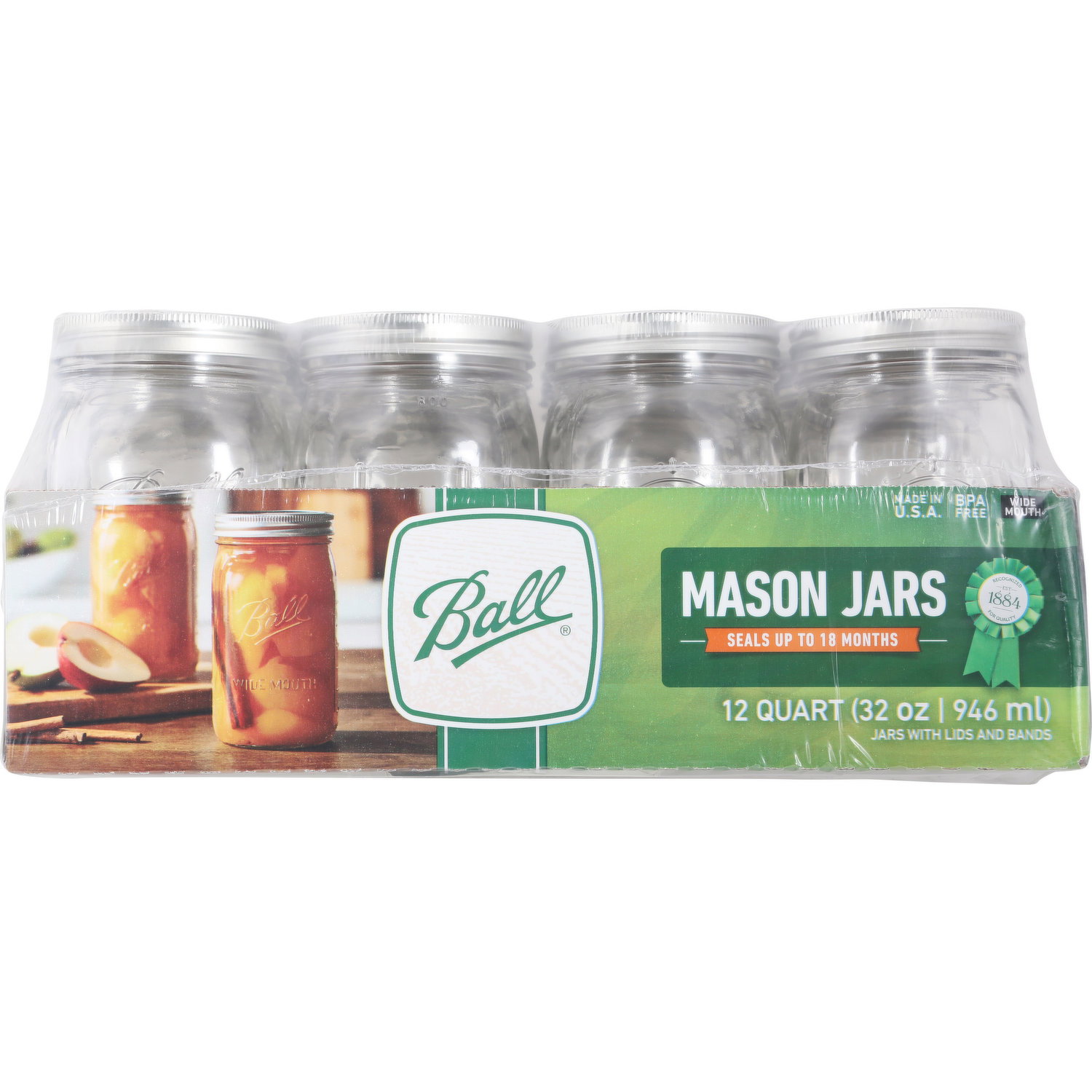
Ball Wide-Mouth 32-oz Mason Jars, 12-Pack*
A listed quart-size Mason jar format that matches one of the NCHFP applesauce table sizes.
View on Amazon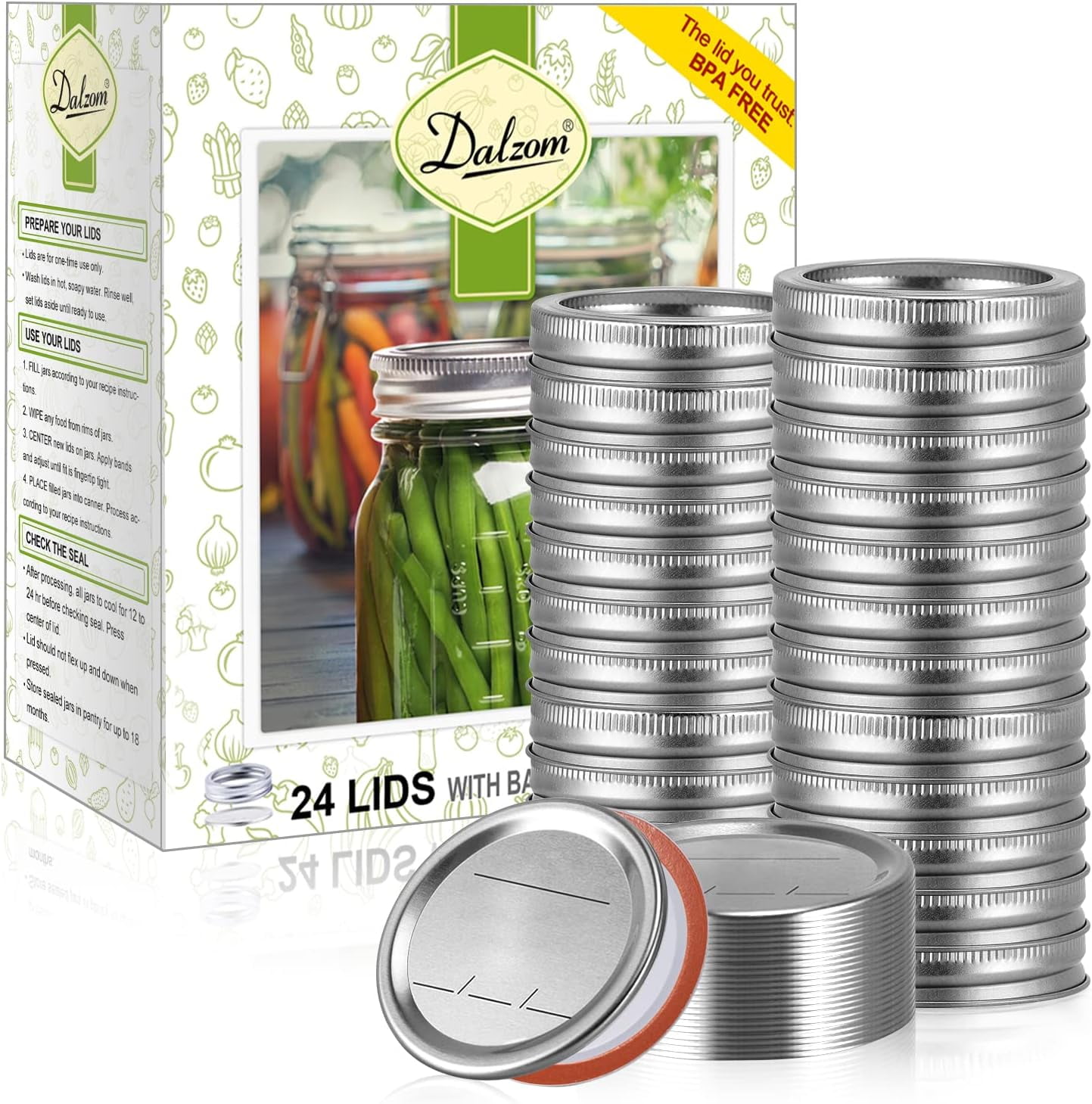
Dalzom Regular-Mouth Canning Lids & Rings*
Replacement regular-mouth lids and bands. Verify compatibility with your exact jars and follow the current lid manufacturer's directions.
View on Amazon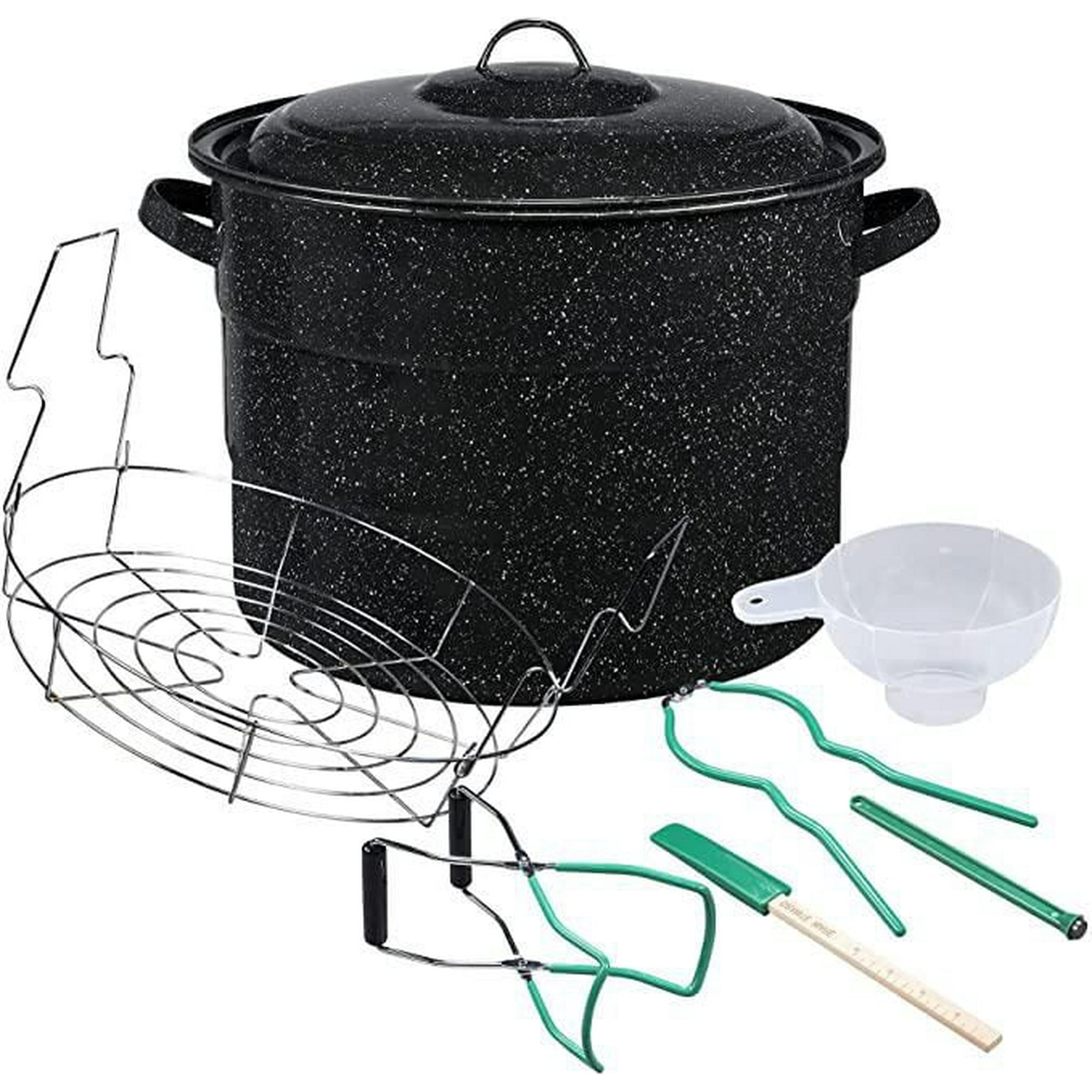
Granite Ware Canning Pot with Rack, 8-Piece Set*
A dedicated water-bath setup with a rack and accessories for jars that fit with the required water coverage.
View on AmazonAffiliate links · Your price stays the same.
Additional equipment for this workflow
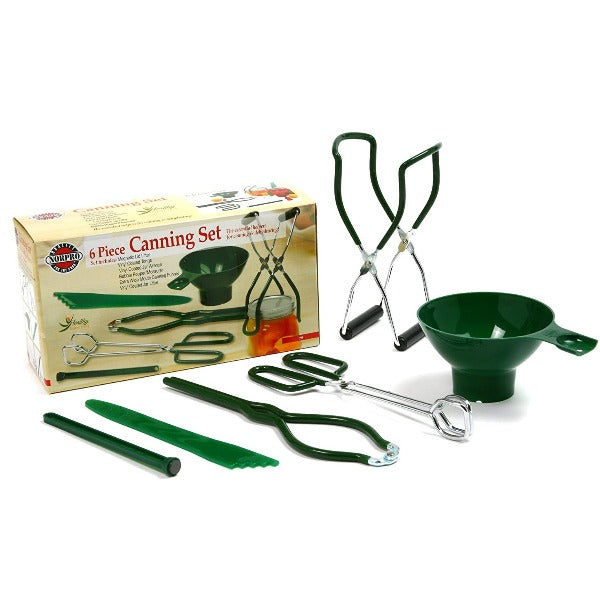
Norpro Canning Essentials 6-Piece Set*
A starter set of jar-handling and filling tools for cooks building a basic canning kit.
View on Amazon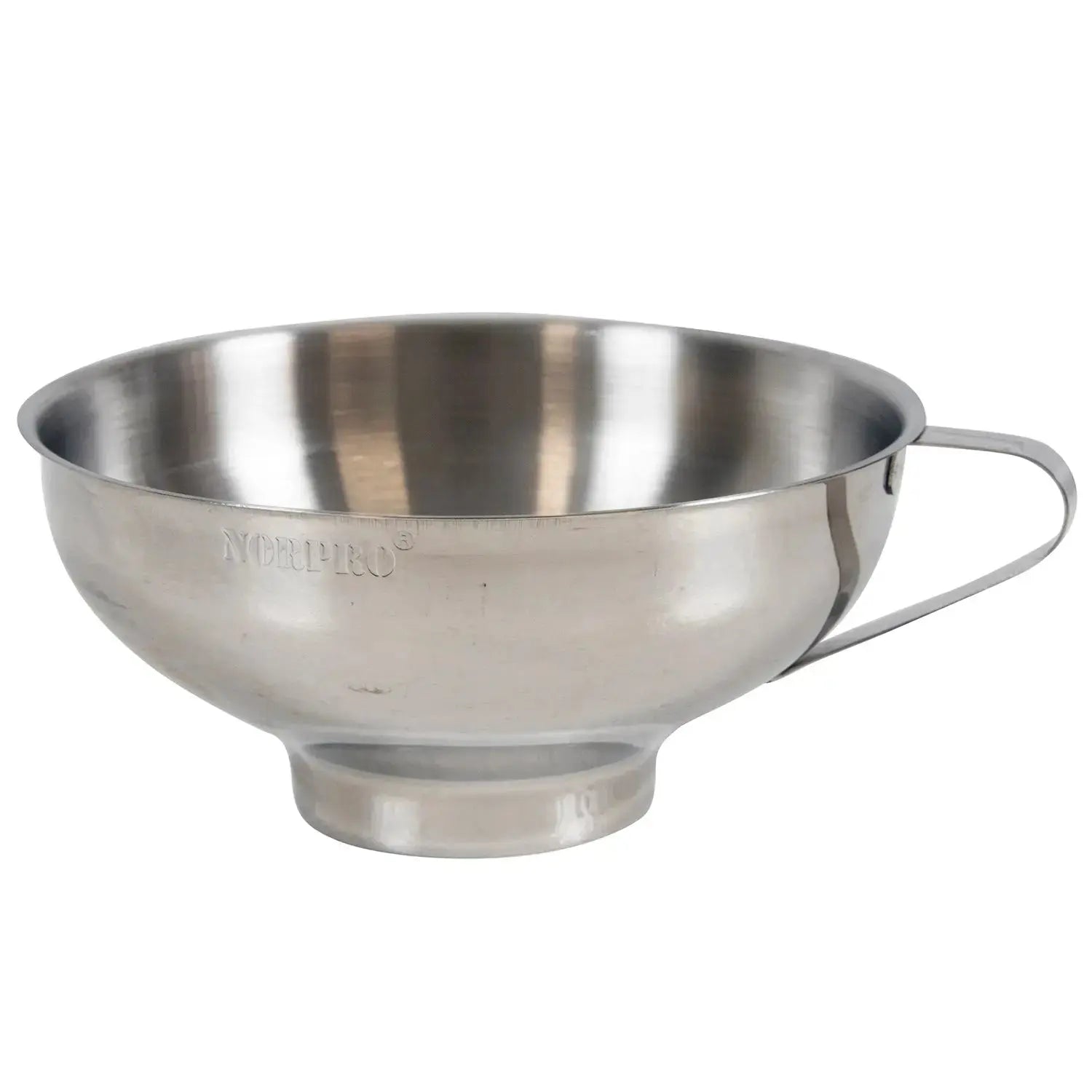
Norpro Stainless-Steel Canning Funnel*
A wide funnel helps keep hot applesauce off the jar's sealing surface.
View on Amazon
Presto 01781 23-Quart Pressure Canner*
Useful if pressure canning is already part of your pantry workflow. It is not required for this water-bath applesauce method.
View on AmazonAffiliate links · Your price stays the same.

Ball Complete Book of Home Preserving*
A broad home-preserving reference for expanding beyond applesauce. Use current tested instructions for any specific canning project.
View on AmazonHow to can applesauce in jars: step by step
Prepare the canner and hot-pack setup
Place the rack in the boiling-water canner. For hot-packed foods, NCHFP's general canner directions call for preheating the canner water to about 180°F before the jars are loaded. Have enough water available to maintain the required level above the filled jars.
Cook the peeled, cored apples
Place the drained slices in an 8–10 qt pot, add ½ cup water, and cook while stirring occasionally until tender, usually 5–20 minutes depending on the apples.
Make the sauce smooth or chunky
Press the cooked fruit through a sieve or food mill for a smooth sauce. Skip that pressing step for chunk-style applesauce.
Sweeten only if you want to
The sauce may be packed without sugar. If desired, NCHFP suggests starting with ⅛ cup sugar per quart of sauce, tasting, and adding more if preferred. Reheat the finished sauce to boiling.
Fill hot pint or quart jars
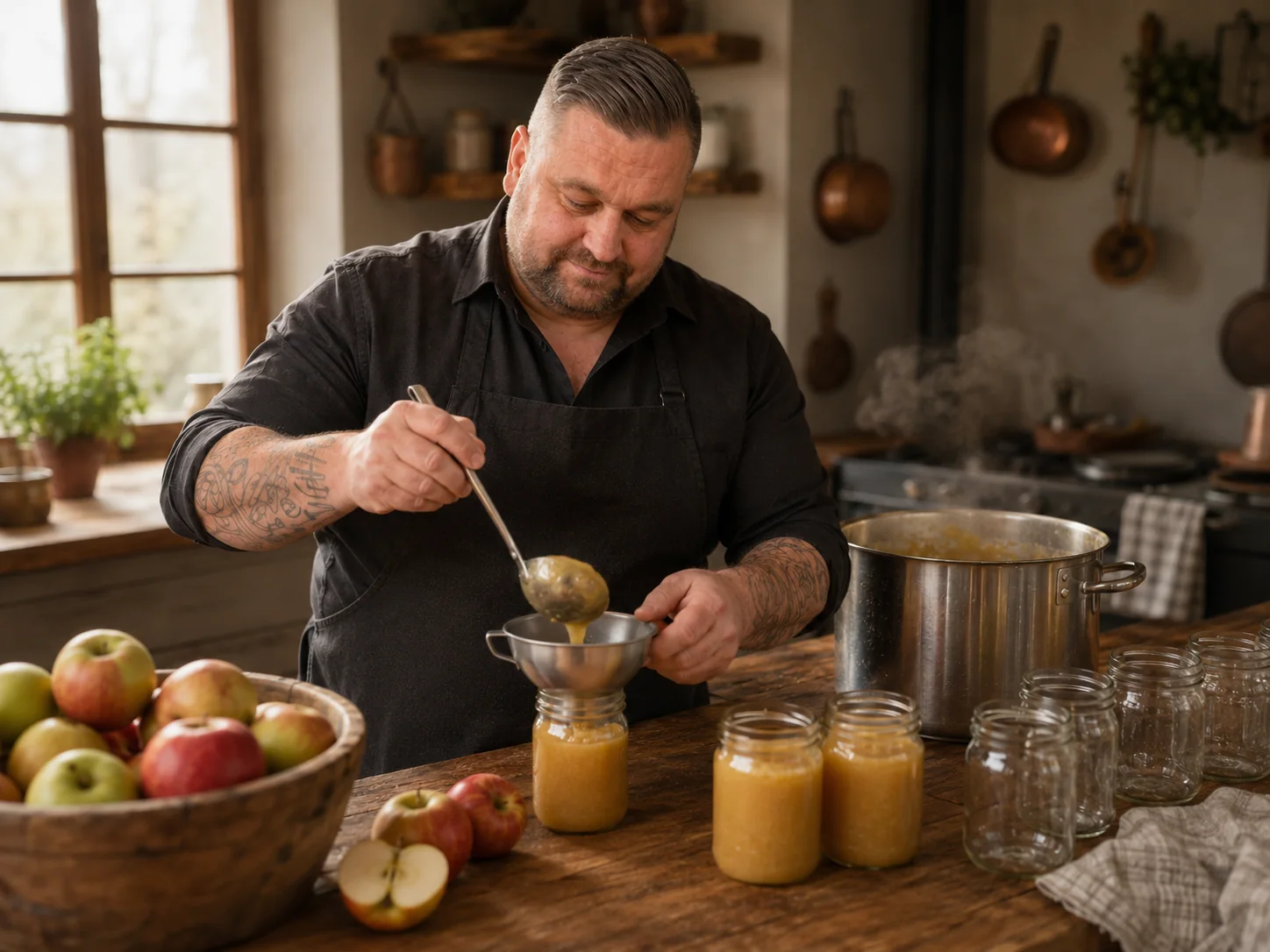
Fill the jars with hot applesauce and leave ½-inch headspace. Remove trapped air as needed, wipe the rim clean, and apply the lids according to the manufacturer's directions.
Cover the jars with water and start timing at a full boil
NCHFP's boiling-water-canner guidance calls for water at least 1 inch above the jar tops; for process times over 30 minutes, use 2 inches. Cover the canner, bring the water to a vigorous boil, and start the processing timer only when the water is boiling.
Maintain the boil for the full altitude-adjusted time
Keep the canner covered and maintain a complete boil. If the water stops boiling during processing, NCHFP directs you to bring it back to a vigorous boil and begin the timing again from the start.
Rest, remove, and cool undisturbed
When the process time is complete, turn off the heat, remove the lid, wait 5 minutes, then lift the jars out upright. Set them on a towel with space between jars and leave them undisturbed for 12–24 hours.
Applesauce canning time: pint vs. quart jars and altitude
The table below reproduces the NCHFP boiling-water process times for hot-packed applesauce. Use the row for your jar size and the column for your elevation. Do not shorten the time because the jar sealed quickly.
| Jar size | 0–1,000 ft | 1,001–3,000 ft | 3,001–6,000 ft | Above 6,000 ft |
|---|---|---|---|---|
| Pints | 15 min | 20 min | 20 min | 25 min |
| Quarts | 20 min | 25 min | 30 min | 35 min |
NCHFP also publishes tested dial-gauge and weighted-gauge pressure-canner tables for applesauce. That is useful if you already use a pressure canner, but it does not make pressure canning necessary for this recipe: the boiling-water method above is a tested option for applesauce.
Primary tested references for the process:
How to check the seal and store canned applesauce
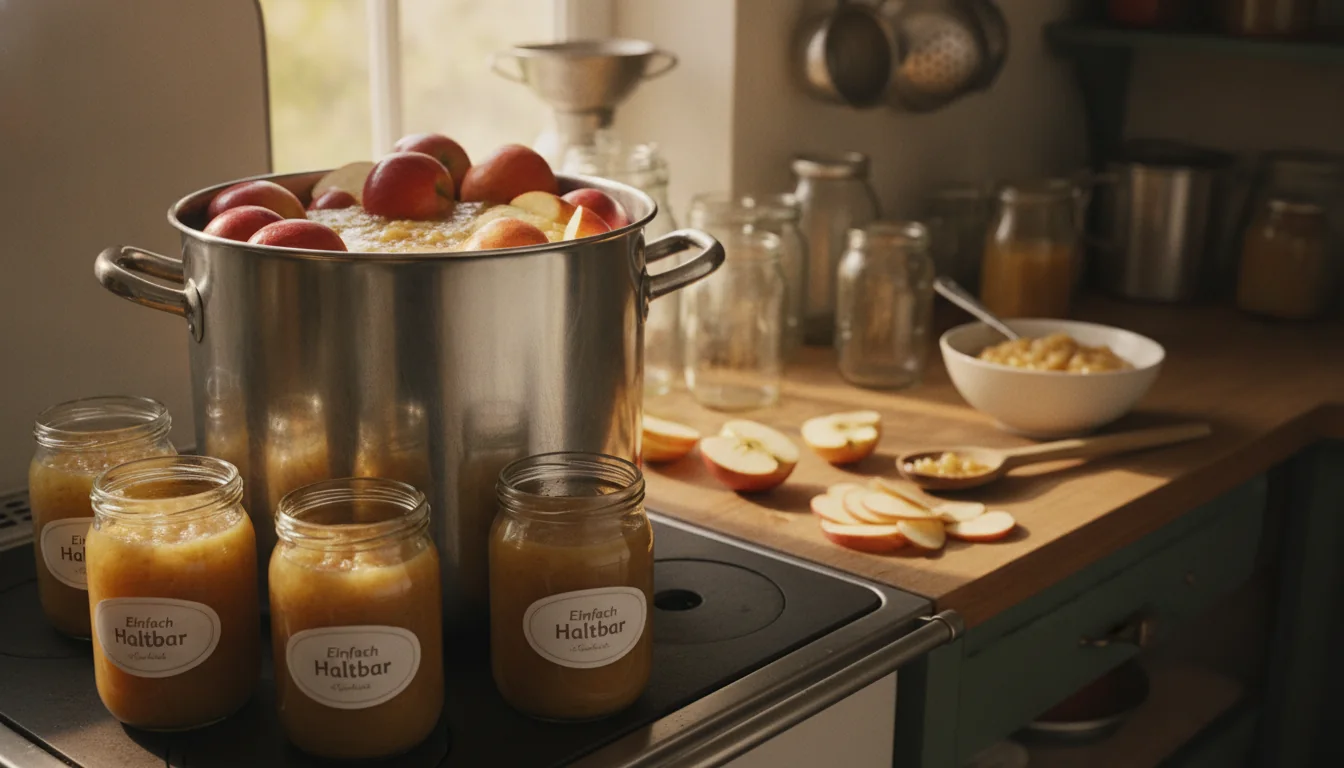
Let the jars cool for 12–24 hours before checking seals. With a two-piece metal lid, NCHFP describes a good seal as a lid whose center is concave and does not spring up when pressed. Remove the screw bands for storage, wash and dry the jars if needed, label them, and keep them in a clean, cool, dark, dry place.
For best quality, NCHFP recommends storing home-canned foods around 50–70°F and planning to use them within about one year. That is a quality recommendation, not permission to ignore a broken seal or spoilage signs. Once a jar is opened, refrigerate the applesauce.
What if a jar does not seal?
Do not put an unsealed jar on the pantry shelf. NCHFP says that if the original batch followed a current research-tested recipe, an unsealed jar may be reprocessed within 24 hours by reheating the food to boiling, using a clean jar and new lid, and repeating the full tested hot-pack process. Because reprocessing can reduce quality, refrigeration or freezing may be the better choice. NCHFP says a properly handled unsealed jar can be refrigerated and used within one week, or frozen with appropriate freezer headspace.
When should you throw canned applesauce away?
Do not taste food from a jar with an unsealed lid or signs of spoilage. Warning signs include leakage, a bulging or loosened lid, rising bubbles, unnatural color, spurting liquid, mold growth, or an unusual odor. When in doubt, discard the product rather than sampling it.
The most common mistakes when canning applesauce
Another common mistake is buying more equipment than the project needs. For applesauce, the essentials are simple: sound pint or quart canning jars, compatible lids, a pot or canner deep enough for the required water level, a rack, a jar lifter, a funnel, and a reliable timer. Prep gadgets are convenience tools, not safety controls.
Can you add cinnamon, vanilla, or lemon juice?
For applesauce that will be eaten fresh or refrigerated, season it to taste. For shelf-stable canning, the safest editorial rule is to keep the tested applesauce base intact. NCHFP's published applesauce procedure does not require lemon juice, and it allows optional sugar. If you want a heavily spiced or substantially changed product, use a tested recipe written for that version rather than improvising the canning process.
FAQ
Frequently asked questions about canning applesauce
Can you can applesauce without sugar?
Yes. NCHFP allows applesauce to be packed without sugar. Sugar is optional for flavor in this tested process.
How much headspace do you leave for canned applesauce?
The NCHFP hot-pack applesauce method uses ½-inch headspace for pint and quart jars.
How long do you water-bath applesauce?
At 0–1,000 ft, NCHFP lists 15 minutes for pints and 20 minutes for quarts. The times increase with elevation; use the altitude table in this guide rather than a single universal number.
Do you need a pressure canner for applesauce?
No. NCHFP publishes both boiling-water and pressure-canner processes for applesauce. A boiling-water canner is a tested option when you follow the correct jar size and altitude-adjusted time.
Can I can applesauce in 64-oz half-gallon Mason jars?
Not with the NCHFP applesauce table. Its tested applesauce process uses pint and quart jars. NCHFP limits half-gallon jar canning guidance to very acidic juices, so do not extrapolate applesauce times to 64-oz jars.
Can I leave the apple peels in?
For a fresh batch you can make applesauce in many ways, but the tested NCHFP canning procedure used here directs you to wash, peel, and core the apples. For shelf-stable canning, keep that preparation step.
What if my applesauce jar did not seal?
Do not store it at room temperature. If the original batch followed a tested recipe and the problem is found within 24 hours, NCHFP provides a reprocessing option with reheated food, a clean jar, and a new lid. Refrigeration or freezing are alternatives.
How do I know if canned applesauce has spoiled?
Do not taste from a jar with a loose or bulging lid, leakage, mold, rising bubbles, spurting liquid, unnatural color, or an unusual odor. Discard suspicious jars.
How long is home-canned applesauce good for?
NCHFP recommends using home-canned foods within about one year for best quality when they are properly processed, sealed, and stored in a cool, dark, dry place. Always inspect the seal and contents before use.
Can I freeze applesauce instead of canning it?
Yes. Freezing is a practical alternative when you do not want to run a canner. Use freezer-safe containers and leave appropriate expansion space.
Conclusion: easy applesauce, predictable canning
The easiest way to make this project reliable is to separate it into two clear jobs. First, make good applesauce: choose sound apples, peel and core them, cook them until tender, and make the texture you like. Second, preserve it: reheat the sauce to boiling, pack it into appropriate pint or quart Mason jars with ½-inch headspace, and process the jars for the full altitude-adjusted time.
That simple separation keeps you from relying on kitchen myths such as “the lid popped, so it is canned.” A good seal matters, but the tested process comes first. With the correct jar size, full water-bath process, careful seal check, and cool pantry storage, homemade applesauce becomes an easy, repeatable way to turn a large apple harvest into useful pantry food.
Sources & editorial standard:
The process numbers in this article come from NCHFP's tested U.S. home-canning guidance. Jar size, headspace, altitude, and processing time are kept together rather than mixed with unrelated systems.
Affiliate note: The 64-oz Ball half-gallon jar set and the 32-oz fermentation airlock kit supplied for this project were intentionally not promoted as applesauce-canning equipment because they do not match the tested pint/quart applesauce workflow used in this guide.