Best Dehydrators for Beef Jerky
Three choices for regular jerky batches
Start with your normal batch size, then compare cabinet size and control convenience.
 EVERYDAY BATCHES
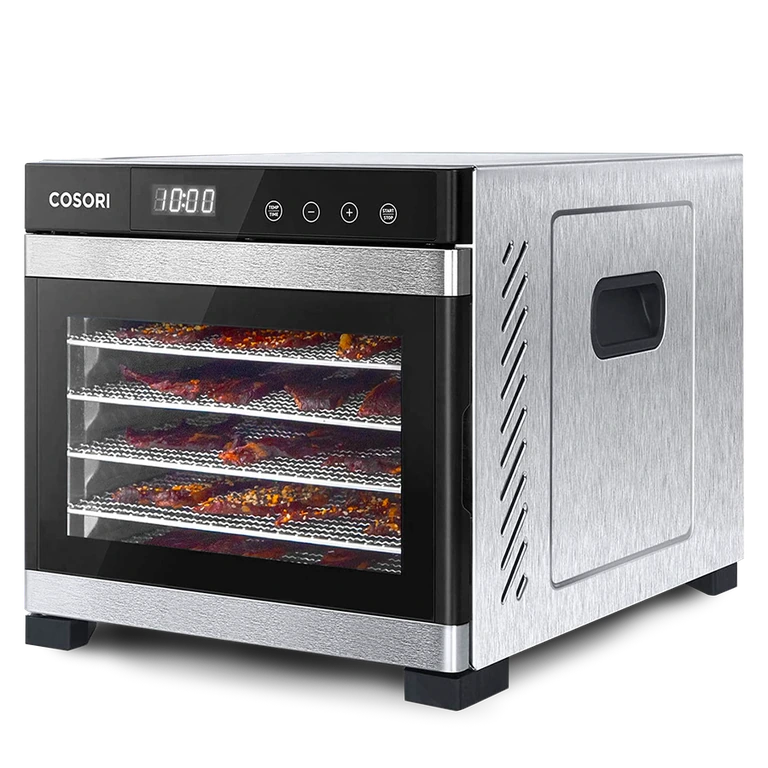
COSORI CP267-FD
A front-loading cabinet for regular fruit, herb and snack batches.
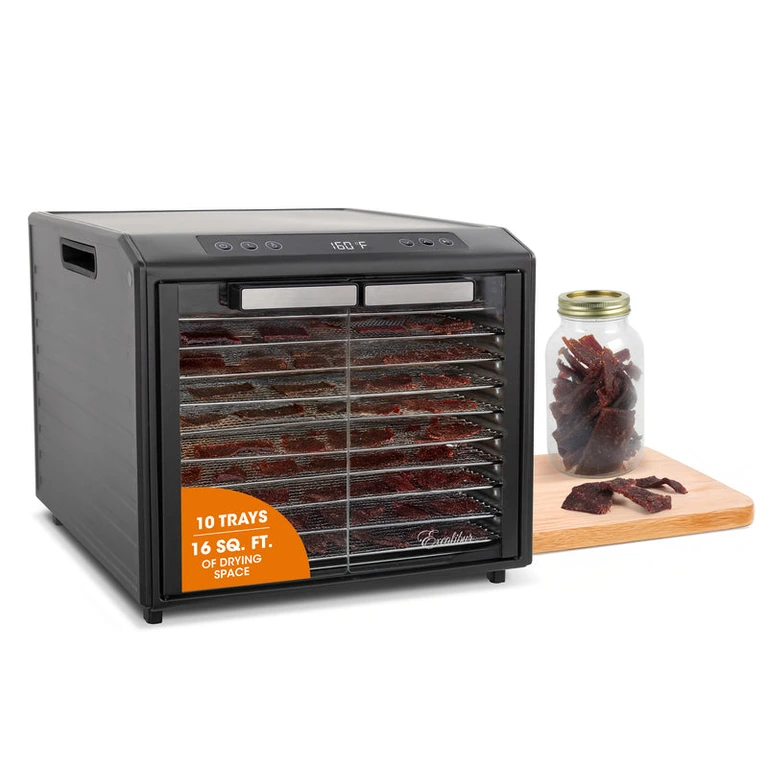
View on AmazonLARGE TRAY AREAExcalibur DH10SCSS13
Ten chrome trays and 16 sq ft of drying area for frequent, larger batches.
View on Amazon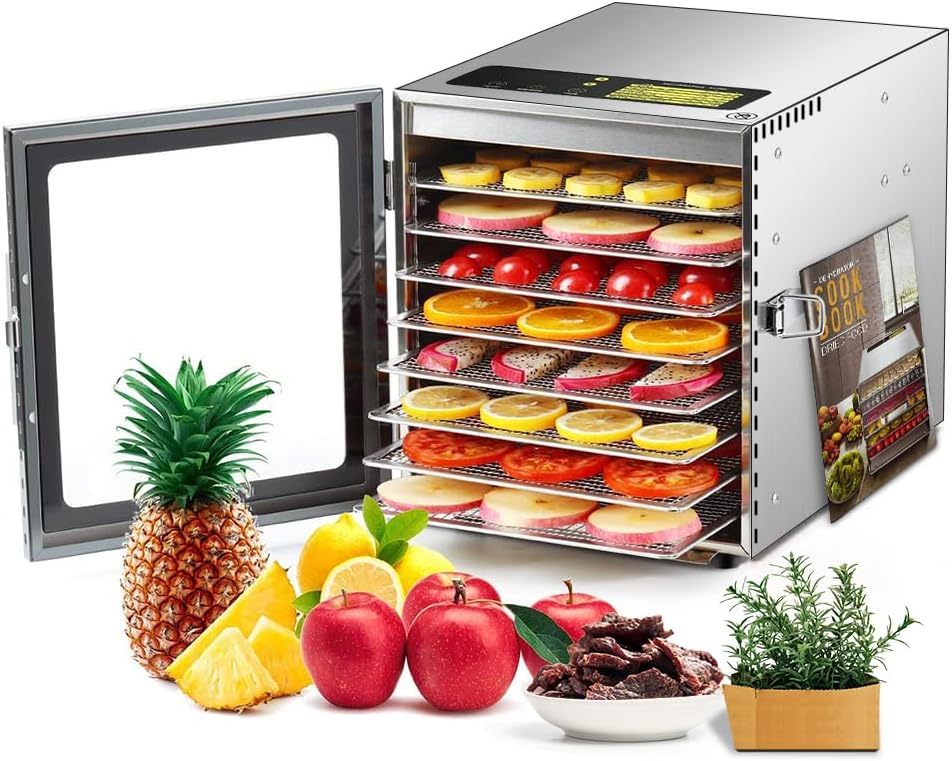 FAMILY-SIZE
Cercker 8-Tray
An eight-tray cabinet between a compact starter and a larger ten-tray machine.
View on AmazonAffiliate links · Your price stays the same.
If you are looking for the best dehydrator for beef jerky, the right machine is not automatically the one with the most trays or the highest wattage. What matters more is whether the dehydrator can hold a steady drying temperature, move air evenly around the strips, fit your normal batch size and clean up easily after meat marinades.
This guide compares seven current options for different jerky-making needs. We did not personally lab-test these dehydrators. Our picks are editorial recommendations based on the current model specifications already documented in Einfach Haltbar's equipment research, manufacturer information and the practical requirements of making jerky at home. Prices, bundles and model details can change, so confirm the exact Amazon listing before ordering.
This article is part of our Buying Guides collection. If you want a broader machine comparison for fruit, herbs and other foods too, see our Best Food Dehydrators 2026 guide.
Affiliate disclosure: As an Amazon Associate I earn from qualifying purchases. Links marked as product links may earn Einfach Haltbar a commission at no extra cost to you. Our editorial selection is not based on a fabricated hands-on test or paid ranking.
Best Dehydrators for Beef Jerky 2026: Quick Comparison
The table below is a practical shortlist, not a lab-score ranking. The most useful choice depends on how much meat you process, how much counter space you have and whether you prefer digital controls or a simpler dial.
1. COSORI CP267-FD — Best Overall Balance
The COSORI CP267-FD is our best overall balance for a home jerky maker who wants digital controls, stainless-steel trays and enough capacity for regular batches without moving to a very large cabinet. The currently documented configuration has six stainless-steel trays, a 95°F–165°F temperature range and a digital timer.
For jerky, the useful part is not simply the 165°F maximum. It is the ability to set a repeatable drying temperature after the meat has completed the safety-heating step. Six front-loading trays are a practical middle ground: more convenient than a tiny stackable unit for frequent batches, but easier to place than a ten-tray cabinet.
Trade-off: six trays can become limiting if you routinely process a large hunting-season batch or several pounds at a time. In that case, the Excalibur, Cercker or VEVOR options below give you more tray area.
COSORI CP267-FD
Six stainless-steel trays, digital controls and a 95°F–165°F range make this the most balanced everyday jerky pick in this guide.
2. Excalibur DH10SCSS13 10-Tray — Best Premium Pick
The Excalibur DH10SCSS13 is the premium choice here for people who want substantially more drying area and a cabinet-style horizontal-airflow layout. The current guide data lists ten chrome trays, about 16 square feet of tray area, an 85°F–165°F range and digital timer controls.
That capacity is useful when you would otherwise split one prep session across multiple dehydrator cycles. Horizontal airflow is also convenient for jerky because air travels across the tray levels rather than relying only on a vertical stack. You should still check multiple strips for dryness because slice thickness, loading and marinade all affect drying time.
Trade-off: this is a much larger appliance than a five- or six-tray entry-level machine. The extra capacity is only worth paying for if you will actually use it.
Excalibur DH10SCSS13
Ten trays and a large drying area for frequent or larger jerky batches.
3. Cercker 8-Tray — Best for Family-Size Jerky Batches
The Cercker 8-Tray sits between the six-tray COSORI and the ten-tray cabinet options. The currently documented version uses eight stainless-steel trays, digital controls and a listed maximum temperature up to 190°F.
That makes it attractive for a household that regularly makes more than a small snack batch but does not automatically need a ten-tray unit. The stainless-steel tray format also keeps the food-contact surfaces simple to inspect and clean after sticky marinades.
Trade-off: model listings can change quickly in this category, so confirm the exact tray count, included accessories and current warranty on the linked product page before purchase.
Cercker 8-Tray
Eight stainless-steel trays for a useful step up in capacity without jumping directly to a ten-tray cabinet.
Larger loads and simpler alternatives
Need more tray capacity, expandable stacking or an occasional-use machine? These options solve different needs.
 LARGER LOADS
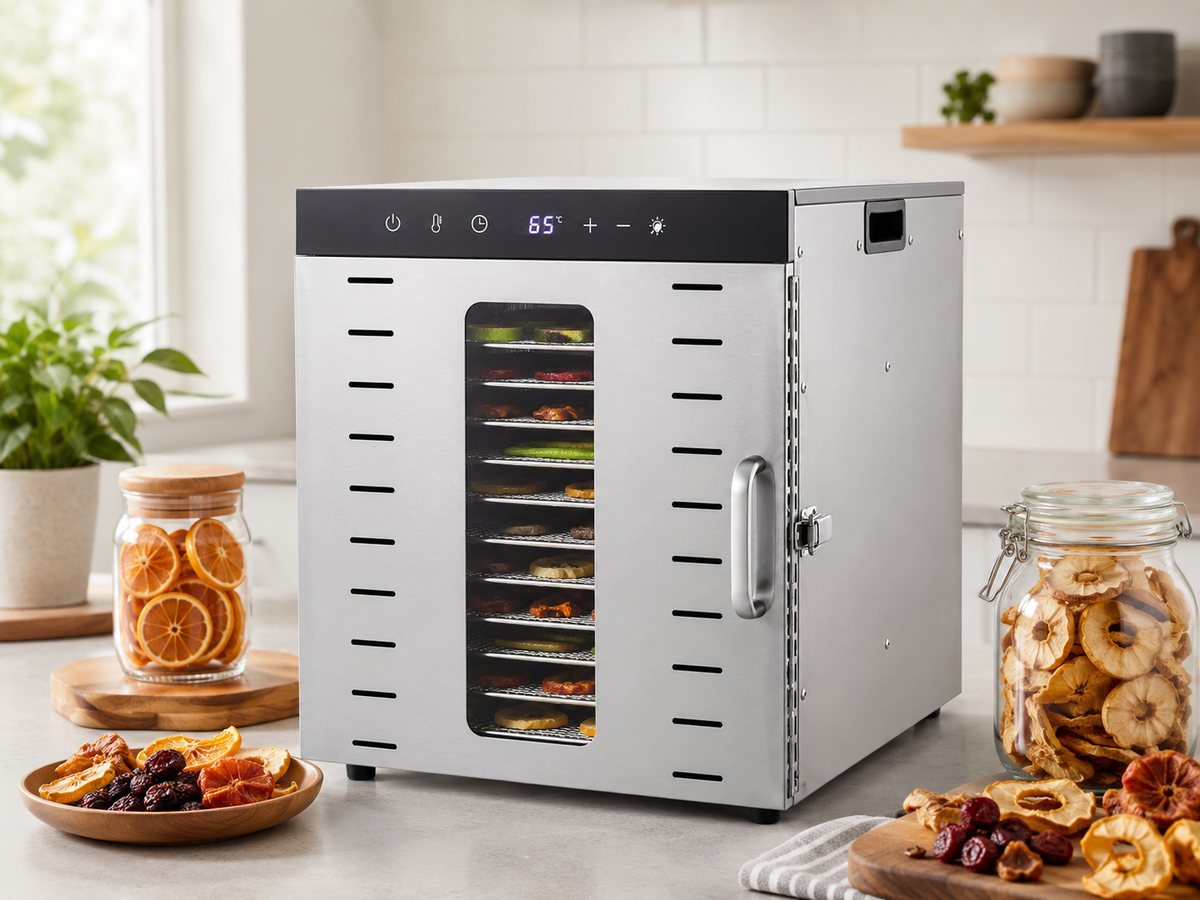
VEVOR SS-10X
More loading space when a smaller dehydrator means several separate runs.
View on Amazon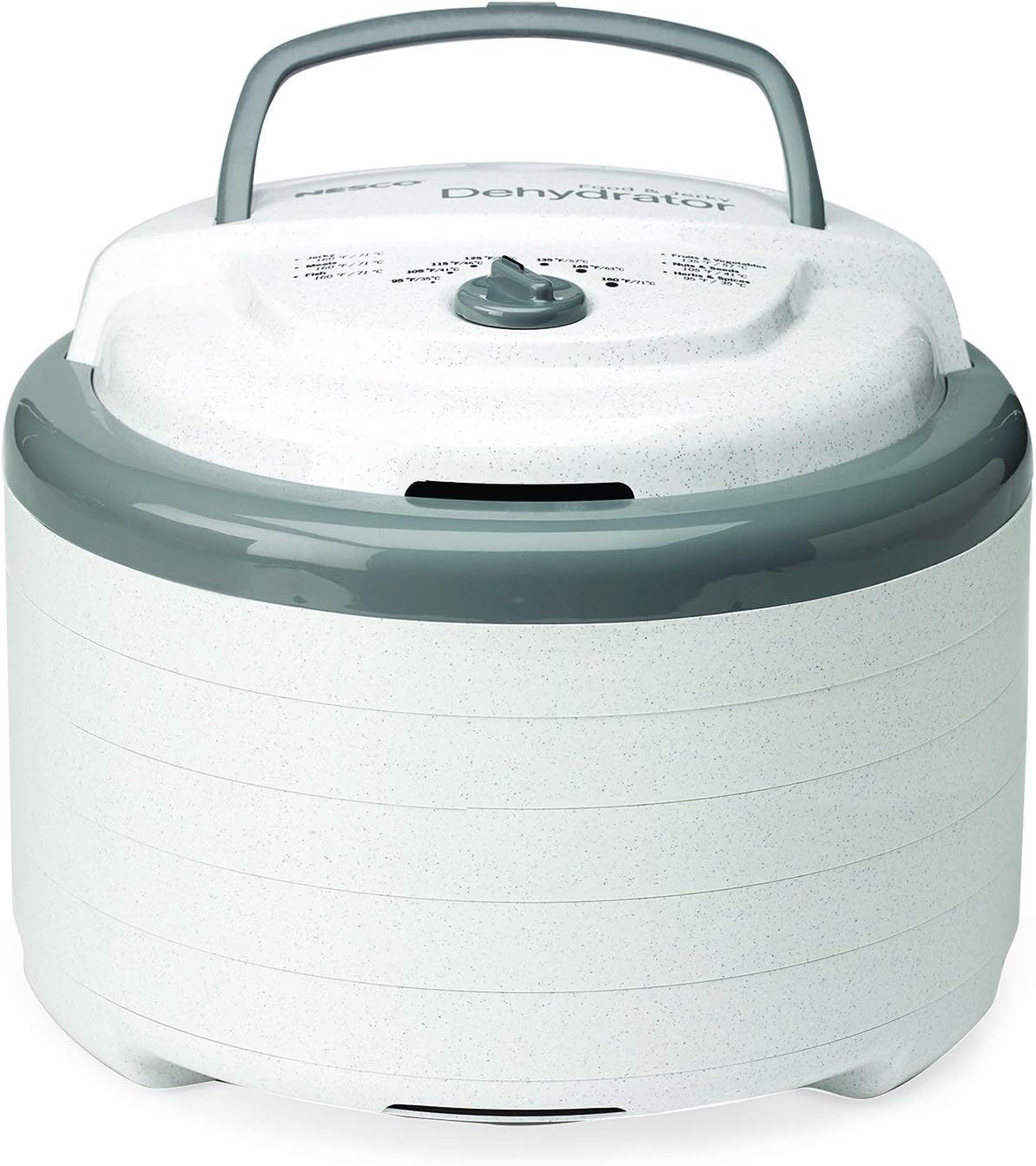 EXPANDABLE
NESCO FD-75A
A stackable format for a simpler start and room to expand.
View on Amazon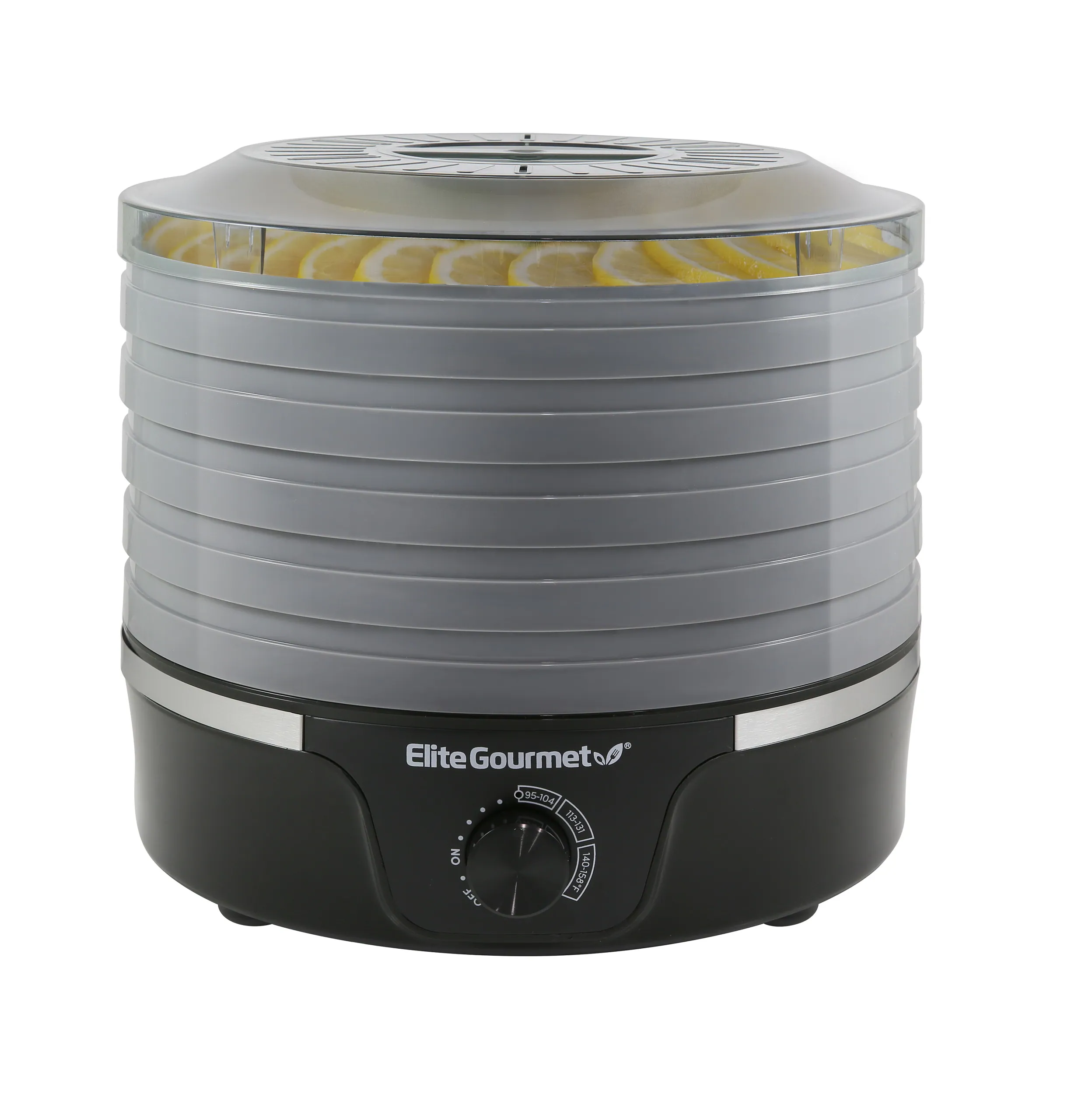 OCCASIONAL USE
Elite Gourmet EFD319DKG
A simpler stackable option when you dry smaller batches occasionally.
View on AmazonAffiliate links · Your price stays the same.
4. VEVOR SS-10X 10-Tray — Best Large-Capacity Value
The VEVOR SS-10X is the capacity-first option in this shortlist. The currently documented configuration has ten stainless-steel trays, an 86°F–194°F range and digital timer controls. If your main frustration is running several batches back-to-back, the larger cabinet gives you more usable space in one cycle.
For jerky, use the wide temperature range as flexibility rather than as a reason to run the meat hotter during drying. After the recommended safety-heating step, the USDA FSIS drying guidance remains a constant 130–140°F.
Trade-off: large cabinet dehydrators take more counter or storage space, and a bigger machine is not automatically the better choice for someone who only makes one small batch every few weeks.
VEVOR SS-10X
Ten stainless-steel trays for users who care more about batch volume than compact storage.
5. NESCO FD-75A Snackmaster Pro — Best Expandable Beginner Pick
The NESCO FD-75A is a different type of recommendation. It starts with five trays and the currently documented setup can expand to twelve, making it useful for a beginner who wants a simpler machine now but may want more capacity later. Its adjustable dial covers approximately 95°F–160°F.
The stackable design uses less cabinet-style counter space and gives you a straightforward way to add tray capacity. For jerky, the main compromise is that a dial does not give you the same at-a-glance repeatability as a digital controller, so an independent thermometer and your own process notes become more useful.
Trade-off: expandable trays are convenient, but adding more levels can also change how you manage loading and checking. Do not assume every tray will finish at exactly the same moment.
NESCO FD-75A
Five trays to start, with room to expand when your normal batch size grows.
6. Elite Gourmet EFD319DKG — Best Budget Pick
The Elite Gourmet EFD319DKG is the lower-cost entry point in this seven-model group. Current guide data lists five BPA-free trays, an adjustable dial and a 95°F–158°F range. It covers the drying-temperature range needed for beef jerky without paying for a larger digital cabinet.
This is best suited to occasional use and smaller batches. If you are still learning whether homemade jerky will become a regular routine, a simpler five-tray machine can be more sensible than buying maximum capacity on day one.
Trade-off: you give up digital timer convenience and the extra tray area of larger models. Confirm the exact current model and included trays because product bundles can change.
Elite Gourmet EFD319DKG
A simple five-tray option for occasional jerky batches and a smaller initial equipment commitment.
7. Commercial Chef CHD200S — Compact Format, Voltage Check Required
US buying status: verify before ordering. The linked listing currently says 240 V in its title but 120 V in its specification table and product description. We cannot confirm which electrical rating will be supplied. Keep this option on hold until the seller confirms the exact US version and its rating label.
The Commercial Chef CHD200S is a compact-format option retained for comparison, with US voltage details that need to be resolved before buying. The currently documented configuration has five trays, an adjustable dial and a 95°F–158°F temperature range.
Its strength is simplicity. If you do not want a large appliance living on the counter and you make jerky in smaller quantities, a five-tray format is easier to justify. The temperature range still covers the 130–140°F drying stage after the meat has been safely heated.
Trade-off: compact capacity means more cycles when you prepare a large amount of meat. It is a fit-for-space pick, not a high-volume recommendation.
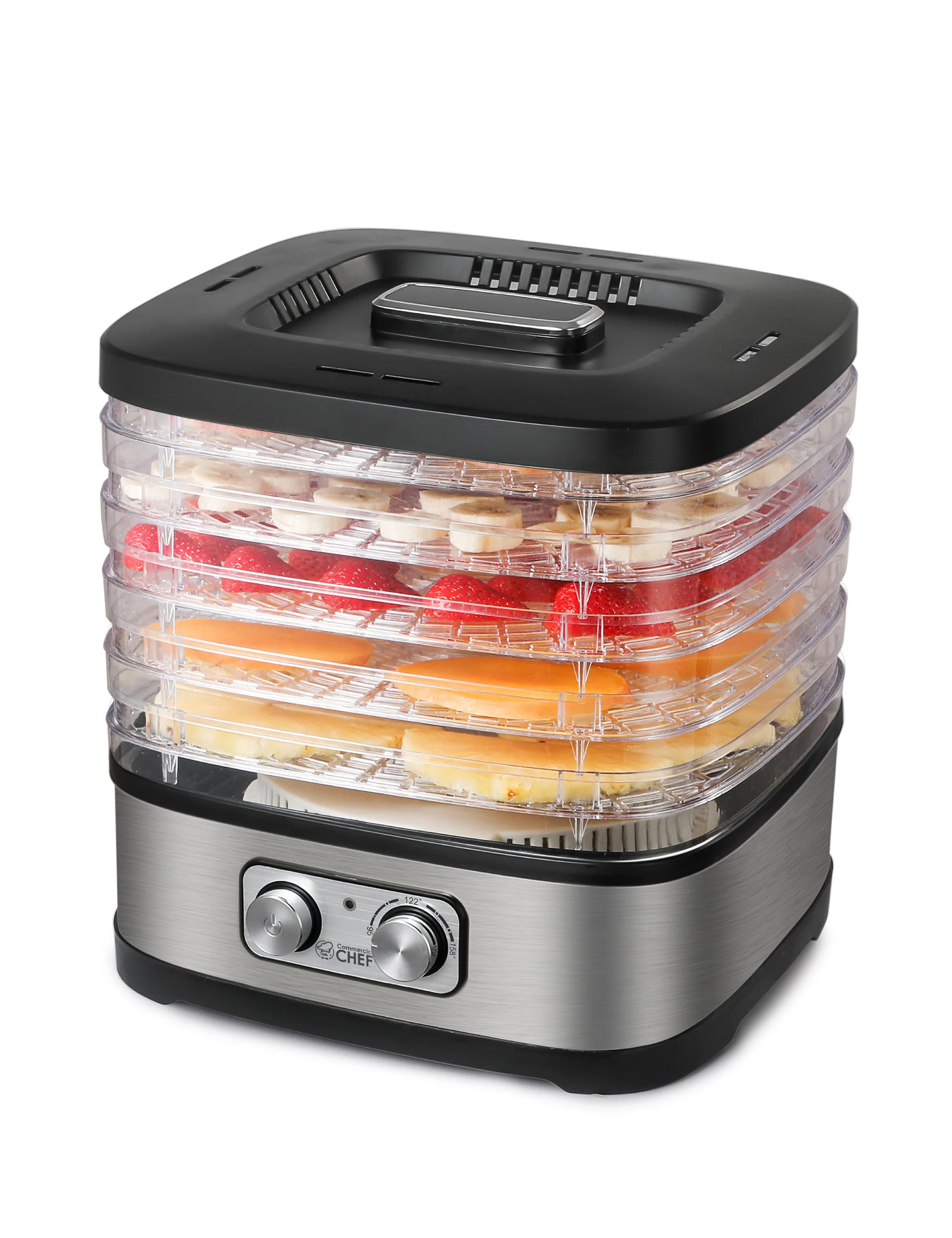
Commercial Chef CHD200S
A five-tray machine for smaller batches where footprint matters more than maximum capacity.
What Matters Most in a Dehydrator for Beef Jerky
Product lists are useful, but the buying criteria matter more because they tell you whether a machine fits your own process. For beef jerky, focus on the following features before comparing cosmetic extras.
Adjustable Temperature and Steady Heat
A jerky dehydrator should let you set the drying range required by the method you follow. For the USDA FSIS process described in this guide, the dehydrator needs to maintain a constant 130–140°F during drying. A wider temperature range can make a machine more versatile for other foods, but a higher maximum is not automatically a better jerky result.
Horizontal vs. Vertical Airflow
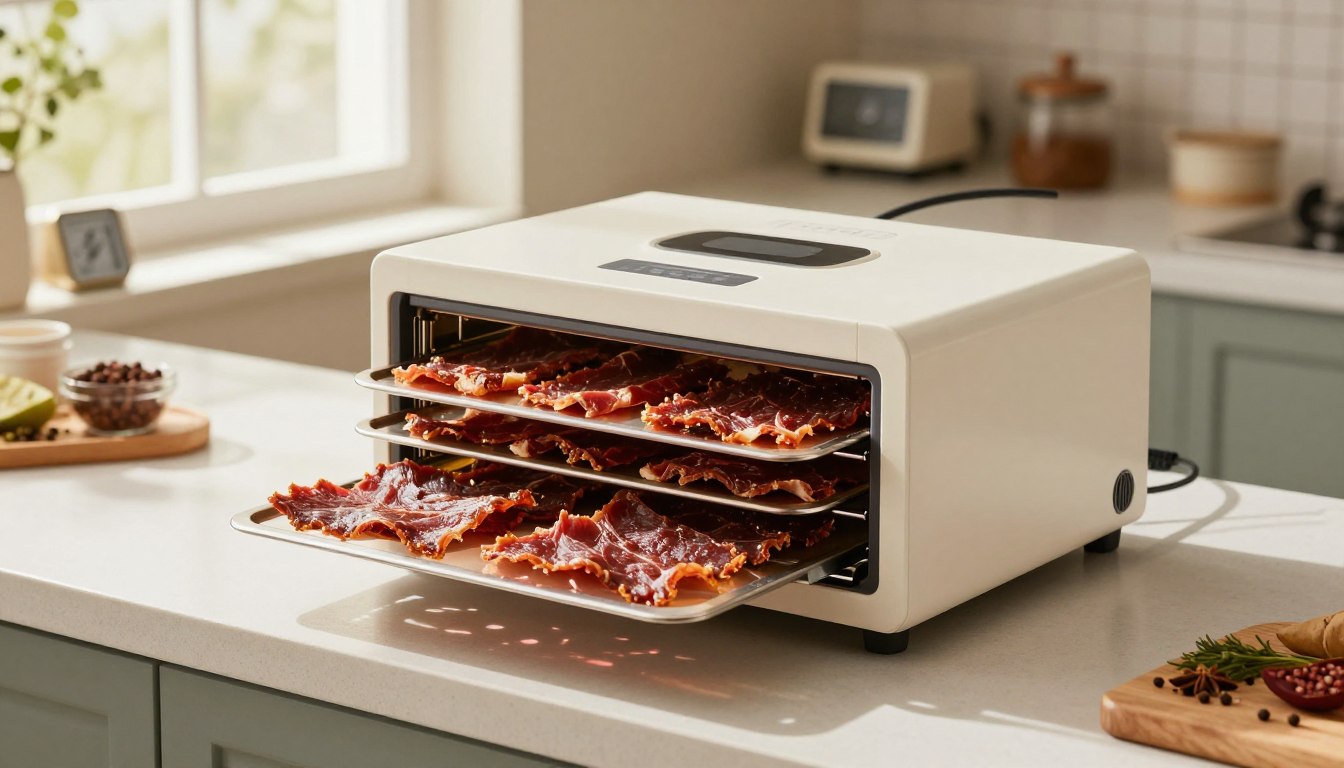
Horizontal-airflow cabinet dehydrators use a rear fan to push heated air across multiple tray levels. This layout can reduce the amount of tray management needed in a loaded cabinet. Vertical-flow stackable models can also make good jerky, but you may need to pay closer attention to how individual trays are drying. Whichever design you choose, leave space between strips and never overlap the meat.
Tray Area and Your Real Batch Size
Do not shop by tray count alone. A large rectangular tray and a small round tray are not equivalent. Think about how many pounds of meat you normally prepare, how thinly you slice it and how much space the strips need when laid in one layer. If you routinely split one prep session across two or three drying cycles, moving up to eight or ten trays can make sense. If you only make a small batch occasionally, the larger cabinet may simply occupy more space.
Tray Material and Cleanup
Jerky marinades can leave salt, sugar and seasoning residue, so easy-to-remove trays and accessible interior surfaces are worth prioritizing. Stainless-steel or chrome trays are durable choices, while BPA-free plastic trays can keep a stackable machine lighter. The important point is whether the tray material is rated for the appliance and whether you can clean it according to the manufacturer's directions.
Timer, Controls and Noise
A timer is convenient, but it should not be treated as a doneness sensor. Jerky can finish at different times depending on thickness, marinade, load and appliance behavior. Digital controls are useful for repeatability; simple dials are fine if you verify your process and check the strips. If the dehydrator will run in an open kitchen for many hours, fan noise is also a practical purchasing factor worth checking in current owner feedback.
Common Mistakes When Buying a Jerky Dehydrator
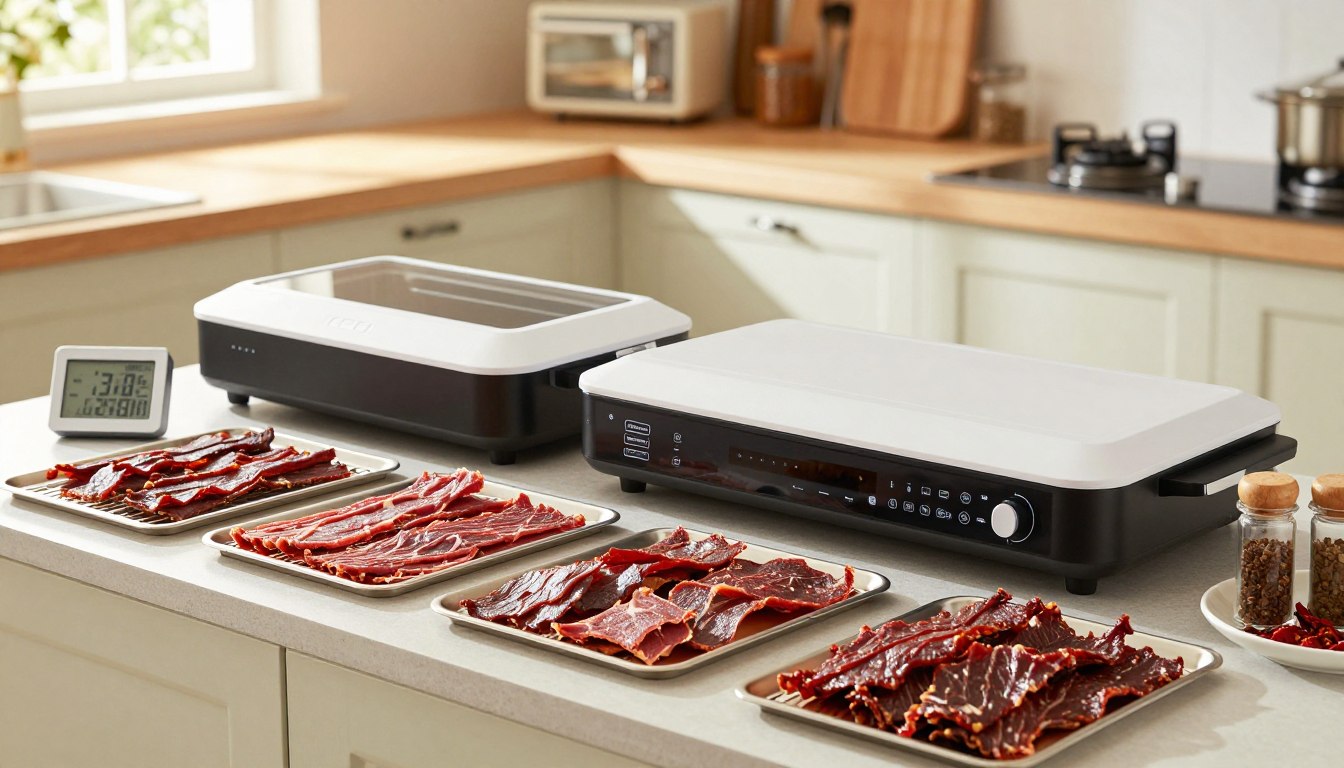
- Buying the biggest model by default: ten trays are useful only if you routinely fill them.
- Assuming a “jerky” label makes the process safe: the meat-heating step and thermometer verification remain separate from marketing presets.
- Judging only by maximum temperature: stable drying control in the correct range matters more than an unusually high top setting.
- Ignoring actual tray area: tray count alone does not tell you how many strips fit without overlapping.
- Forgetting cleanup: marinades make removable trays and accessible surfaces more important than they look on a product page.
- Overvaluing the timer: it is a convenience feature, not proof that every strip is dry.
Make your first batch safely
How to make beef jerky in a dehydratorMove from choosing a machine to slicing, marinating, safety heating, drying and storing your jerky.