Check suitability before choosing a recipe
Your dog’s normal food, medical history and chewing ability matter more than a recipe trend. For a prescribed diet, dietary sensitivity, swallowing difficulty or other medical concern, ask the veterinary team which extras are appropriate. A food that another dog enjoys is not automatically a good choice for yours.
The WSAVA guide to dog treats recommends keeping treats below 10% of daily calories and choosing an appropriate size and shape. That includes other extras offered during the day. Do not turn this into a fixed number of carrot chips: homemade pieces differ in size, and a dog’s calorie needs require an individual assessment.
For the first trial, choose one familiar ingredient and a very small serving. Keep the rest of the feeding routine stable so you can notice whether the new treat suits the dog. There is no reason to fill every tray before you know whether your dog likes the result or whether its texture is comfortable to chew.
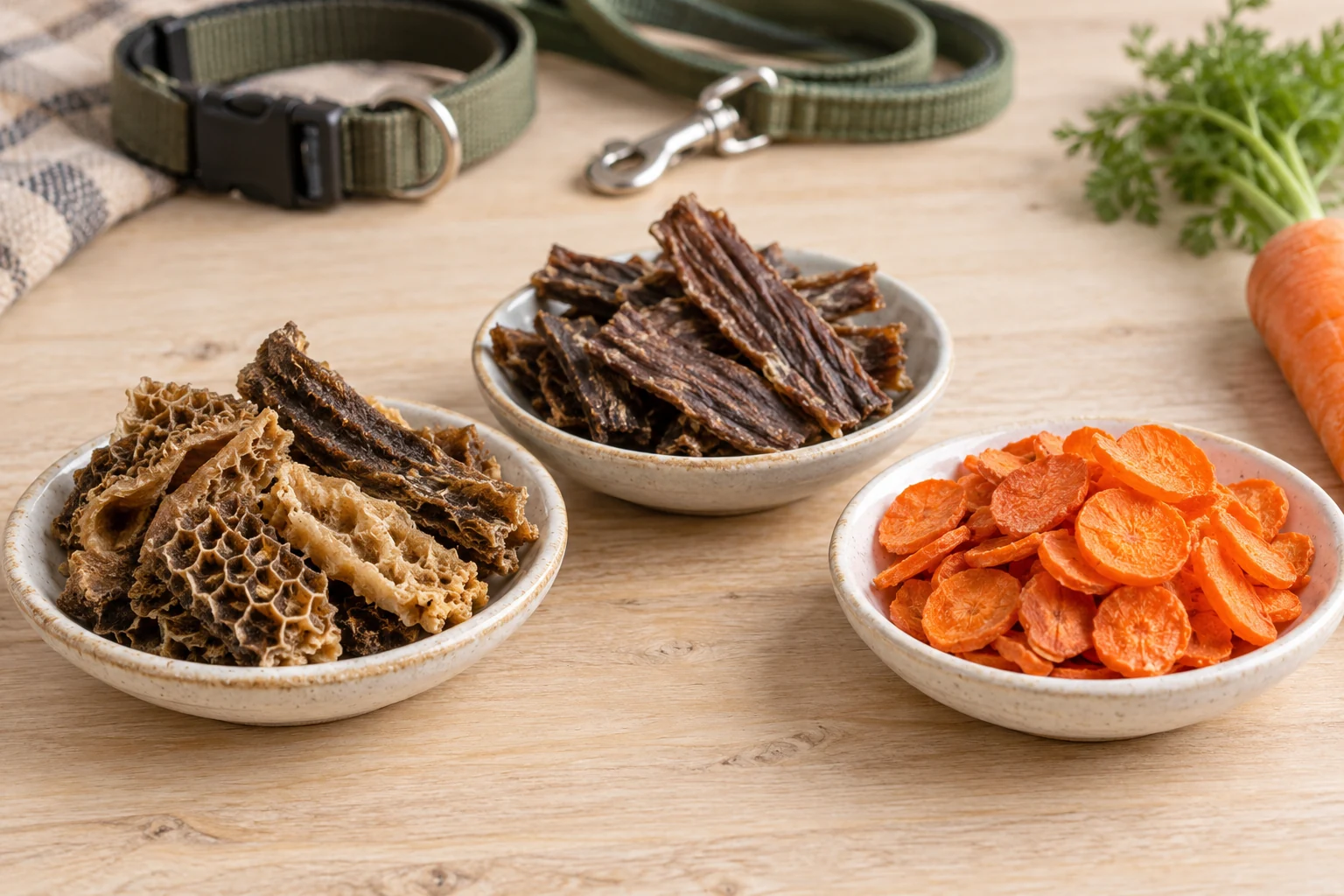
Tripe, meat and vegetables: what the opening image compares
Dried tripe: If you choose a packaged tripe treat, check its ingredients, feeding directions and calorie information. Ask the manufacturer about processing and storage; a dry appearance alone cannot establish safety.
Dried meat strips: Check that the product is intended for dogs and suitable for yours. Seasoned jerky for people can contain ingredients that do not belong in a dog treat. Keep the package and follow its handling directions. FDA guidance on handling pet food and treats also applies to purchased treats.
Plain vegetables: The carrot example below is a separate home-preparation option. The three types in the opening image are choices to assess individually, not a suggested combined portion. Use the WSAVA treat guidance for the size, supervision and calorie checks, and ask your veterinary team about uncertain choices.
Carrot, apple and banana are separate projects
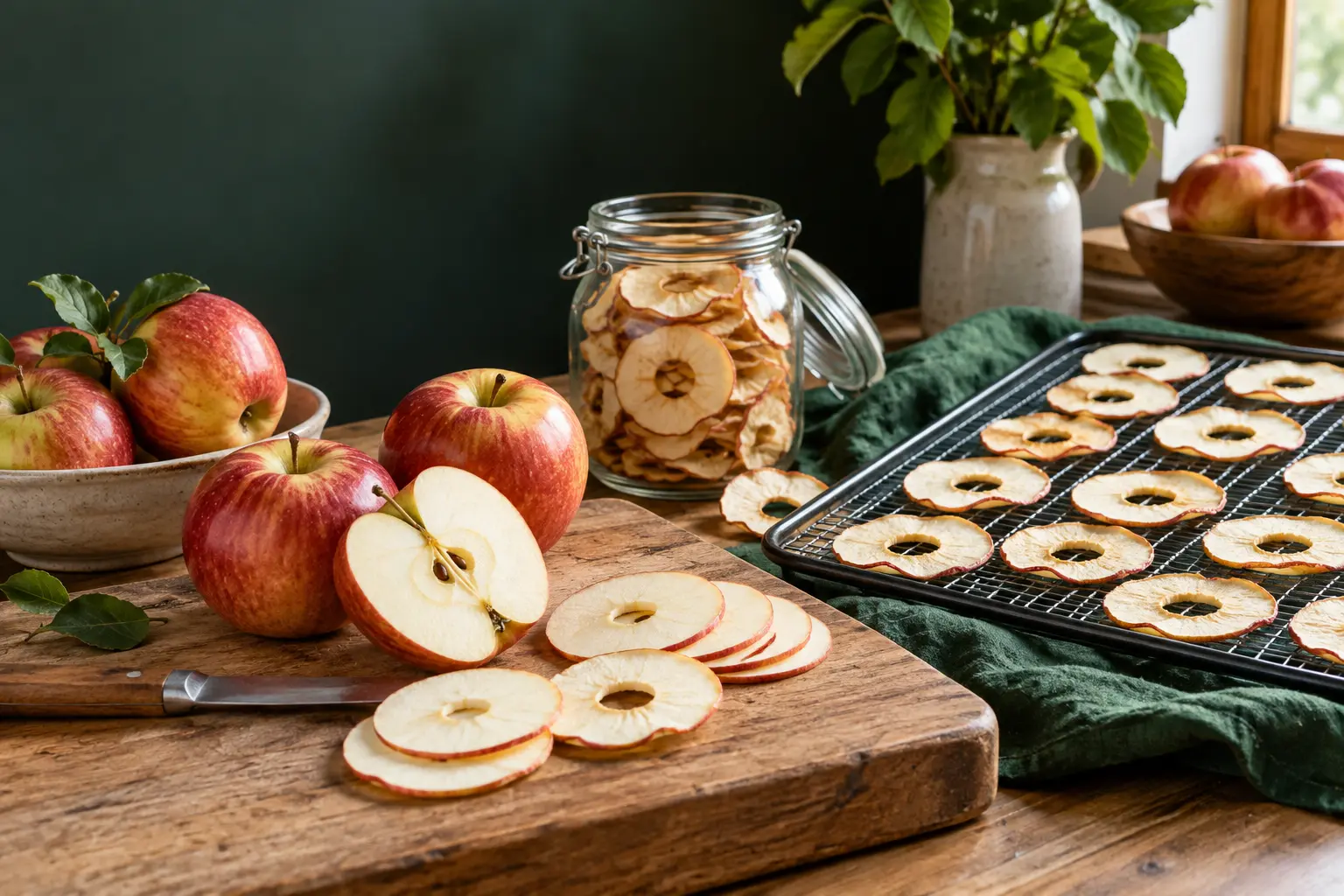
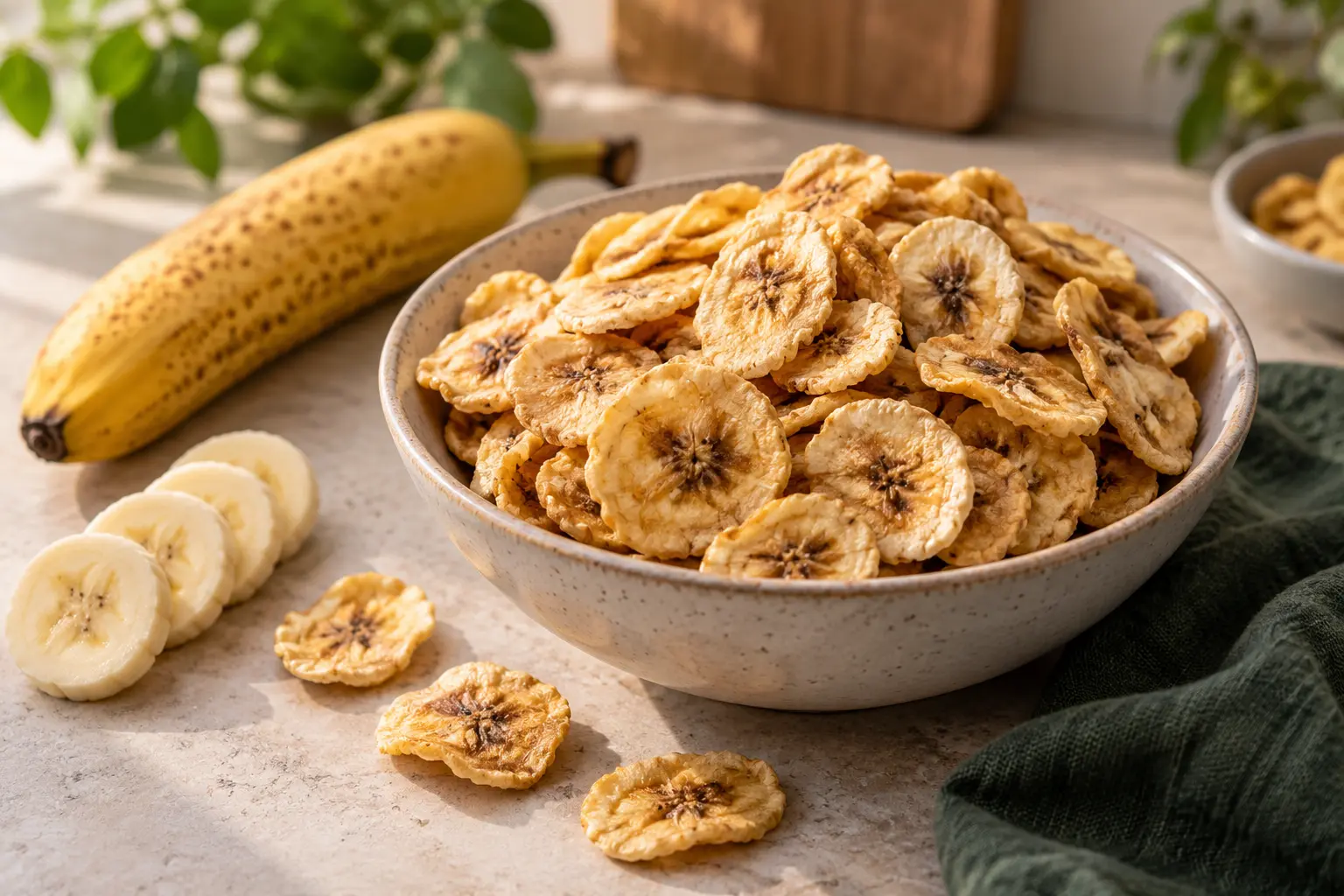
Veterinary guidance from PDSA includes carrots, apples with seeds and core removed, and banana among possible occasional extras. These are choices to discuss within the dog’s diet, not instructions to feed a bowl of mixed fruit. Leave out the garnishes and sweeteners that might appear in recipes intended for people.
Carrot is the worked example below. For apple, remove the core and seeds completely and follow an apple-specific food-drying method. For banana, peel and follow a banana-specific method. Their finished texture can be flexible and chewy, which differs from dried carrot. The same seven steps should not be copied across all three ingredients.
The human food-preservation articles on drying apples and drying bananas explain those food processes. They are not veterinary recipes. Any pretreatment, serving suggestion or addition still needs to fit what is appropriate for your dog.
Set up a plain carrot batch
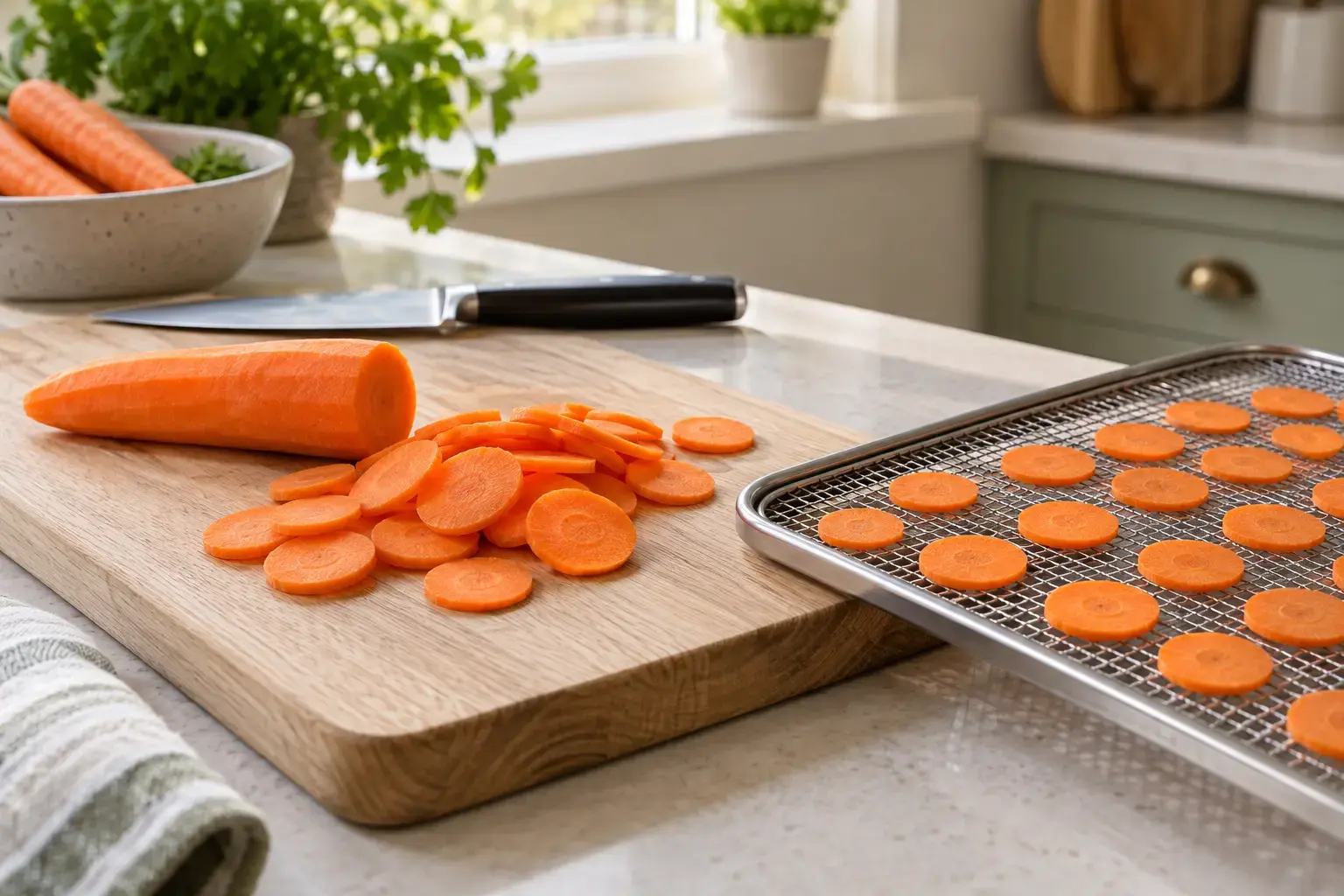
Wash your hands and clean the work area, utensils and trays. Wash, trim and peel the carrots, then slice or cut strips about 1/8 inch thick. Make a small, consistent batch, keeping awkward thick ends for another use. Clean equipment matters even when the intended recipient is a pet. FDA guidance covers safe handling of pet food and treats.
The example uses CSU Preserve Smart’s carrot drying method. In 1 gallon of boiling water, process no more than 4 cups of pieces at once. Once boiling resumes, water blanch for 3½–4½ minutes below 5,000 feet or 4½–5½ minutes at higher elevations. Briefly chill in ice water to stop cooking, then drain.
Place the slices in a single layer on appropriate trays. Use a compatible food-grade mesh insert if shrinking pieces could fall through. Keep the machine’s air routes clear, and avoid adding oil or a sauce to make the pieces more attractive. A simple first batch is easier to assess.
- A few sound carrots Begin with a small amount your dog already tolerates.
- 1 gallon boiling water and separate ice water For the carrot blanching process; use no more than 4 cups carrots per batch.
- No seasonings or sweeteners Leave out oil, salt, sauces and flavor coatings.
Yield varies with produce, trimming and final dryness. Record the weight of your own batch rather than assuming a fixed fresh-to-dried conversion.
The carrot example may occupy a drying day, including preparation and checking, followed by 4–10 days of conditioning after cooling. No drying duration establishes a suitable serving size for a dog.
Compare dehydrators for carrots and household produce
These optional models are for the plain carrot example and other fruit or vegetable projects. A machine's ability to remove moisture does not by itself validate a meat or tripe process. Choose a size you will also use for household produce, and start with a suitable appliance you already own.

COSORI CP267-FD Food Dehydrator
Consider this cabinet format if you also dry household produce and want to inspect individual carrot trays. Check compatible mesh inserts for pieces that shrink; follow the carrot method below.
View on Amazon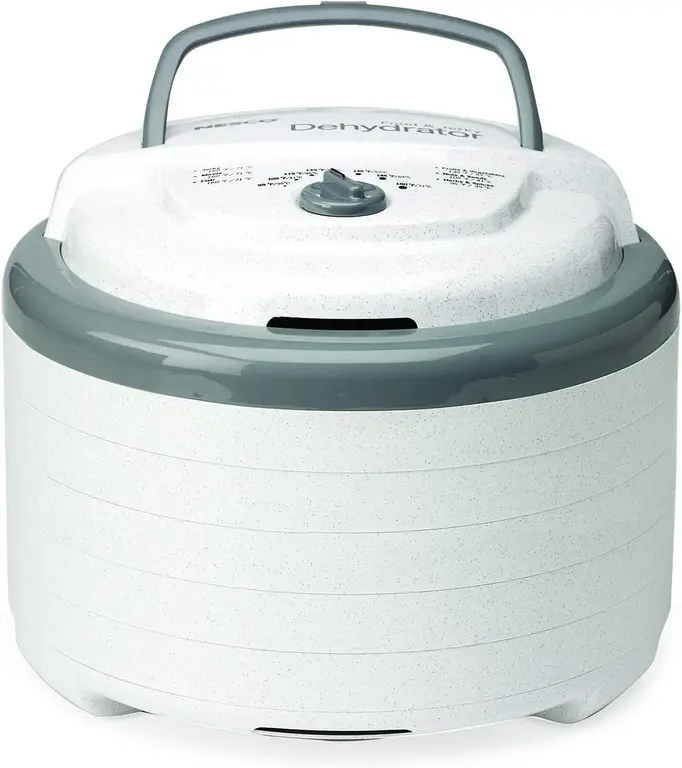
NESCO FD-75A Snackmaster Pro
Compare this stackable format against the small carrot batches and other produce projects you plan to make. Confirm how you will reach, inspect and clean the trays before choosing.
View on Amazon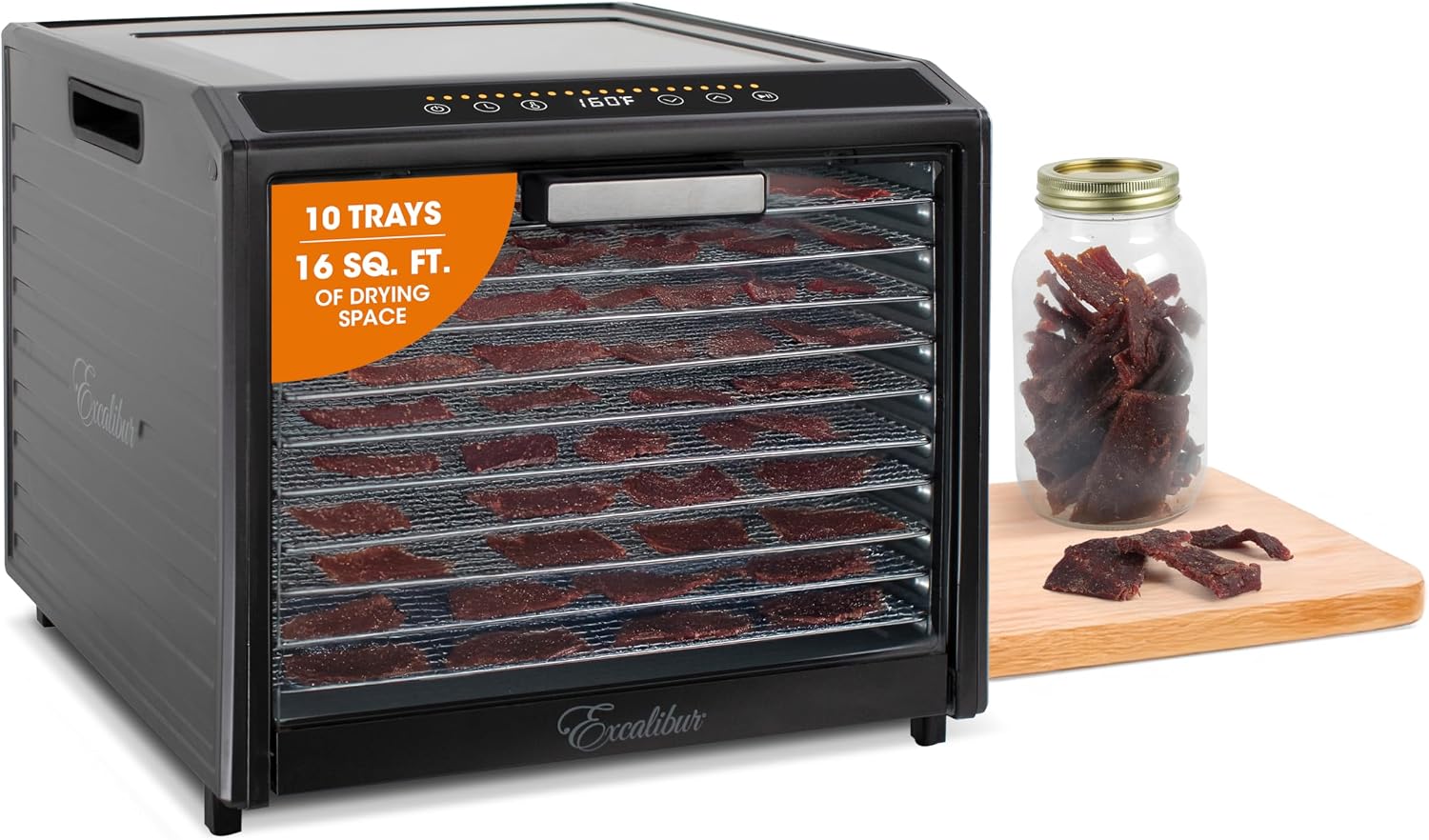
Excalibur Performance Series 10-Tray
Ten trays are worth considering for regular household fruit and vegetable batches. A few dog treats alone may not use that capacity, and the machine does not make a meat or tripe process safe by itself.
View on AmazonAffiliate links · Your price stays the same.
For the wider equipment decision, see our food dehydrator comparison. For process basics, read dehydrating for beginners.
A seven-step plain carrot example
Check suitability and clean
Choose carrot only if it fits your dog’s diet. Clean hands, utensils, surfaces and trays.
Wash and cut
Wash, trim and peel carrots; make consistent 1/8-inch slices or strips.
Water blanch
Use 1 gallon water for no more than 4 cups carrots. Once the boil returns, blanch 3½–4½ minutes below 5,000 ft, or 4½–5½ minutes at or above 5,000 ft.
Briefly cool and drain
Dip in ice water just to stop cooking, then drain and arrange one layer.
Dry at 140°F
Use 140°F (60°C) and monitor the carrot batch, following your appliance instructions.
Inspect cooled pieces
Check representative pieces for a tough-to-brittle finish without damp centers. Continue drying if needed.
Condition, store and offer appropriately
Cool fully, loosely fill a clean container about two-thirds full and cover lightly. Condition in a dry, well-ventilated place for 4–10 days, stirring or shaking daily. If moisture beads appear, redry and repeat conditioning; discard moldy food. Then package dry and label. Offer only a suitably sized small treat under supervision, omitting pieces too hard or awkward for your dog.
Dryness and chewing suitability are different checks
A piece can be dry enough for the food-storage process yet unsuitable for a particular dog to chew. Inspect the finished shape, edges and hardness as a separate step. Do not give a large ring or a hard fragment simply because you worked hard making it. Break or omit unsuitable pieces and choose a different reward if needed.
Stay with your dog while it eats the treat. If its normal eating behavior changes or it has difficulty handling the texture, stop offering that product. A portion of its usual complete food may be a simpler training reward. Homemade drying is an optional kitchen project, not something the dog needs for a balanced diet.
Ingredients that do not belong in this batch
Keep onions, garlic, grapes, raisins, chocolate, macadamia nuts and xylitol-containing products away from the treats. The ASPCA list of foods to avoid feeding pets explains important toxic ingredients. Read ingredient labels on anything you consider adding; a product marketed as sugar-free can still be unsuitable.
For this example, the simplest ingredient list is also the easiest to track: carrots and processing water. Do not add barbecue seasoning, leftover marinade, stock powder or a sweet spread. If accidental ingestion of a potentially toxic food occurs, contact a veterinarian or animal poison service promptly instead of waiting for a homemade remedy to work.
Why these steps are not a meat-jerky recipe
Drying raw meat, fish, tripe or organs raises different questions from preparing plain vegetables. A low-temperature drying cycle is not a general pathogen-killing step, and the outside appearance of an animal treat does not establish its safety. People handling the treat and shared kitchen equipment can also be exposed.
This article therefore does not provide a shortcut meat process or convert human jerky seasonings into pet food. If you want animal-based homemade treats, ask your veterinary team about a suitable evidence-based preparation. A food dehydrator’s recipe booklet or a social-media image does not replace that decision.
Label the batch and keep servings modest
Complete the conditioning stage from CSU’s carrot method before final packaging. Cool the finished carrots fully, then place them loosely in a clean plastic or glass container, about two-thirds full. Cover lightly and keep in a dry, well-ventilated place for 4–10 days. Stir or shake daily; if moisture beads appear, redry the carrots and repeat conditioning. Discard moldy food. After that check, use clean, dry moisture-resistant packaging, label the batch and keep it away from steam and moisture.
Store only a modest amount at first. That lets you judge usefulness before repeating the work, and avoids collecting large jars of treats that do not fit the dog’s daily food allowance. There is no verified calorie count per homemade slice here. For a precise feeding plan, your veterinary team can help you choose quantities or a different treat with known nutritional information.
Frequently asked questions
Are these a complete homemade dog food?
No. They are possible small treats and do not replace a complete, balanced diet.
Can puppies or senior dogs eat them?
Suitability depends on the individual dog, its diet and its ability to handle the texture. Ask its veterinary team when uncertain.
Can I use apple or banana in the carrot steps?
No. Those fruits need their own preparation and drying checks, and their suitability as treats remains a separate decision.
Can I add peanut butter?
This example contains no spread or coating. Any separate treat must fit the dog’s diet; xylitol-containing products are dangerous to dogs.
Can I dry chicken at the same setting?
Do not transfer the carrot process to chicken or other animal ingredients. They require a different, appropriately validated food-safety process.
Can I package the carrots as soon as they cool?
Complete the CSU conditioning stage first: 4–10 days with daily moisture checks. Redry and repeat conditioning if moisture beads appear; discard moldy food. This food-storage check is separate from deciding whether a piece suits your dog’s diet and chewing ability.
Sources and editorial notes
FDA pet-treat handling and WSAVA feeding guidance were reviewed on September 12, 2026. The worked home-drying example is plain carrot; no meat or tripe preparation is validated by this article. The images are editorial illustrations, not photographs of tested batches. Product comparisons are optional editorial guidance, not personal product tests. Accuracy cannot be guaranteed; verify the complete current sources and your dog's individual dietary needs.
- WSAVA: Feeding Treats to Your Dog
- PDSA: Your Dog’s Diet
- FDA: Safe Handling of Pet Food and Treats
- ASPCA: People Foods to Avoid Feeding Your Pets
- CSU Preserve Smart: Drying Carrots
AI-generated contextual illustration; not a photograph of our recipe or appliance tests.