Firm carrots give you the best starting texture
Choose carrots that feel firm rather than bendy, with no slimy surfaces or soft, damaged areas. Large carrots are perfectly useful if you cut them evenly; small whole carrots are attractive in a jar but less predictable to bite and harder to fit. Wash away soil before peeling or slicing so the knife does not carry dirt through the prepared pieces.
Peeling is mainly a texture and appearance choice for clean, sound carrots. A rough or thick outer surface is often nicer removed. Trim the stem and narrow tip, then decide how you will serve the batch. A pickle for a rice bowl needs a different shape from one you want to set beside a sandwich. Making that decision now keeps the finished jar useful.
Choose a clear flavor direction
The amounts below use Food Hero’s refrigerator-vegetable formula with carrots as the vegetable. White vinegar lets the carrot and seasonings stand out, while cider vinegar gives a fruitier impression. Sugar is optional in that source recipe. It rounds out the taste, but sweetness should not be treated as a substitute for the specified vinegar.
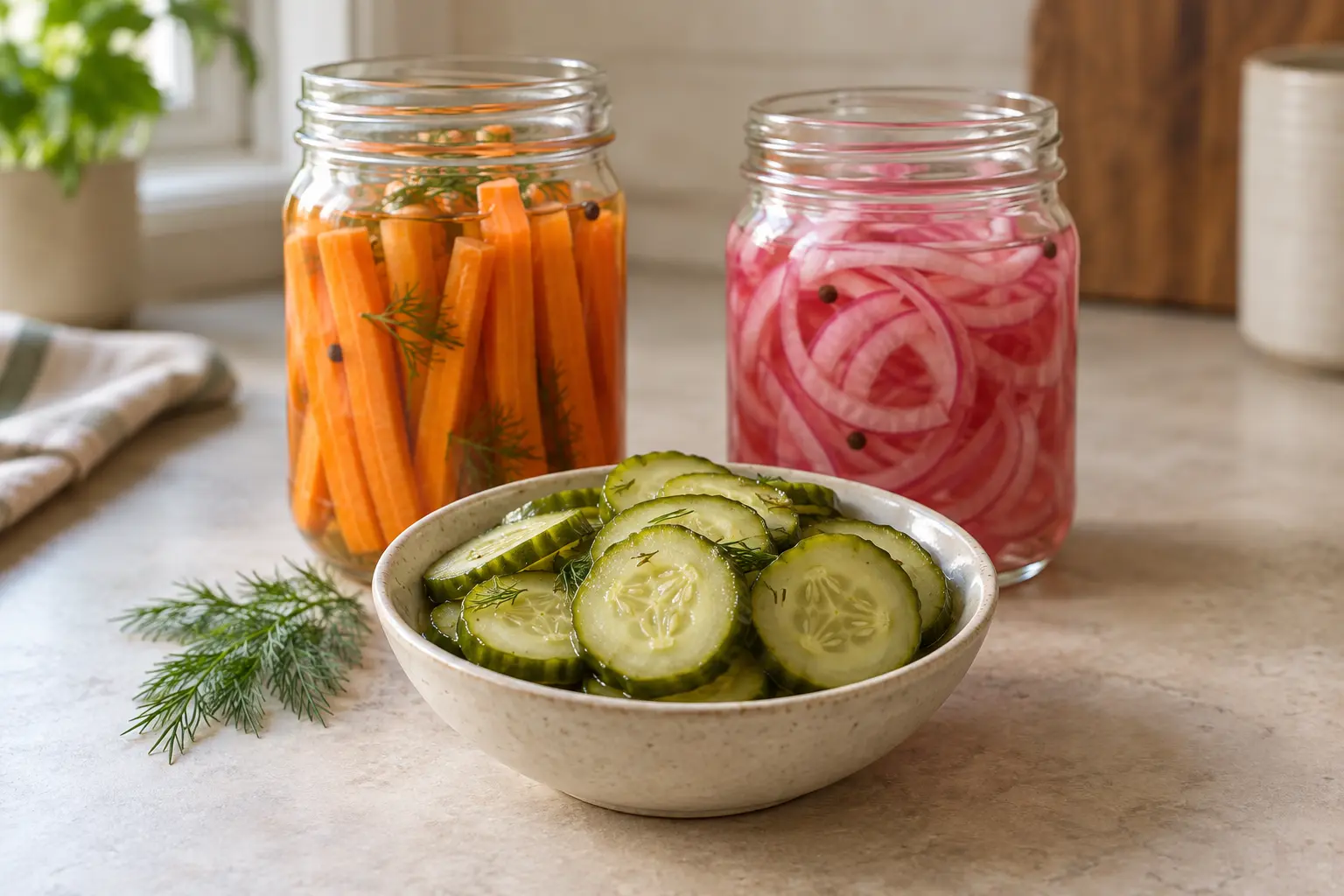
For an herb-led batch, use fresh dill with a little sliced garlic. For a brighter, warmer flavor, try thin ginger slices and a small amount of chili within the listed seasoning quantity. Avoid adding every spice in the cupboard: carrot has a distinct flavor worth keeping. If you are making the two jars for different meals, divide the seasonings between them and label which is which.
- 3½–4 cups prepared carrots, cut into even slices or short sticks
- 1 cup commercial white or cider vinegar, labeled 5% acidity
- 1 cup water
- 1 tablespoon salt
- 1–2 tablespoons sugar, optional
- 2–4 tablespoons total seasonings; try fresh dill with sliced garlic, or sliced ginger with a little chili
About 2 pints; actual packing depends on the carrot cut.
Allow about 20 minutes to prepare, plus 1–3 days in the refrigerator for flavor. Food Hero gives up to 3 months refrigerated for its vegetable recipe; use clean utensils and keep the jars cold throughout.
Slices, sticks or ribbons?
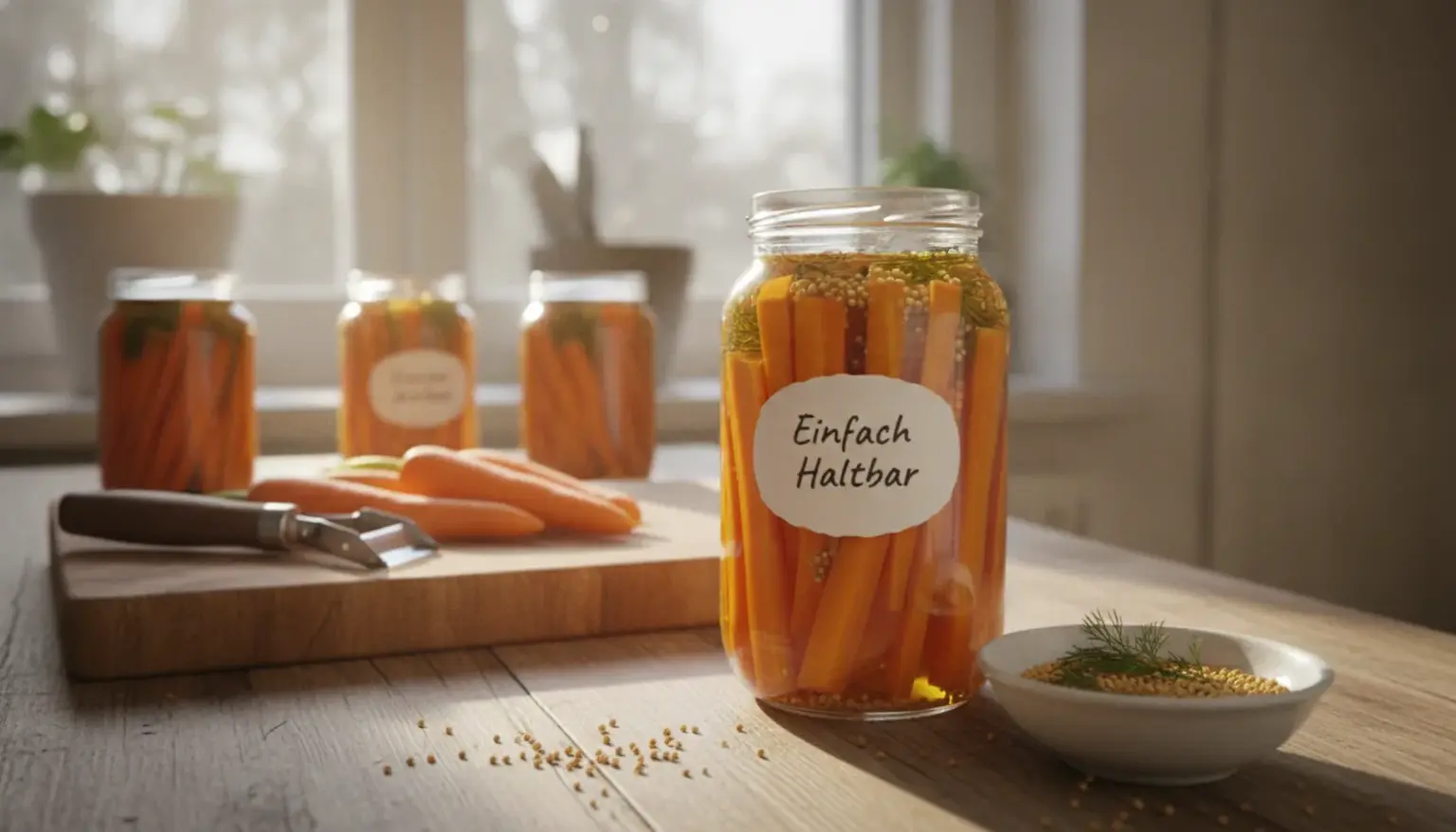
Thin rounds are easy to scatter over salads and bowls. Short, narrow sticks give a satisfying crunch in sandwiches or beside a snack plate. Cut thick carrots lengthwise before making sticks so the pieces do not have a large, hard center. Check a piece against the jar before cutting the whole batch; leave room for the brine and the space at the top.
Very thin peeler ribbons behave differently from sturdy sticks. They collapse together, are harder to pack evenly and give a softer result. Use this batch for slices or sticks, and treat ribbons as a different fresh salad idea. With any cut, work on a stable board and keep your fingertips out of the blade’s path. Consistency is more useful than a decorative shape.
Useful tools for a small batch
Two pint jars, a small saucepan and a knife are enough. A peeler is useful for rough carrot skins, and a colander plus a bowl of ice water helps if you choose the brief blanch.
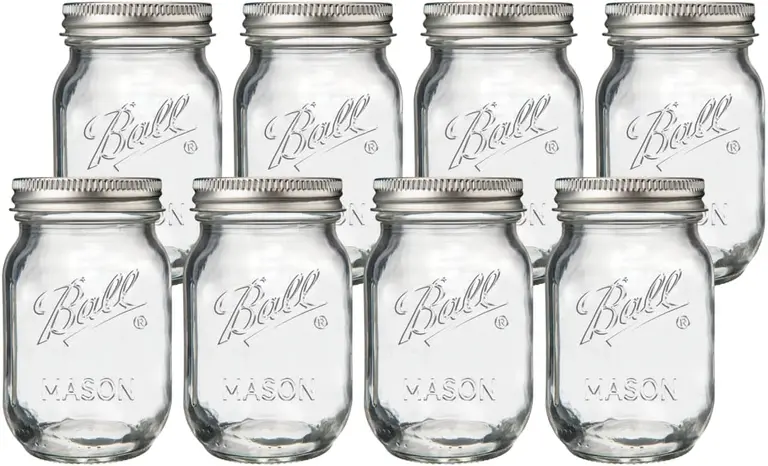
Ball Pint Mason Jars · 16 oz
A pint-size option for portioning carrots. Check how much your prepared batch holds and use an extra container instead of packing to the rim.
View on Amazon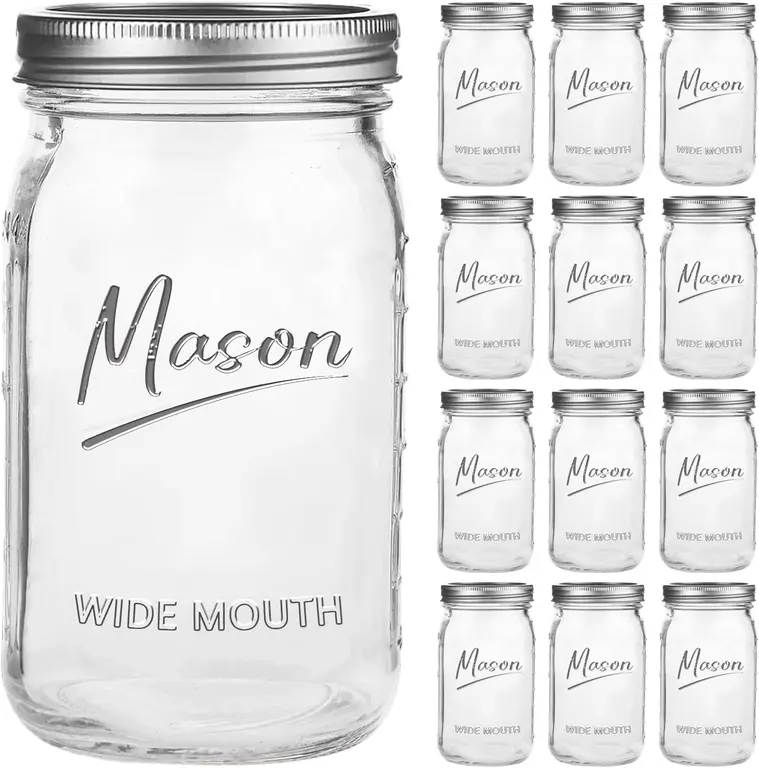
Wide-Mouth Mason Jars · 32 oz
A roomier serving or storage alternative, rather than an extra purchase required for this two-pint recipe. Keep the carrot batch refrigerated.
View on Amazon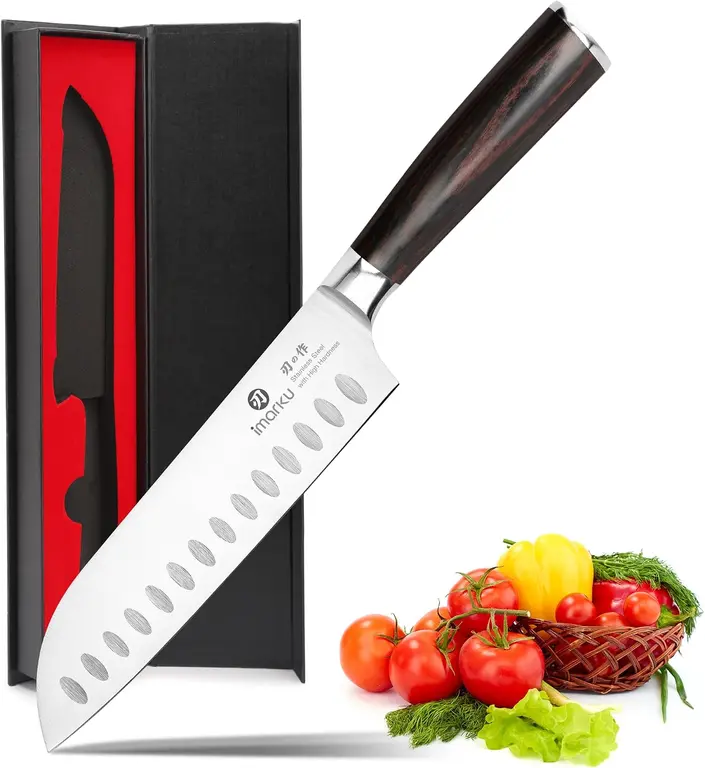
imarku Santoku Knife · 7 in
A knife option for preparing carrots on a stable board. A sharp knife you already own can do the same job; consistent thickness matters most.
View on AmazonAffiliate links · Your price stays the same.
Use food-safe containers suitable for acidic food. Follow the container manufacturer’s temperature guidance, especially when adding warm brine. You do not need a canner for a refrigerator recipe.
When the short blanch is worthwhile
A raw carrot has a firmer bite than many other quick-pickle vegetables. Food Hero allows carrots to be briefly boiled and cooled in ice water before packing. That option is useful if you want a less rigid bite or are using thicker pieces. The aim is to soften slightly while retaining structure, not to cook the carrots into a soft side dish.
Have the ice water ready before the carrots go into the hot pan. Drain them after cooling so the cooling water does not follow them into the jars. Use the same treatment for the entire batch rather than mixing soft precooked pieces with thick raw ones. If you prefer a very firm pickle, skip the optional blanch and start with a manageable, even cut.
Make the batch in 7 steps
Wash and trim
Wash your hands and scrub the carrots. Trim and peel as needed.
Cut the batch
Measure 3½–4 cups of even slices or short sticks.
Blanch if desired
Boil the carrots for 1–2 minutes, cool immediately in ice water and drain well. Or leave them raw.
Heat the brine
Simmer the vinegar, water, salt and optional sugar, stirring to dissolve. Remove from the heat.
Pack the jars
Divide seasonings and carrots between two clean pint jars, leaving about ½ inch at the top.
Add brine and refrigerate
Cover the carrots with warm brine. Close with clean lids and refrigerate promptly.
Let flavor develop
Allow 1–3 days in the refrigerator. Date the jars and serve with clean utensils.
Use the carrots where crunch matters
For a sandwich, lift out a few sticks and drain them before laying them against the filling. They work particularly well with something soft: an egg salad, chickpea spread or cooked tofu. A small quantity gives the sandwich contrast without making every bite taste only of vinegar. Keep the stored jar cold while you assemble the meal.
For a rice or grain bowl, slice any larger pickled sticks into bite-size pieces before serving. Add them after the warm ingredients so the carrots keep their fresh character. On a snack plate, pair a few pieces with bread, a dip and another plain vegetable. The jar is a condiment you can use repeatedly in small amounts, rather than a side dish you need to finish in one sitting.
Solve texture problems at the next batch
If the carrots are harder than you enjoy, use a thinner cut or choose the brief blanch next time. Keeping them warm on the counter is not a solution. If they are too soft, reduce unnecessary heating and begin with firmer produce. Once a carrot has softened substantially, more vinegar will not rebuild its crunch.
An overly busy spice mixture can hide the carrot’s sweetness. Make the next jar simpler rather than chasing balance with extra salt, water or sugar in a stored batch. For a sharp-tasting serving, combine fewer carrots with a mild part of the meal. If the jars are difficult to serve from, shorten the sticks next time or use a wider-mouth container; there is no need to force a fork through a tight bundle.
Keep the recipe and the storage limit together
The storage period listed here belongs to the cited Food Hero refrigerator-vegetable recipe. It should not be transferred to a different carrot salad, an improvised low-vinegar mixture or a batch left warm. Keep the preparation date on the jar and make the amount you expect to enjoy while its texture still suits you. A long maximum is not a target that every household needs to reach.
Store the jars where you can see them and where raw-food drips cannot reach them. Take out a portion with a clean fork, close the jar and put it back. Do not add new raw carrots to the old liquid. If you notice mold, unusual gas, slime or an off smell, discard the contents without tasting. For pantry jars, choose a separate tested carrot-pickle canning recipe and follow it from the beginning.
Frequently asked questions
Do I have to blanch the carrots?
No. The source offers a short blanch as an option. Raw pieces give a firmer bite; briefly blanched pieces are less rigid. Use one approach consistently within the batch.
Can I use baby carrots?
Sound, ready-to-eat baby-cut carrots can be cut into smaller, even pieces after rinsing. Leaving large pieces whole changes the eating texture and makes the jar harder to pack.
Can I leave out the sugar?
Yes, sugar is optional in the cited vegetable recipe. The result will taste sharper. Keep the vinegar and water quantities as written.
Can I use the leftover liquid for another batch?
Start again with fresh brine. Do not keep topping up a jar with raw carrots; that mixes different preparation dates and changes the stored mixture.
Can these go into the pantry if the lid seals?
No. These are refrigerator pickles. A lid can pull down as warm food cools without the food having received an appropriate canning process.
Sources and editorial notes
Adapted for US readers from the German counterpart. Recipe attribution and refrigeration boundaries are explained in the source notes.
- Oregon State University Food Hero: Refrigerator Pickled Vegetables
- NCHFP: General Information on Pickling
Food illustrations reused from the German counterpart; they do not document an in-house recipe test.